
_edited.png)

AI in Event Services Explained for Oahu Planners


Most people assume AI is something reserved for tech companies or massive corporate conferences. If you’re planning a wedding in Kapolei or a birthday bash in Kaneohe, you might think AI has nothing to do with your event. That assumption is costing planners time and money. AI in event services explained simply means using smart technology to handle the tasks that slow you down, so you can focus on what actually makes your event special. And it’s more accessible than you think.
Table of Contents
Key takeaways
Point | Details |
AI adoption gap is real | Only 7% of event pros have scaled AI use, meaning early adopters gain a real edge. |
Automation saves hours | AI chatbots can cut admin time by 40 to 60%, freeing planners for creative and personal work. |
Privacy matters from day one | Vague consent forms and open-ended data retention can violate GDPR and similar laws, so vet your AI vendors carefully. |
Start small, build gradually | Integrate AI into one workflow at a time rather than overhauling your entire process at once. |
Attendee engagement improves measurably | 72% of attendees at a 2026 event actively used AI-powered app features, showing real adoption in practice. |
Core AI technologies transforming event services
Before you can use AI well, you need to know what you’re actually working with. The terminology can feel overwhelming, but the concepts are straightforward once you strip away the jargon.
Artificial intelligence in events just means software that analyzes data and makes decisions or recommendations automatically. Machine learning is a type of AI that gets better the more data it processes. Chatbots are automated messaging tools that answer questions and guide guests through tasks without a human on the other end. Analytics platforms collect data from registrations, ticket sales, or guest behavior and surface patterns you’d never spot by hand.
Here’s where these tools show up in real event planning:
Vendor research: AI tools scan hundreds of vendor options and filter by price range, availability, and past reviews.
Guest communication: Chatbots handle RSVPs, answer frequently asked questions, and send reminders automatically.
Budget tracking: AI expense tools flag when spending is trending over budget before it becomes a problem.
Logistics coordination: AI scheduling tools manage timelines, send alerts for delays, and keep teams aligned.
Engagement features: AI-powered photo booths, personalized playlists, and activity suggestions based on guest preferences.
Tools like HoneyBook, Eventbrite’s analytics suite, and purpose-built chatbot platforms are already being used by event professionals at all scales, from 20-person birthday dinners to 500-guest weddings.
Pro Tip: You don’t need to adopt all these tools at once. Pick one pain point, like vendor research or guest communication, and start there. One well-chosen AI tool used consistently beats five tools used poorly.
How AI optimizes event planning workflows on Oahu
Planning an event in Oahu comes with specific challenges. Vendor availability is tight during peak wedding season. Venues book fast. And coordinating between caterers, photographers, entertainment, and rental companies takes hours of back-and-forth communication. AI makes that process faster and more accurate.
Here’s a practical breakdown of where AI saves real time:
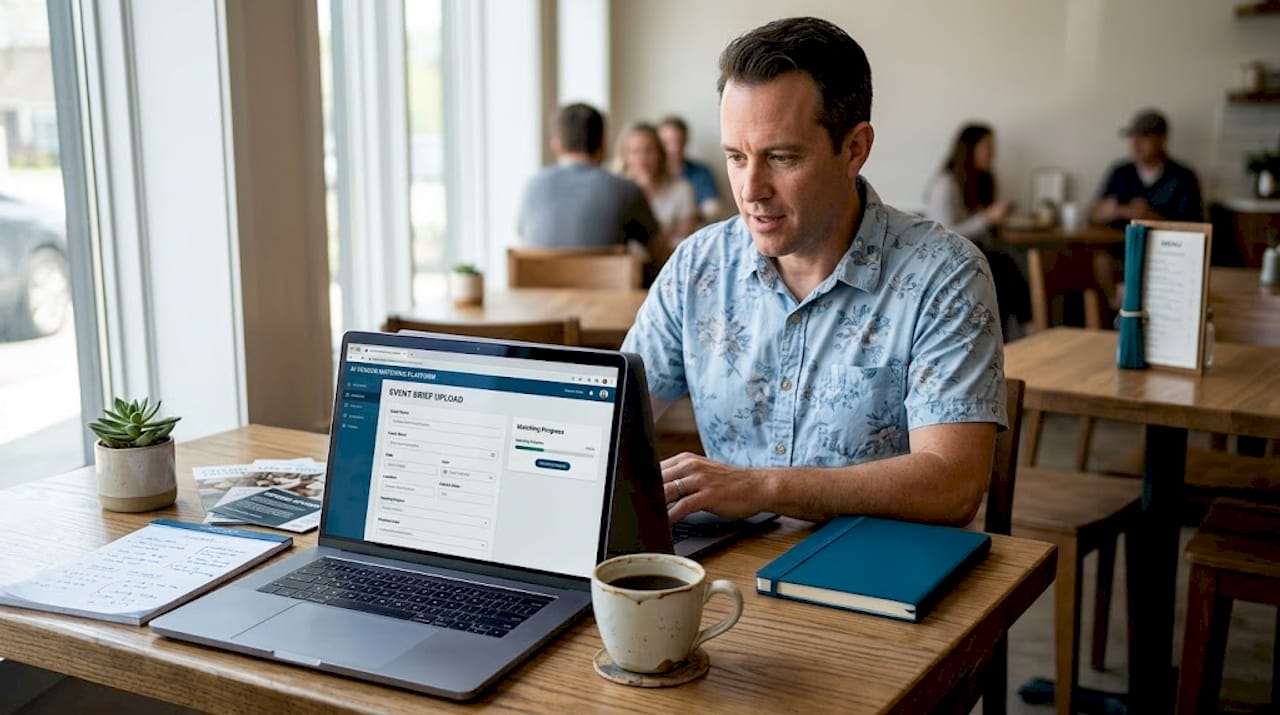
Vendor and venue research: Instead of manually browsing websites and sending inquiry emails, planners can upload event specifications to an AI research tool and receive tailored vendor recommendations based on budget, location, style, and availability. The more detail you provide, the better the results.
Scheduling and timeline management: AI scheduling tools automatically detect conflicts in event timelines, like a catering delivery landing at the same time as a vendor setup window, and flag the issue before it becomes a problem on the day.
Budget tracking and alerts: Tools like Monday.com’s AI features or purpose-built event budget software track expenses in real time and send alerts when specific line items are trending over budget.
Guest communication automation: Automated email sequences, RSVP confirmations, and reminder messages can be set up once and run without manual follow-up. AI chatbots reduce admin time by 40 to 60% and speed up event setup by 25%.
Partner and exhibitor coordination: The Goodwood Festival of Speed used an AI tool to cut routine exhibitor queries and manage partner communications through AI-enabled digital manuals, reducing admin burden significantly.
Local Oahu planners can apply the same logic to community events, school gatherings, and luau-style celebrations where coordination between multiple local vendors is common. The event planning essentials required for a smooth setup on the island do not change, but AI makes executing them faster.
Pro Tip: When using AI for vendor research, upload a full event brief rather than a one-line request. Include your guest count, venue type, budget range, preferred style, and any specific cultural considerations. The specificity of your input directly determines the quality of what the AI returns.
Enhancing attendee experience and engagement with AI
The most visible benefit of AI at events is what guests actually experience. And the numbers back this up.
At the 2026 SISO CEO Summit, 72% of registrants actively used AI-powered event app features, including personalized session recommendations and AI-driven networking suggestions. That level of engagement is exceptional, and it comes from AI tools that feel personal rather than automated.
Here is how AI enhances the guest experience at weddings, birthdays, and community celebrations:
AI-powered chatbots for registration and questions: Guests get instant answers about venue directions, dress code, dietary accommodations, and event schedules without anyone needing to staff a phone line. One case study showed 6,067 successful attendee engagements handled by a chatbot with 98% accuracy at a 2025 convention.
Personalized activity and entertainment recommendations: AI tools can suggest photo booth themes, song requests, or activity stations based on guest profiles or simple preference surveys completed at registration.
Social and networking features: At larger community events or corporate celebrations, AI-powered apps can match guests with shared interests or suggest conversation starters, making events feel more connected.
AI photo booth features: Smart photo booths now use facial recognition filters, instant digital delivery, and style overlays that update based on the event theme in real time.
The key insight here is that AI engagement tools reach peak value when they are integrated into the platforms guests are already using, not added as a separate step. If your guests have to download a new app just to use an AI feature, most of them won’t. Build it into the experience they’re already in.
Managing privacy and compliance when using AI at events
This is the part most planners skip, and it can create real problems. AI tools collect data. Guest names, contact information, photos, behavioral patterns during events, and more. In 2026, that data is subject to strict regulations, and being careless about it puts you and your clients at risk.
Event data privacy now faces strict scrutiny under GDPR in Europe, the California Consumer Privacy Act in the U.S., and the EU AI Act, which governs how AI systems process personal data. Vague consent language and indefinite data retention are direct violations of these rules.
Here’s what responsible AI data handling looks like for event planners in Oahu:
Use specific consent language. Your registration form should state exactly what data you collect, how it will be used, and how long it will be kept. Generic “we may record this event” language is not enough.
Apply data minimization. Only collect what you actually need. If you don’t need birthdates, don’t ask for them.
Set clear retention limits. Define when data gets deleted. Guest contact info should not sit in an AI platform’s database indefinitely.
Vet your AI vendors. Ask them directly about their data storage practices, security certifications, and compliance with U.S. privacy laws. Planners must audit AI outputs and verify accessibility and compliance with current regulations.
Make opt-out easy. Any guest who doesn’t want to be photographed by an AI photo booth or tracked through an event app should be able to opt out without hassle.
Privacy done right is also a selling point. Oahu families and community organizers increasingly care about where their data goes. Being transparent about your practices builds trust before the event even starts.
Overcoming challenges and maximizing AI benefits
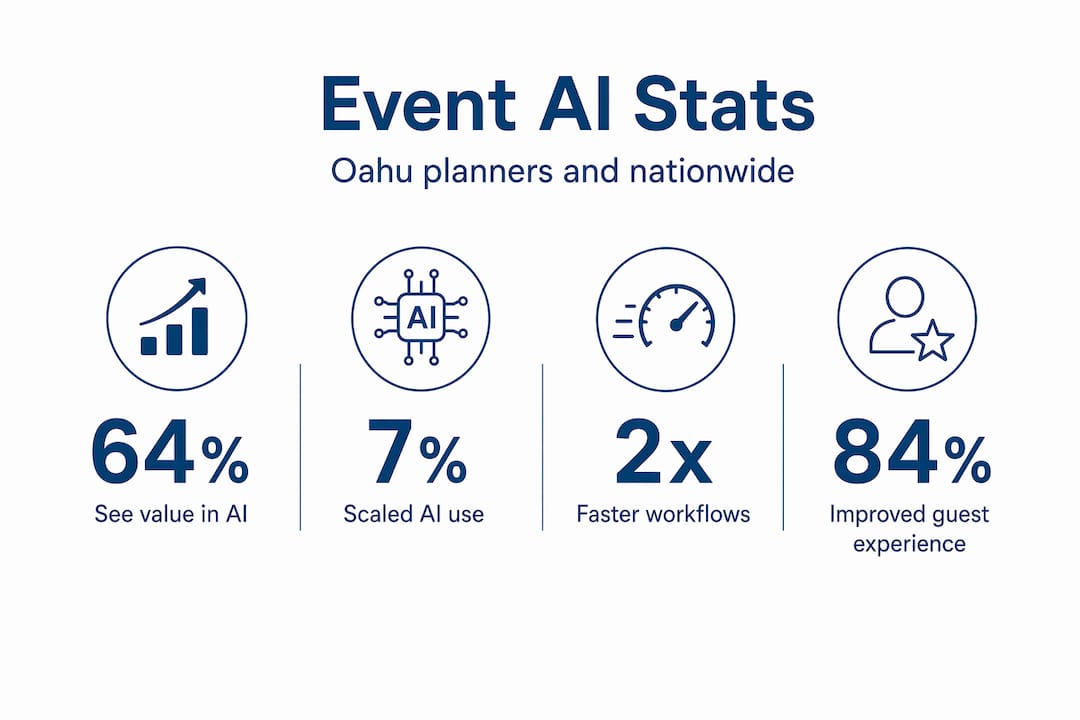
Here’s the honest reality. 64% of event professionals see AI as significant, but only 7% have scaled meaningful use cases. That gap exists because most people either try to do too much at once or choose tools that don’t fit their actual workflow.
The table below shows the most common mistakes and what to do instead:
Common mistake | Better approach |
Choosing AI tools based on features alone | Choose based on how the tool fits your existing process |
Expecting AI to replace human judgment | Use AI for data and logistics; keep humans for creative decisions |
Implementing multiple tools simultaneously | Start with one tool, master it, then add the next |
Ignoring vendor support and training | Prioritize tools with clear onboarding and responsive support |
AI frees event teams to focus on creativity by handling the repetitive, data-heavy tasks. It acts as an infrastructure layer, not a replacement for the human relationships that make events memorable. The effectiveness of AI tools also depends heavily on how well they are integrated into your full event lifecycle, not just used for one task in isolation.
For Oahu planners managing everything from graduation parties to community festivals, the practical advice is this: map out the three most time-consuming tasks in your current process, then find one AI tool that addresses at least one of them. That’s your starting point.
Pro Tip: Before signing up for any AI platform, ask for a free trial and run it against a real past event. Use actual vendor names, real guest counts, and your actual budget. A trial with fake data tells you almost nothing about whether the tool will work for you.
My honest take on AI and Oahu event planning
I’ve worked with enough events here on Oahu to know that the biggest risk isn’t using AI wrong. It’s not using it at all while the planning process keeps eating up hours that could go into making the event itself better.
What I’ve found is that planners who resist AI tend to think of it as a replacement for their expertise. It’s not. It’s closer to having a very fast assistant who never forgets a follow-up email and never misreads a budget spreadsheet. The creativity, the personal touch, and the knowledge of what works for a local Oahu crowd, that still comes from you.
What I’ve also learned is that early AI adopters in this market aren’t the big corporate planners. They’re the organized solo planners and small teams who figured out that automating one or two backstage tasks gives them more time to be present at the actual event. That’s the advantage worth chasing.
My take: don’t wait until AI feels comfortable. Start with one tool, stay curious, and adjust as you learn. The AI multiplies productivity available to you. What you do with that extra capacity is still entirely up to you.
— Terriffics
How Terrifficsentertainment brings AI-powered fun to Oahu events
At Terrifficsentertainment, we’ve built AI directly into what we offer. Our AI-powered photo booth doesn’t just take pictures. It delivers personalized, on-theme digital experiences that guests love and share instantly. Combined with our DJ sound and lighting, karaoke, and outdoor movie setups, every package is designed to keep your celebration personal and memorable.
Whether you’re planning a wedding reception, a milestone birthday, or a neighborhood community event anywhere on Oahu, our mix-and-match packages make it easy to add technology without overcomplicating anything. Check out our AI photo booth rental or explore our full DJ and photobooth packages to see what fits your event best. Fast setup, friendly service, and a team that genuinely cares about making your day great.
FAQ
What does AI in event services actually mean?
AI in event services means using software that automates tasks like guest communication, vendor research, budget tracking, and engagement features, so planners can focus on the creative and personal elements of their events.
Is AI too expensive for small events like birthdays or family celebrations?
No. Many AI tools for event planning are free or low-cost, and the time saved on admin work often offsets any tool fees. Even a basic chatbot or scheduling tool can make a noticeable difference for small gatherings.
How do AI chatbots help at events?
AI chatbots handle guest questions, RSVP confirmations, and reminders automatically. One case study showed a chatbot completing 6,067 attendee engagements with 98% accuracy, freeing the event team for higher-value work.
What privacy rules apply when using AI at Oahu events?
U.S. laws like the California Consumer Privacy Act apply, and if any guests are from Europe, GDPR requirements are relevant too. You need specific consent language, clear data retention limits, and a way for guests to opt out of AI-driven features.
How do I start using AI for my next event in Oahu?
Pick the single most time-consuming task in your planning process, whether that’s vendor research, guest communication, or scheduling, and find one AI tool built for that specific task. Master it before adding anything else.
Recommended
Comments