
_edited.png)

Clean School Dance Playlist Ideas That Are Ready to Import

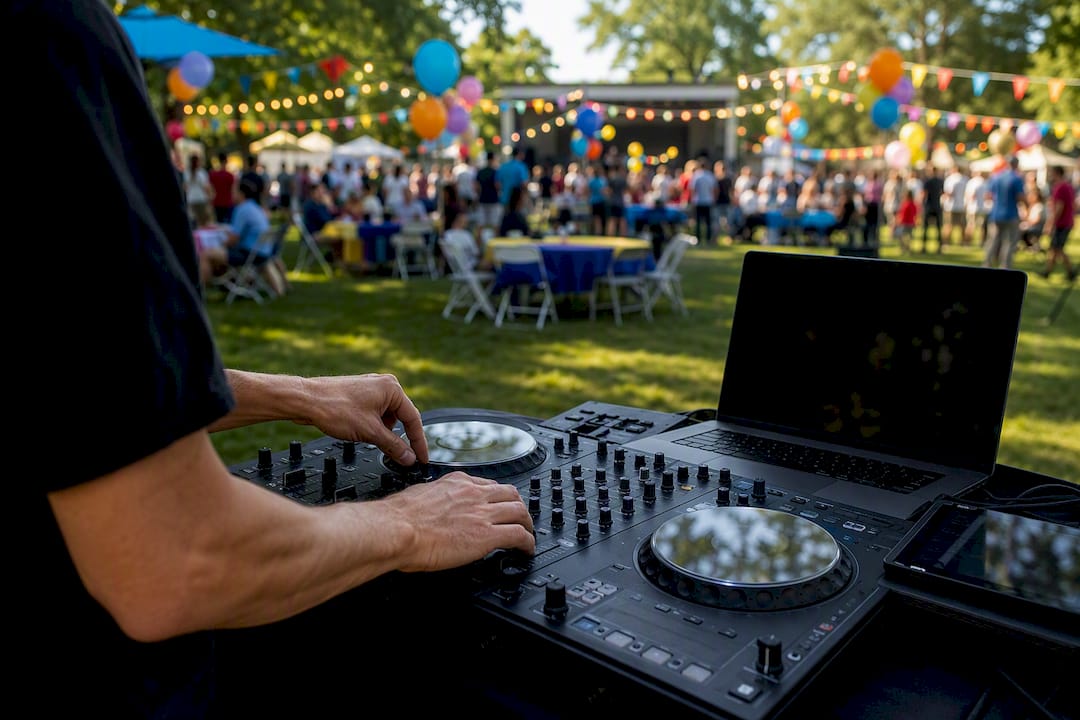
Start with a public “clean” streaming playlist labeled for middle school, junior high, or high school, or build one from a vetted list like the sets below, then run every single track through one rule before the dance: pre-listen and confirm the edit actually removes the problem language or theme, because plenty of “clean” radio versions still keep suggestive lyrics intact. That’s the clean-edit rule, and it’s non-negotiable.
For sizing, DJ playbooks built around real prom timelines suggest 60 to 80 songs for a 4-hour event, with a shorter 2-hour middle school dance needing roughly three dozen songs. Keep a backup crate on standby too.
Import a public “clean” playlist on Spotify or Amazon Music as your starting skeleton, then screen it track by track.
Match the playlist type to the grade level. Middle school needs a tighter, more conservative set than high school.
Build a 30-song backup crate. DJs rely on this for song requests, awkward silences, or last-minute swaps.
Pro Tip: Never trust a playlist’s “clean” label at face value. “Clean” on streaming platforms usually means no explicit profanity tag, not no suggestive content.
Key Takeaways
A clean school dance playlist works when every track is pre-listened for both language and theme, sized to the event’s length, and backed by a 30-song crate for the unexpected.
Point | Details |
Apply the clean-edit rule | Pre-listen to every song’s actual edit before the event, since “clean” tags often miss suggestive themes. |
Size the playlist to the event | Plan roughly 30 to 40 songs for a 2-hour dance and 60 to 80 for a 4-hour prom, per DJ industry guidance. |
Keep a 30-song backup crate | Reserve extra clean tracks for requests, dead air, or last-minute swaps. |
Schedule participatory songs deliberately | Place line dances and singalongs mid-evening to revive a flagging dance floor. |
Set a request policy in advance | Require clean-only submissions with staff having final approval, and post it before the event. |
Table of Contents
Copy-Ready Playlists Organized by Age and Dance Length
The right song list depends heavily on grade level. A track that works fine for a senior prom can feel wildly out of place at a sixth-grade mixer, and vice versa: playing only bubblegum pop at a high school homecoming will empty the floor fast. Here’s how to segment your options.
1. Middle school (a moderate playlist size for roughly 1.5 to 2 hours)
This age group needs upbeat, high-tempo pop with almost zero romantic or suggestive undertones. Think chart-topping pop, throwback novelty songs, and group dance staples.
Uptempo current pop hits (check for any “explicit” tag, and swap immediately if flagged)
Throwback novelty and dance-craze songs that almost never carry risky lyrics
Movie soundtrack singalongs, which tend to be pre screened by nature
The main edit to watch for here isn’t profanity. It’s innuendo buried in an otherwise “clean” pop song. Middle schoolers pick up on double meanings faster than most adults expect.
2. Junior high (40 to 50 songs, 2 to 2.5 hours)
Junior high dances can handle a slightly wider mix: current top-40, clean-edit hip-hop, and structured group dances that give shy students an easy way to join in.
Current top-40 pop and dance tracks, all pre-listened for edit accuracy
Clean-edit hip-hop and pop-rap, since this is where “radio clean” most often fails to catch everything
Group and line dances scattered through the set to reset the energy
One or two slow songs placed early, before the crowd gets too rowdy for them to land
Hip-hop and pop-rap are the genres that need the closest listen. A track can be labeled “clean” and still reference drug use, violence, or sex in a way that a quick skim misses. Play the whole verse, not just the chorus, before it goes on the list.
3. High school (60 to 80 songs plus a 30-song backup crate)
High school dances and proms run longer and need real variety, which is exactly what prom DJ guidance for a 4-hour event recommends: 60 to 80 primary songs, verified clean edits only, and a 30-song reserve for requests or dead air.
Current hits across pop, hip-hop, and EDM, each individually verified
Throwback anthems from the 2000s and 2010s that reliably fill the floor
A dedicated slow-dance block, kept short and placed with intention rather than scattered randomly
The 30-song backup crate for requests, technical hiccups, or a flat stretch mid-event
Serato’s DJ Daz high school prom playlist is a useful real-world example of how working DJs blend clean edits of current hits with older floor-fillers rather than leaning on one genre.
How Do You Build and Screen a Safe Playlist?
Whether you’re starting from scratch or importing a public playlist, run it through the same screening process every time. Skipping steps here is where “clean” playlists quietly go wrong.
Lyric scan. Read or listen to the full lyrics, not just the chorus. Streaming “clean” tags often only strip curse words.
Context check. Ask whether the song’s theme, not just its word choice, is appropriate. A song with zero profanity can still be about a suggestive scenario.
Edit verification. Play the actual radio or clean edit you plan to use, all the way through, before the event. Teacher-sourced guidance consistently flags this as the step most planners skip.
Timing math. Most dance songs run 3 to 3.5 minutes, so figure roughly 17 to 20 songs per hour when calculating your total.
Flow planning. Open with mid-energy songs, build to a peak in the middle, drop in slow songs at a predictable point, and close on your highest-energy track.
Pro Tip: Label your final playlist “APPROVED” and keep a separate “MAYBE” folder for anything you’re still unsure about. Never load a maybe-list track live, even under pressure from requests.
Do a full sound check before doors open, and confirm your playback device or DJ software has the approved list loaded as the default, not a queue mixed in with unscreened tracks.
What Songs Reliably Fill the Dance Floor?
Certain songs work almost every time because they give students something to do together instead of just standing around. Line dances and singalongs are your best tool for reviving a floor that’s gone quiet.
Classic line dances (the kind nearly every student already knows) work best mid-evening, right when the initial energy dips.
Throwback singalongs from past decades pull in students who don’t recognize current hits but know every word to an old classic.
Modern floor-fillers with verified clean edits keep the set feeling current, not just nostalgic.
Space participatory songs out. Playing three line dances back to back burns out the format’s novelty fast.
Music’s effect on group behavior isn’t just a hunch. Research on music and mood backs up what experienced DJs already know: the right song at the right moment shifts a room’s energy almost instantly. For a broader mix of clean, cross-generational picks, the YMCA’s family-friendly dance playlist is a solid model for blending throwbacks with current tracks without adding lyric risk.
How Should You Handle Student Song Requests?
Requests are where most playlist problems start, so set the policy before the dance, not during it.
Collect requests ahead of time through a simple form or a supervised request table at the event.
State your policy plainly: clean edits only, staff has final say, and no explicit or sexual content, no exceptions.
Post the policy where students and parents can see it in advance, in the dance flyer or on the school website.
If a request gets denied, have staff explain briefly and redirect to an approved alternative instead of just saying no.
Pro Tip: Route every request through your “approved” list first. If it’s not already screened, it doesn’t play that night, no matter how many students ask.
Why This Guidance Is Reliable
Terriffics Entertainment LLC handles DJ sound, lighting, and full entertainment packages for school events across Oahu, which means these screening habits come from actual event nights, not guesswork.
The two rules that matter most, every single time: verify the clean edit yourself before it plays, and always keep a backup crate ready. Skip either one and you’re gambling with a room full of students and their parents watching.
If your team wants a full breakdown of running a school dance from start to finish, Terriffics has covered the planning side too, not just the music.
Editorial Perspective: Prioritize Lists You Can Actually Use
Most school dance advice online spends too much time explaining why clean music matters and not enough time handing planners something they can import tonight. That’s backwards. Planners already know why suggestive lyrics are a problem. What they need is a screened song list and a five-minute checklist, not another lecture on age-appropriateness.
The conventional advice also treats “clean” as a single filter, when it’s really two: language and theme. A song can pass every profanity check and still be entirely wrong for a school gym. That distinction gets skipped constantly, and it’s where most playlist mistakes actually happen.
If you take one thing from this guide, prioritize the edit verification step over everything else. Sizing and sequencing matter, but a mislabeled “clean” track slipping through is the failure that actually gets a call home.
Selected Playlists and DJ Resources
DJ Daz’s Serato prom playlist for real-world clean edit examples
YMCA’s family-friendly playlist for cross-generational picks
Terriffics Entertainment for professional DJ booking on Oahu
Frequently Asked Questions
How many songs do I need for a 2-hour middle school dance? Plan for roughly 30 to 40 songs, based on an average of 3 to 3.5 minutes per track, plus a small backup crate of 10 to 15 extra clean songs.
Are radio “clean” edits always safe to play? No. Radio edits typically strip out curse words but often leave suggestive themes intact, so pre-listen to the full edit before adding it to your approved list.
What’s the best way to handle inappropriate song requests? Set a clear policy in advance: clean edits only, staff has final approval, and any request gets checked against your approved list before it plays.
Should I hire a DJ or build the playlist myself? Either works if you follow the same screening rules. A DJ with school dance experience brings a pre-vetted crate and can adjust live, which takes pressure off staff during the event. If your school wants to round out the night, pairing the DJ setup with a photobooth rental gives students something to do between songs and keeps the energy up on slower stretches.
How do I keep the playlist fresh across a full school year? Rotate in 10 to 15 new verified tracks each event while keeping your proven floor-fillers, so the set feels current without starting the screening process completely over each time.
Sources
Recommended
Comments