
_edited.png)

Oahu Emcees: 6 Step Hawaiian Name Pronunciation With Native Audio
- Terriffics Entertainment

- 12 hours ago
- 6 min read
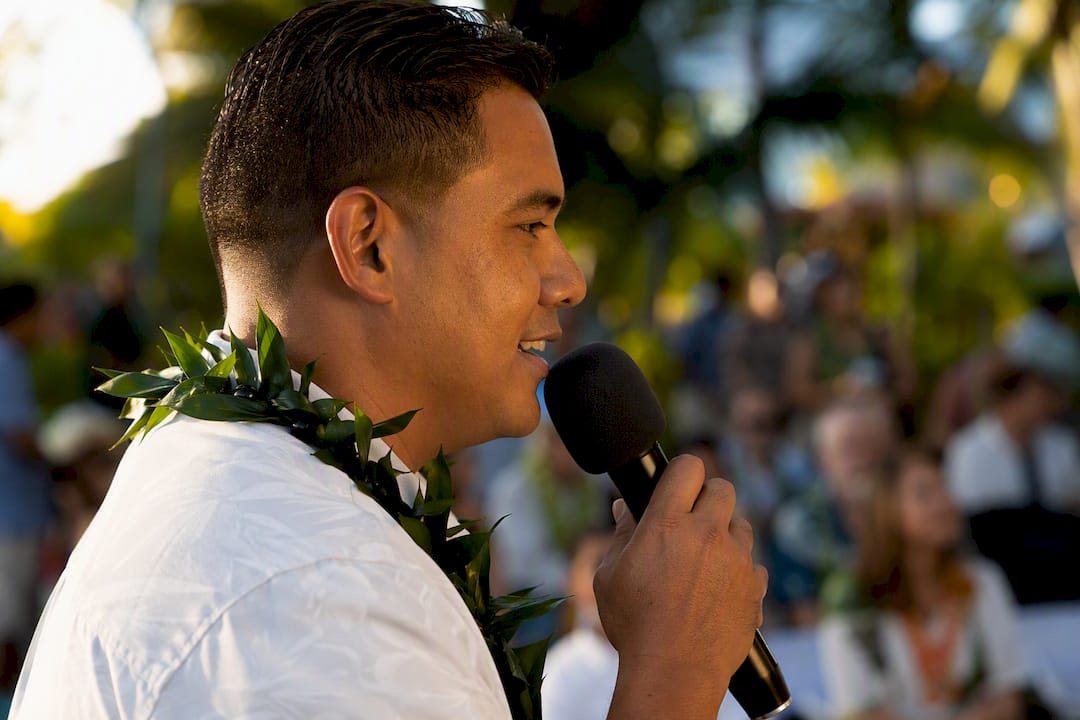
Pronounce every Hawaiian letter: five vowels and eight consonants, with no silent letters anywhere in the word. Watch for the ʻokina (glottal stop) and kahakō (long vowel mark), since both can change a name’s meaning entirely. Learn the W rule ([w] or [v] depending on what surrounds it), then practice with real audio from sources like the National Park Service or GoHawaii. At Terrifficsentertainment, we hear these names announced at Oahu events every weekend, and getting them right changes the whole feel of a celebration.
TL;DR:
Correct pronunciation of W in Hawaiian varies depending on the surrounding vowels, sounding like [w] after O or U, and closer to [v] after E or I.
Both the ʻokina and kahakō are essential phonemic marks that can change a word’s meaning and must be used accurately.
Practice involves listening to native speakers, breaking names into syllables, and mimicking slowly before recording and comparing.
Common Hawaiian names are built on consistent vowels and nearly identical consonants to English, with attention needed mainly for diphthongs and accent marks.
Accurate pronunciation demonstrates respect, enhances the event’s cultural authenticity, and shows genuine care for the names and heritage involved.
Table of Contents
What Makes Hawaiian Name Pronunciation Different From English?
Hawaiian uses just 13 letters total: five vowels and eight consonants. That’s a smaller toolkit than English, but here’s the catch. Every single letter gets pronounced. No silent E, no swallowed syllables, no shortcuts.
The five vowels each have one consistent sound, which honestly makes Hawaiian easier than English once it clicks:
A sounds like “ah” (as in father)
E sounds like “eh” (as in bed)
I sounds like “ee” (as in see)
O sounds like “oh” (as in toe)
U sounds like “oo” (as in moon)
Vowels can also stretch into long versions, which we’ll cover in the next section. As for consonants, H, K, L, M, N, and P behave almost exactly like their English counterparts, so you already know how to say most of a Hawaiian name before you even start. The NPS pronunciation guide confirms this consistency across place names throughout the islands, and GoHawaii’s language guide backs it up with audio you can listen to directly. The one letter that trips people up constantly is W, and we’ll get to that trap shortly.
What Are the ʻOkina and Kahakō, and Why Do They Matter?
The ʻokina is a glottal stop, written as a backward apostrophe (ʻ). You already make this sound naturally. Say “uh-oh” out loud and notice the tiny catch in your throat between the two syllables. That catch is the ʻokina.
The kahakō is a macron, a small line over a vowel, and it simply means “hold this sound longer.” Skip either mark and you’re not just mispronouncing a word, you might be saying a completely different one.
Kai (sea) versus kaʻi (to lead or string together)
Pau (finished) versus paʻu (soot, or a type of skirt depending on context)
Ke versus kē (the kahakō lengthens the vowel and shifts meaning)
According to GoHawaii, both marks are phonemic, meaning they’re treated as separate sounds, not decorative accents. If you want to confirm you’re hearing them correctly, archival recordings from native speakers remain the gold standard. The Kaniʻāina audio repository hosted by Ulukau lets you hear real speakers place these sounds naturally, which is far more useful than reading a phonetic chart alone.
Why Does W Sound Different in Some Hawaiian Words?
The letter W is the biggest curveball for English speakers. After an O or U, it usually sounds like [w] (think “Waikiki”). After an E or I, it often shifts toward [v] (think “Hawaiʻi,” which many speakers say closer to “Havaiʻi”). This distribution shows up consistently in the IPA pronunciation key for Hawaiian, though dialect and personal preference cause some variation island to island.
Stress in Hawaiian tends to fall on the second to last syllable, and breaking a name into its syllables before you attempt the whole word saves you from mangling it. Watch for diphthongs too, like “ai” (sounds like “eye”) and “au” (sounds like “ow”).
Don’t rush through vowel pairs. Say each one.
Don’t guess at W. Check the surrounding vowels first.
Do break long names into syllable chunks before speaking them aloud.
How Do You Practice and Verify Hawaiian Name Pronunciation?
Getting Hawaiian name pronunciation right isn’t about memorizing rules in isolation. It’s a physical skill, and it takes repetition. Here’s the routine we recommend to anyone hosting or emceeing an event on Oahu:
Listen first. Find the name spoken aloud before you attempt it yourself.
Mark the ʻokina and kahakō. Write the name out with both symbols visible so you don’t forget them mid-sentence.
Break it into syllables. Slow the word down into its smallest pieces.
Mimic slowly. Say it at half speed, matching the recording as closely as you can.
Record yourself. Play it back immediately, while the native version is still fresh in your ear.
Compare and repeat. Listen side by side until the two versions match.
For listening practice, the NPS park pages cover place names tied to specific parks, GoHawaii’s guide offers broader everyday audio, and Kaniʻāina gives you archival native-speaker recordings for deeper verification. If you’re hosting or emceeing, the guide to the role of an emcee at a wedding makes a good point worth repeating here: always confirm pronunciation directly with the person before introducing them publicly.
Pro Tip: When introducing someone by name at an event, say the name slowly once during rehearsal, then say it again at normal speed right before you go live. That second pass locks it in and keeps you from stumbling in front of a crowd.
How Do You Pronounce Common Hawaiian Names?
Here are real examples you’ll run into constantly at Oahu weddings, graduations, and community events, broken into syllables so you can practice each one.
Kealani (Keh.ah.lah.nee), meaning heavenly glow. Check GoHawaii’s audio guide for the vowel rhythm.
Kaimana (Kai.mah.nah), meaning diamond or power of the sea. The “ai” is a diphthong, not two separate sounds.
Leilani (Lay.lah.nee), meaning heavenly lei or child of chiefs.
Keanu (Keh.ah.noo), meaning cool breeze.
Kīlauea (Kee.lau.eh.ah), with a kahakō over the I. Verify the stretch on NPS’s park pronunciation page, since it’s tied directly to Hawaiʻi Volcanoes National Park.
Haleakalā (Hah.leh.ah.kah.LAH), meaning house of the sun, with the kahakō landing on the final A.
Lāhainā (LAH.high.NAH), with kahakō marks on both the first and last syllables.
Oʻahu (Oh.ah.hoo), where the ʻokina between O and A is essential. Skip it and you’ll say something noticeably different.
For any of these, Kaniʻāina’s archive remains your most reliable check against a native speaker’s actual voice.
Why Correct Hawaiian Pronunciation Matters at Your Event
We’ve set up entertainment across Oahu long enough to notice something simple: when a name gets said right, the room feels it. A correctly pronounced name during a graduation announcement or a wedding toast tells the honoree they were seen, not just processed through a script.
Cultural advocates describe accurate pronunciation as a form of stewardship, since names often carry genealogy and meaning that go back generations, as Ka Wai Ola points out. You don’t need to be a linguist to honor that. You just need to practice, use the audio resources above, and ask the person directly if you’re unsure. Nobody’s ever been offended by a genuine “How do you say your name? I want to get it right.”
— Terriffics
Where to Go for Hawaiian Pronunciation Help
NPS park pronunciation pages: best for place names tied to Hawaiʻi’s parks
GoHawaii’s language guide: best for everyday audio and orthography
Kaniʻāina archive: best for verifying against native-speaker recordings
Wikipedia’s IPA key: best for technical phonetic detail
If you’re planning an Oahu wedding, graduation, or corporate event and want announcements, introductions, or a slideshow handled by a team that already knows how to say these names correctly, Terrifficsentertainment’s photobooth and event services pair naturally with a DJ setup that respects the details. We build packages around getting the small things right, name pronunciation included, because that’s what makes an event feel personal instead of generic.
Sources
Recommended
Comments