
_edited.png)

Oahu Micro Wedding Sound: Book the Right Gear 3–6 Months Ahead

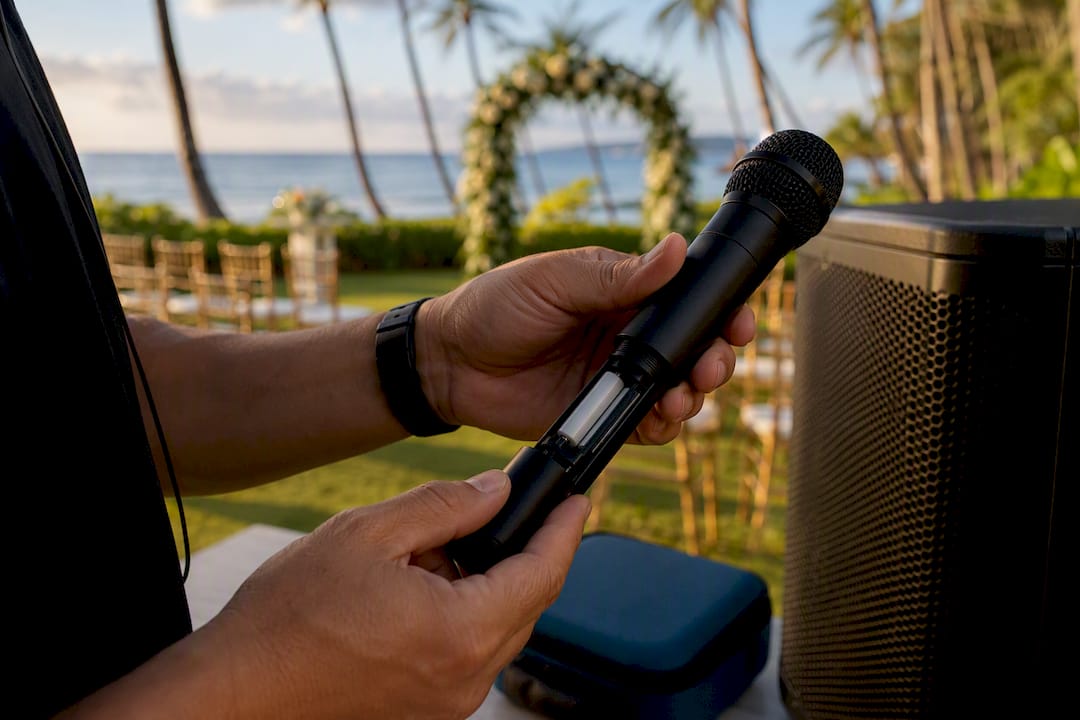
Micro weddings work beautifully across Oahu, and the right audio setup depends on your venue: beach ceremonies call for a compact battery-powered PA with lavalier mics or live ukulele, while small receptions do better with a powered PA or a local DJ package. Book a local audio pro early. A local audio pro knows the permit rules, the wind patterns, and the load-in quirks that trip up out-of-town rental companies.
TL;DR:
Most beach ceremonies are limited to 25 guests by permit rules, with many vendors recommending closer to 15 for better crowd management and photos.
Public beaches require permits and hold strict noise and guest cap enforcement, making early permit planning essential to avoid violations.
Battery-powered PA systems with lavalier mics are ideal for outdoor ceremonies, while small powered speakers suit indoor receptions and offer better sound control.
Book local audio professionals at least three to six months in advance, especially during peak season, to ensure compliance and proper gear tailored to your site.
Weather conditions like wind and humidity are often underestimated, so choose weather-rated equipment and have contingency plans for sudden rain or strong trade winds.
Table of Contents
What Counts as a Micro Wedding in Oahu?
A micro wedding generally runs from just the couple up to about 25 guests, and that upper number is not arbitrary. Oahu’s public beaches commonly cap ceremony gatherings at 25 people under state and county permit rules, and many beach wedding packages recommend staying closer to 15 for better photos and easier crowd flow. Fewer guests also mean simpler sound, since you’re not fighting to project over a bigger group.
Venue type changes your audio options more than guest count does. WedHawaii describes micro weddings as scaled-down versions of a traditional wedding, and that scaling shows up differently depending on where you hold it:
Public beaches and parks: No on-site power, sand and salt spray to manage, and strict permit limits on setup size.
Private estates and gardens: Venues like Waiahole Nursery & Garden Center publish clear capacity and amenity details, often including on-site power and designated vendor load-in zones.
Hotels and resorts: Built-in AV infrastructure, covered spaces, and staff familiar with vendor coordination.
Private gardens with in-house production: Some properties, including The Private Garden Aloha Ke Akua, coordinate live music and vendor recommendations directly.
Pick a site with covered areas or nearby power access, and your sound plan gets a lot less complicated.
Permits, Noise Rules, and Logistics That Affect Your Sound
Oahu treats beach ceremonies as a public-space activity, which means permits and guest caps aren’t optional paperwork, they’re enforced. Here’s what typically applies:
State or county beach permits usually cap ceremonies at 25 guests, and rangers do check.
Public parks often require a formal reservation, and some ask for proof of liability insurance before you set up any equipment.
Amplified sound near residential areas or other beachgoers can draw noise complaints, so placement and volume matter as much as gear choice.
Many Oahu wedding vendors bundle permit handling and liability insurance directly into their elopement and micro wedding packages.
That last point matters more than couples expect. A vendor who already knows which beaches allow amplified sound, and which ones don’t, saves you from finding out the hard way on your wedding day.
Practical Sound Options for Ceremonies and Small Receptions
Your gear should match your venue, not the other way around. Here’s how the main options stack up for Oahu’s typical micro wedding settings.
Battery-powered portable PA with a Bluetooth speaker. The default choice for beach ceremonies and small garden setups, since there’s no outlet to rely on and permit officers appreciate a compact footprint.
Lavalier mics for the officiant and couple. These clip discreetly to clothing and free everyone’s hands, which matters when you’re also holding flowers or exchanging rings.
Handheld wireless mics for readings or toasts. A rechargeable UHF wireless mic with solid range works well for a reading or a quick speech without needing a full mixer setup.
Small powered speakers with a compact mixer for receptions. This is where you’ll play music and handle toasts, and a subwoofer is a nice add if your reception space is covered and not too breezy.
Acoustic live music as an alternative. A soloist or ukulele player often outperforms amplification for atmosphere, and it sidesteps sound-permit questions entirely.
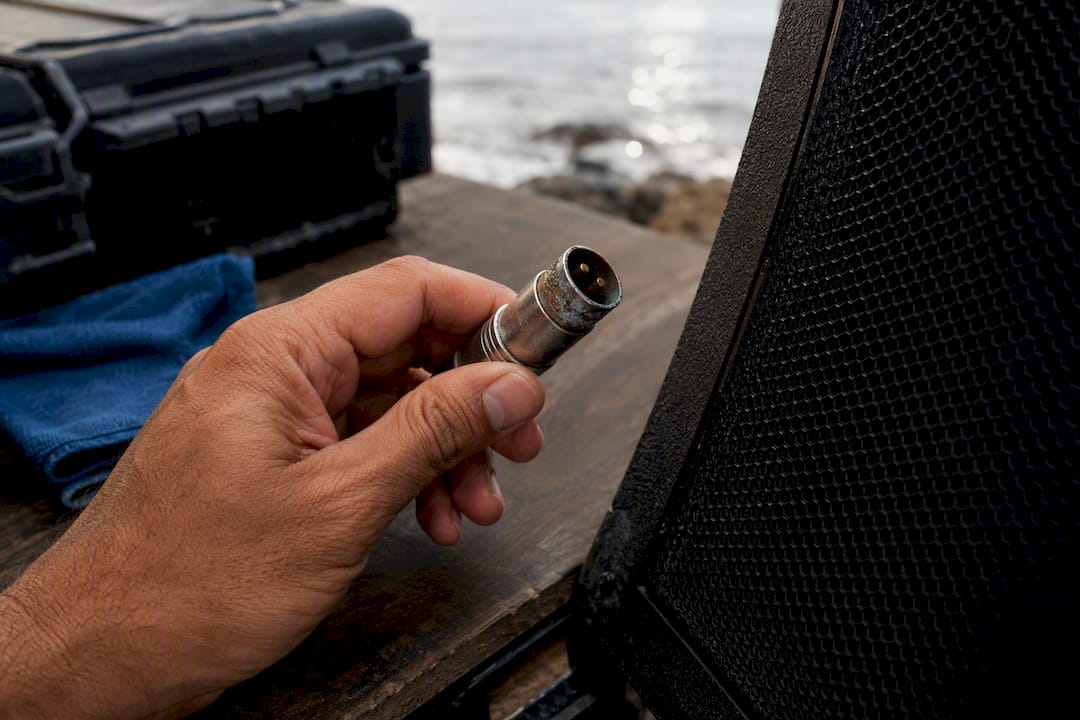
Weather is the variable most couples underestimate. Trade winds pick up fast on open beaches, salt air corrodes exposed connectors over time, and humidity affects battery performance more than people realize.
Pro Tip: Ask whichever provider you hire whether their gear is rated for outdoor, coastal use. Standard indoor PA equipment left near saltwater for even one event can start corroding within months.
Equipment Checklist and Configuration by Setting
Break your audio needs into ceremony and reception, since they call for different gear entirely.
Ceremony essentials:
Lavalier mic for the officiant, plus a second for the couple if you want vows amplified.
One or two compact battery-powered speakers.
Spare batteries, charged and packed separately from the ones in use.
Mic stands or discreet clips, plus wind protection (foam windscreens matter more than people expect).
A simple mixer or input adapter if you’re running more than one mic.
Reception essentials:
A DJ controller or small mixer for music and announcements.
Two active main speakers, with an optional subwoofer for covered spaces.
A wired handheld mic for toasts, since wireless can pick up interference near crowded outlets.
A backup music source (a phone with a downloaded playlist works fine).
Power strips and cable covers to keep walkways clear.
Logistics tie it together. Confirm your load-in window with the venue, plan for a line check before guests arrive, and if nobody on your team has run sound before, book an operator for the day. A rented speaker sitting silent because nobody knew how to pair it isn’t a hypothetical, it happens at real weddings.
Hire a Pro vs. Rent DIY: How to Decide
Renting gear yourself can work for a very small, low-stakes gathering. Hiring a professional makes more sense once permits, timing, or guest comfort are on the line.
Hire a pro when: you need someone to liaise with permit offices, run the equipment during the ceremony, and carry backup gear in case something fails.
Rent DIY when: your group is tiny, your venue has simple power access, and someone confident with basic AV can handle setup and teardown.
Add an hourly operator to a DIY rental if you want lower cost without the day-of stress of running your own sound.
Confirm your rental company understands beach permits before booking, since generic mainland rental outfits often don’t.
Pro Tip: If a vendor can’t answer a direct question about permit compatibility or insurance, treat that as a red flag, not a minor gap. It usually means they haven’t worked an Oahu beach wedding before.
Vendors experienced with local Oahu DJ work tend to know which beaches enforce noise limits strictly and which venues have flexible load-in rules, and that knowledge is hard to replace with a generic rental agreement.
Budget Priorities and Booking Timeline
Costs vary by scope, but three rough bands show up across Oahu micro weddings: basic ceremony amplification sits at the lower end, small DJ packages for a reception fall in the middle, and fuller reception AV with staging runs highest. Treat these as ranges to plan around, not fixed quotes.
Booking order matters more than most couples assume:
Secure your venue and any required beach or park permit first, since everything else depends on that date being locked.
Book your audio provider three to six months out for peak season; off-season or weekday micro weddings sometimes allow closer bookings.
Confirm your officiant and marriage license process early, since some Oahu officiant services can process paperwork same-day, which affects when your vendors need to arrive and do sound checks.
Locking the officiant early also protects your sound check window, since a rushed license process can push back your whole vendor arrival schedule.
Local Audio Tips From Terriffics on Oahu Setups
Beach ceremonies get a compact, battery-friendly rig built around lavalier mics and one or two weatherproofed speakers. Receptions in covered or private venues get more room to add a proper reception speaker pair and a mixer for smoother music transitions.
Sequence your music deliberately: arrival music, processional, a brief pause for vows, recessional, then a clean transition into cocktail hour.
First dance and toast placement should be planned into your reception timeline before the DJ arrives, not decided on the spot.
Build in a reception music plan that matches your venue’s acoustics, since a garden reception and a hotel ballroom need very different volume levels.
Plan load-in with traffic in mind. Getting equipment from Kapolei to a North Shore beach takes longer than a map suggests.
Pro Tip: Always have a one-line weather contingency ready, like moving the ceremony under the nearest covered structure, so a sudden shower doesn’t stall your whole timeline.
Common Audio Mishaps at Oahu Micro Weddings
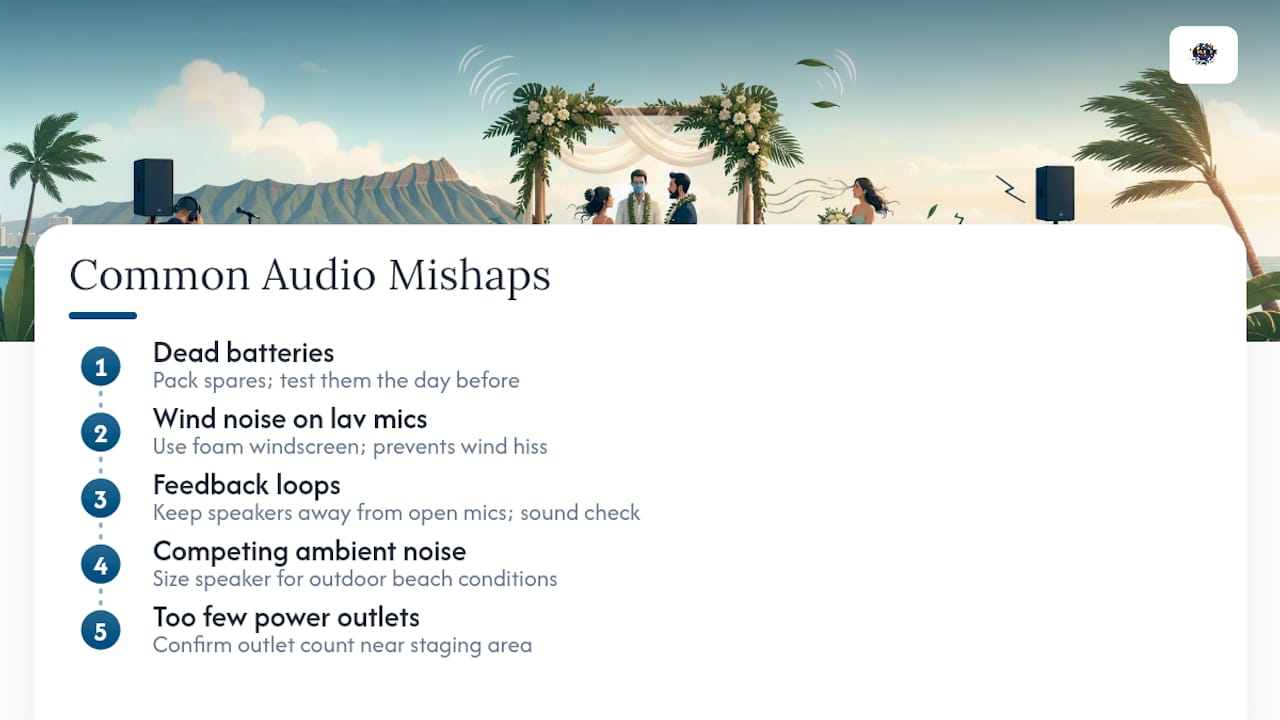
Dead batteries rank as the single most preventable failure. A speaker that ran fine at the rental counter can die halfway through vows if nobody swapped in a fresh battery that morning. Pack spares, and test them the day before, not the morning of.
Wind noise on lavalier mics is the second most common problem, especially on North Shore or windward beaches where trade winds pick up by midday. A foam windscreen costs almost nothing and solves most of it; skipping it means your officiant’s voice gets buried under wind hiss in every photo video guests take.
Feedback loops show up when speakers get placed too close to open mics, which happens more often at small, tight beach ceremonies than people expect. A short sound check before guests arrive catches this before it becomes a live problem during vows.
Underestimating ambient noise is another quiet culprit. Waves, wind, and nearby beachgoers all compete with your ceremony audio, and a speaker sized for an indoor room often cannot cut through outdoor conditions.
Finally, running out of power outlets at a private venue reception catches people off guard. Confirm exactly how many outlets exist near your staging area before you show up with a DJ controller, two speakers, and a phone charger all fighting for the same strip.
Author’s Note: Why Local Experience Matters Here
Island logistics are their own skill set. Knowing which beaches enforce guest caps strictly, which venues allow late load-in, and how trade winds behave by time of day makes the difference between a smooth ceremony and a scramble. If you’re planning a micro wedding on Oahu, talk to a local audio provider early and get a site-specific sound plan before you book anything else.
— Terriffics
Book Your Oahu Micro Wedding Sound With Terriffics
Hiring a local specialist is a practical alternative to piecing together rental gear and a rideshare-app officiant contact list. Such providers know which beaches allow amplified sound, which venues have power access, and how to build a compact ceremony rig or a full reception setup around your specific site.
Our mix-and-match packages cover ceremony amplification, small DJ sets for receptions, and extras like an AI-powered photobooth or karaoke rental for a livelier cocktail hour. Fast setup and teardown mean less time worrying about equipment and more time with your guests, and we can supply an operator so nobody in your wedding party has to run a mixer during the ceremony. If you’re comparing DJ options for your Oahu event, request a site-specific sound plan through our booking page and tell us your venue and guest count. We’ll tell you exactly what gear fits.
Sources
For guest-cap and permit guidance, see Simple Oahu Wedding’s beach packages and Hawaii Wedding Minister’s package inclusions.
FAQ
How Much Does a Micro Wedding Typically Cost in Hawaii?
Costs vary widely by venue and vendor scope, with basic beach ceremony amplification at the lower end, small DJ reception packages in the middle range, and fuller AV or staged receptions running highest. Treat any quote as a range tied to your specific guest count and venue.
Where Can I Find All-Inclusive Micro Wedding Packages in Hawaii?
Many Oahu vendors bundle permit handling, liability insurance, and officiant services directly into elopement and micro wedding packages, and private venues like Waiahole Nursery often include vendor coordination as part of their site fee.
How Many People Are Usually at a Micro Wedding?
Micro weddings typically range from just the couple up to about 25 guests, with beach ceremonies capped near that number by permit rules and many vendors recommending closer to 15 for easier photos and flow.
Can I Get Married the Same Day in Hawaii?
Yes, some Oahu officiant services can process marriage paperwork same-day, but this affects your timeline since it can shift when your audio vendor needs to arrive for a proper sound check.
Do I Need a Permit for Beach Wedding Sound Equipment on Oahu?
Public beach ceremonies generally fall under state or county permit rules that limit guest counts and sometimes equipment size, so confirm your permit covers amplified sound before booking any PA setup.
Recommended
This article was created with the assistance of AI and reviewed for relevance and accuracy by Terriffics Entertainment. Information may change over time, so readers should verify important details with the appropriate local source.
Comments