
_edited.png)

Oahu Outdoor Movies: Start 20–40 Minutes After Sunset

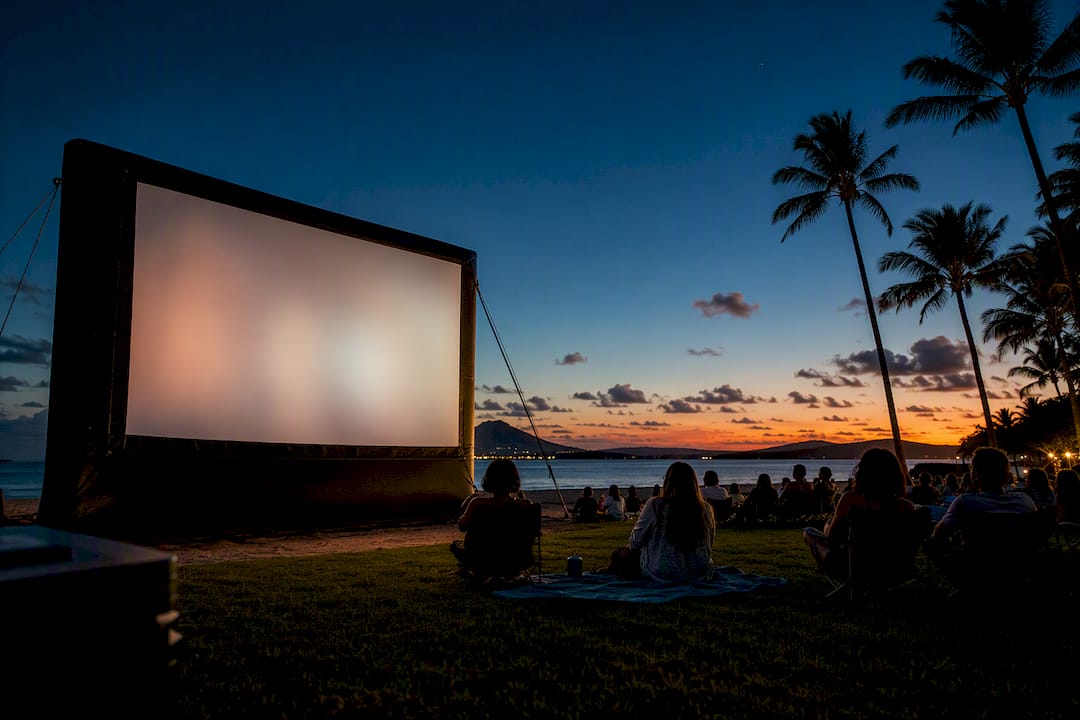
Start the movie once civil twilight ends—generally a bit more than 20 minutes after local sunset—for the sharpest picture at most Oahu locations. You can push start time earlier with a projector rated 3,000 ANSI lumens or higher, or on a heavily overcast evening. Start later if streetlights, security lamps, or a bright full moon are washing out your screen. Either way, run a test projection 30 to 45 minutes before your official start time so you’re not troubleshooting brightness in front of your guests.
TL;DR:
Starting about 20 minutes after sunset is ideal, based on civil twilight data, but a projector with 3,000+ lumens allows for earlier screenings during dusk.
Taller screens and lower projector brightness require later start times to maintain image quality, especially in ambient light conditions.
Weather conditions such as overcast skies can speed up darkness onset, while full moons may necessitate delaying the start to preserve contrast.
Proper site planning includes verifying local sunset and civil twilight times and adjusting for terrain, lighting, and specific venue characteristics.
A detailed schedule with early arrival, thorough testing, and lighting checks ensures a smooth movie start, with all equipment prepared at least 45 minutes prior to screening.
Table of Contents
What Do Sunset and Civil Twilight Mean for Your Oahu Screening?
Civil twilight is the window right after sunset when the sun sits between zero and six degrees below the horizon. The sky still holds light, but it’s dim enough that a projected image starts to hold its contrast. That’s the moment outdoor movie planners point to as the real starting line for a screening, not the sunset time you see on a weather app.
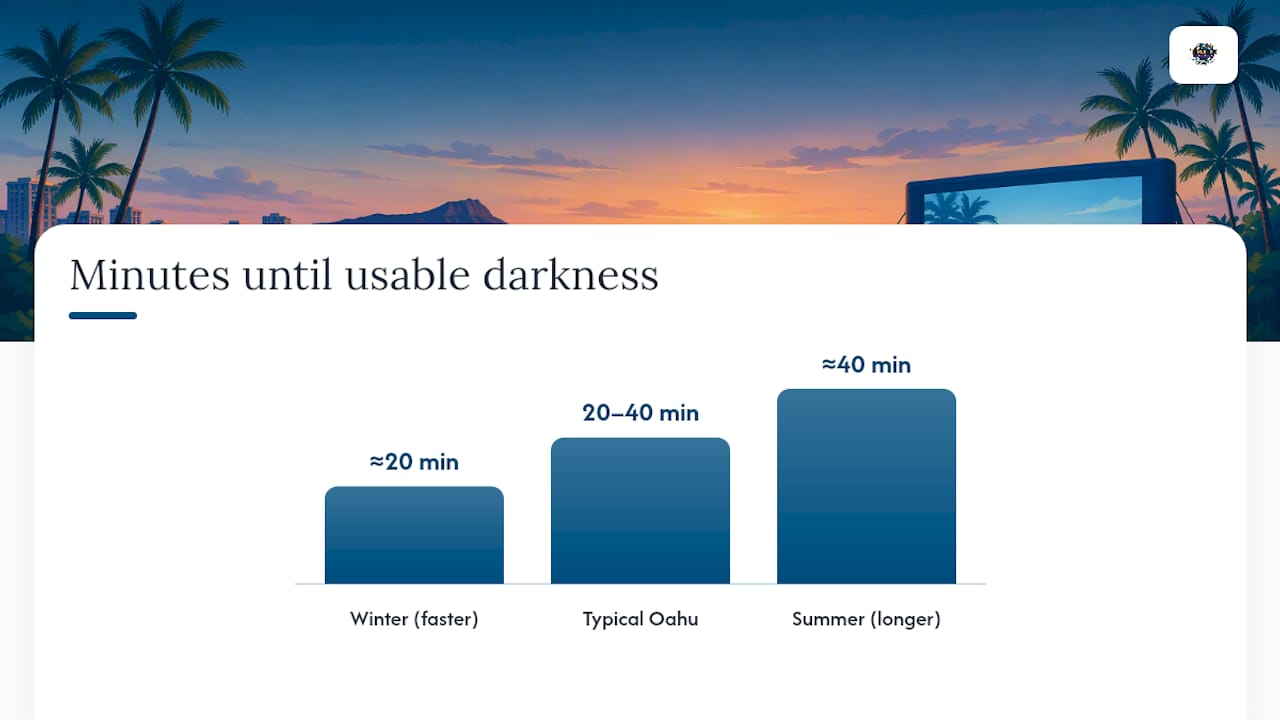
On Oahu, plan for usable darkness to occur 20 to 40 minutes after sunset, depending on the season and your site. Summer evenings stretch that window longer because the sun sets at a shallower angle; winter dusk falls faster. A backyard in Kailua facing an open eastern sky will darken differently than a Kapolei lot boxed in by the Waianae Range.
Here’s how to nail down the exact numbers for your event:
Use Timeanddate.com and search your specific Oahu address for that day’s sunset and civil twilight times.
Check the US Navy’s twilight calculator for a government-grade backup number, especially for larger public events where precision matters.
Recheck the numbers about a week out. Sunset shifts by a few minutes daily, and that adds up over a month of planning.
Factor in your terrain. Homes on the leeward side of a ridge or under tall trees lose light faster than open, flat sites, according to host experience shared by BackyardMovies.net.
A screen tucked against the Koolau foothills can go dark noticeably earlier than one set up on an open field in Ewa. Don’t guess. Pull the number for your address, then adjust from there.
How Do Projector Brightness and Screen Size Affect Your Start Time?
Your equipment sets the floor for how early you can start, more than almost anything else. Projectors under 2,000 ANSI lumens need full darkness to look good, which usually means waiting the full 30 minutes past sunset or longer. Models in the 2,000 to 3,000 lumen range give you some flexibility during late civil twilight. Anything above 3,000 lumens, especially with strong contrast ratios and keystone correction, lets you hold a watchable image against real ambient light, which is a real advantage for early evening events with young kids.
Screen size matters just as much as the projector rating:
Bigger screens spread the same lumens over more surface area, which dims the perceived brightness. A 12-foot screen needs noticeably more punch than an 8 foot one to look equally sharp.
A smaller, higher gain screen is often the smarter call if you need an earlier start time for a school event or young families.
Face the screen away from the setting sun and away from any streetlight or security light that will hit it directly once dusk falls.
Pro Tip: Run a two-minute test clip at your planned start time, then walk the full width of your seating area. If the corners look washed out or dim from the back row, you need a brighter unit or a later start, not louder speakers.
For guidance on choosing the right unit for your crowd size, our breakdown of outdoor movie equipment options for different Oahu events walks through sizing by guest count and site type.
What’s the Ideal Setup Timeline for an Oahu Movie Event?
A smooth screening runs on a schedule, not a hope. Here’s the timeline that keeps a movie start on track:
Arrive 2 to 3 hours before showtime for setup, screen assembly, and cable runs.
Complete AV checks 45 to 60 minutes before start, including a sound check at actual event volume, not a quiet room test.
Run your visibility test 30 to 45 minutes before showtime, once dusk is close enough to judge real contrast.
Open guest seating 15 to 20 minutes before the movie starts so people settle in without delaying the show.
A few logistics decide whether that timeline holds:
Confirm whether you’re running off venue power or a generator; quiet inverter generators matter for residential neighborhoods and HOA-governed communities.
Check permit requirements for county parks, beach parks, and any HOA common areas before you book a date.
Give neighbors a heads-up if you’re hosting a larger backyard or community event with amplified sound after dark.
Our guide to outdoor movie rentals on Oahu covers permit and power questions in more detail for specific venue types.
How Do Weather and Moonlight Change Your Screening Plan?
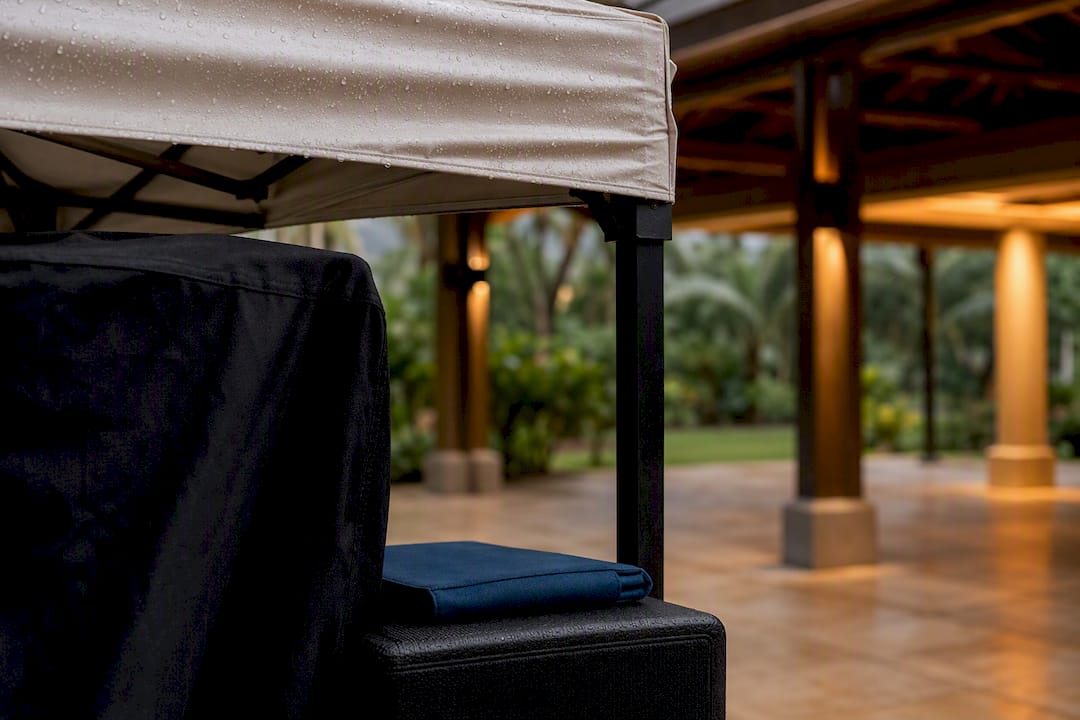
Cloud cover can actually work in your favor. An overcast sky blocks the last of the sun’s glow, so screens sometimes reach usable darkness a few minutes faster than on a clear evening. The tradeoff is rain risk, so always have a covered backup plan for your projector and speakers.
Moon phase deserves more attention than most planners give it. A full moon throws real ambient light across open yards and beach parks, which flattens contrast on lighter scenes even after full darkness sets in. If your film leans on dark or moody visuals, consider pushing your start time back 10 to 15 minutes on full moon nights, or angle the screen to block direct moonlight.
Nearby streetlights, porch lights, and security floodlights are the most common contrast killers on Oahu properties. A few fixes:
Position the screen so its back faces away from any fixed light source.
Use blackout fabric or a portable shield behind the screen if a neighbor’s light can’t be turned off.
Ask hosts or venue staff in advance whether exterior lights can be switched off or aimed elsewhere for the evening.
Pro Tip: Do your test run at the actual expected start time, not earlier in the afternoon. Lighting conditions at 4 p.m. tell you nothing about what your screen looks like at 7:15.
How Terriffics Entertainment Nails Your Oahu Movie Start Time
Getting the timing right takes juggling sunset charts, projector specs, and site quirks, and that’s exactly the kind of planning we handle every week across Oahu. Our Movie Night Package includes fast setup and teardown, so your crew isn’t rushing cables while guests arrive.
Tell us your event date, location, guest count, and available power, and we’ll return a quote along with a setup plan and a specific timing recommendation for your site. We run an on-site test projection before your event so the start time we give you is the one that actually works, not a generic guess pulled from a sunset app. Whether you’re planning a wedding reception screening in Kapolei, a school movie night in Mililani, or a community gathering at a beach park, our local Oahu experience means we’ve already seen how mountain shadows and shoreline light behave at your kind of venue.
Looking to round out the evening? Pair your screening with games built around film trivia from The Things You Missed while guests settle in before showtime, or add a DJ setup from our DJ rental services to keep the pre-show energy going. When you’re ready to lock in your date, browse our full lineup, including the Movie Night Package, and request your quote today.
Planner Perspective: Three Rules Oahu Hosts Rely On
Most timing mistakes come from trusting a generic sunset app instead of checking civil twilight for the actual site. Press play about 30 minutes after sunset, add extra buffer for guest arrival and settling in, and always run your visibility test 30 to 45 minutes before the official start.
Upgrade your projector when your venue fights ambient light you can’t remove, like a lit parking lot or an open beach park. Shift your start time later instead when the light source is temporary, like dusk glow or a bright moon. Either way, confirm venue power and any permit rules well before your event date, not the week of.
— Terriffics
Sources
Check exact sunset and civil twilight times using Timeanddate.com’s calculators for your Oahu address. Review projector brightness guidance from NEWSnet Hawaii’s projector guide before buying or renting gear. Read real host timing experiences at BackyardMovies.net for site-specific lessons.
FAQ
What Time Should an Outdoor Movie Start on Oahu?
Start approximately a little more than 20 minutes after sunset, once civil twilight ends and the sky is dim enough for good contrast. Check the exact sunset time for your specific address, since it shifts by season and by how much terrain blocks the western sky.
Can I Start Earlier With a Brighter Projector?
Yes. A projector rated around 3,000 ANSI lumens or higher can hold a clear image during late dusk, letting you start sooner than a standard consumer unit would allow.
Does a Full Moon Affect Screen Visibility?
Yes, a bright full moon adds ambient light that can flatten contrast, especially on darker scenes. Consider delaying your start by 10 to 15 minutes or shielding the screen from direct moonlight on those nights.
How Much Setup Time Should I Plan for an Outdoor Movie Rental on Oahu?
Plan for crew arrival 2 to 3 hours before showtime, with AV checks finished 45 to 60 minutes before start. Terriffics Entertainment’s Movie Night Package includes fast setup and teardown so your timeline stays on track even for tight venue windows.
Do I Need a Permit for an Outdoor Movie Night on Oahu?
It depends on your venue. County parks and beach parks typically require a permit, while private backyards usually don’t, though HOA communities may have their own notice rules worth checking before you book a date.
Recommended
This article was created with the assistance of AI and reviewed for relevance and accuracy by Terriffics Entertainment. Information may change over time, so readers should verify important details with the appropriate local source.
Comments