
_edited.png)

Oahu Event Coordination Workflow: Your Step-by-Step Guide


A solid Oahu event coordination workflow is a defined sequence of tasks, documents, and communications that turns your celebration vision into a well-executed reality. Whether you are planning an Oahu wedding, a milestone birthday, or a community gathering, the difference between a smooth event and a stressful one comes down to how organized your process is before the day arrives. This guide walks you through every phase of the event coordination process in Hawaii, from building your core documents to managing vendors, meeting local regulations, and using technology to stay on top of every detail. You will leave with a practical system you can apply right away.
What are the essential components of an Oahu event coordination workflow?
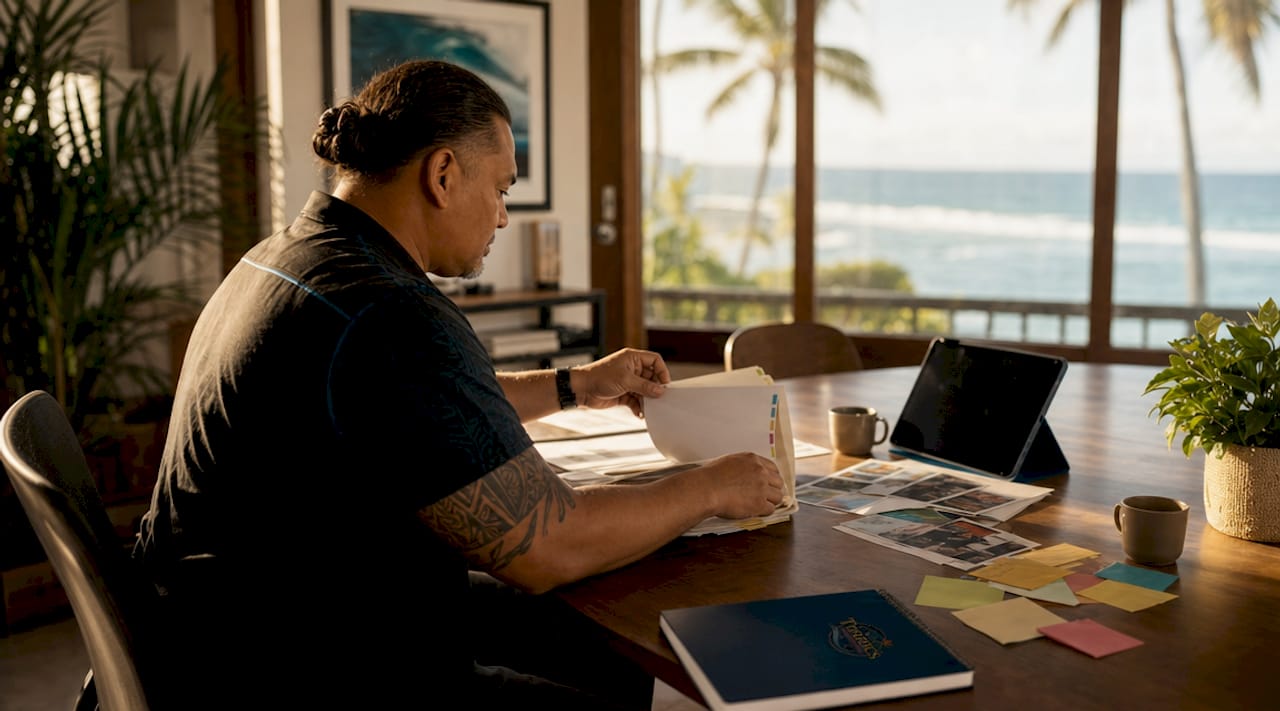
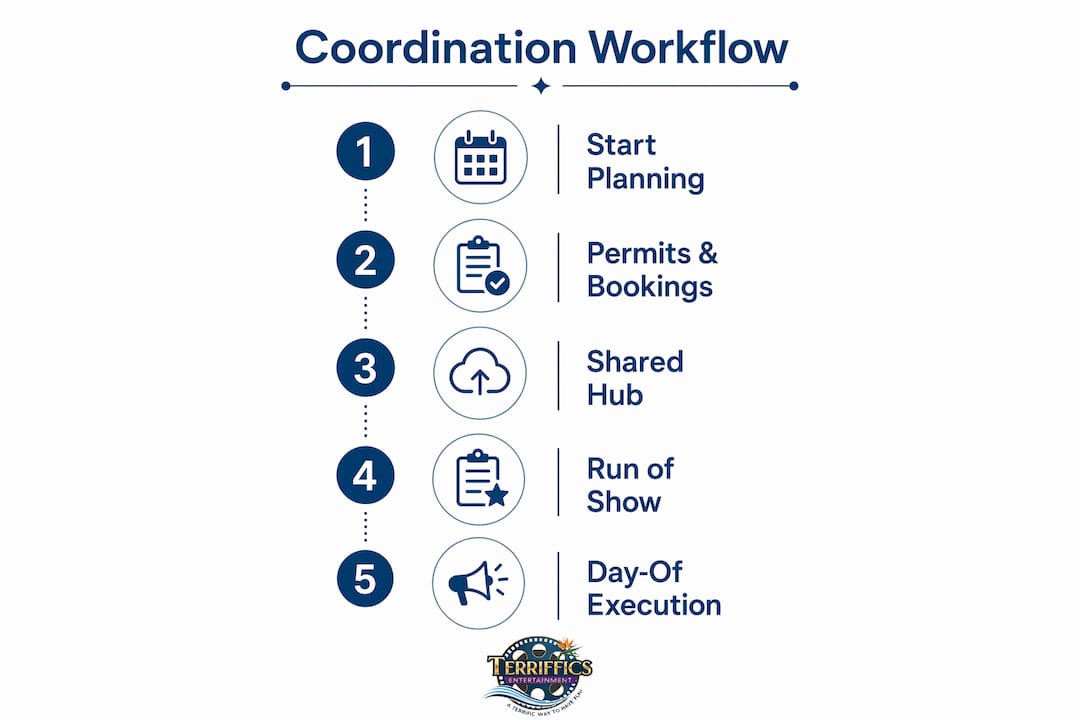
A practical coordination system uses four core documents: a shared digital hub, vendor packets, a run of show, and guest one-pagers. Each one serves a specific purpose, and together they create a single source of truth that reduces confusion for everyone involved.
Here is what each component does and why it matters:
Shared digital hub. This is a Google Drive or Dropbox folder that holds every document related to your event. Version-controlled PDFs prevent the “which version is current?” problem that derails last-minute planning. Every vendor, helper, and family member with a role gets access to the same folder.
Vendor packets. A vendor packet is a one-page brief sent to each vendor confirming their arrival time, setup location, point of contact, and any special instructions. It eliminates back-and-forth texts on the day of the event.
Run of show. This is the minute-by-minute operational script for your event. It lists every cue, who calls it, and who is responsible for each transition. Assigning clear roles such as show caller, vendor liaison, and guest point person prevents the “question loops” that slow everything down.
Guest one-pager. A single printed or digital sheet that answers the most common guest questions: parking, dress code, schedule highlights, and contact info for the day-of point person.
Role assignments. Every task on event day needs an owner. Assign a photo owner, a vendor liaison, and a guest greeter before the event so no one is scrambling to figure out who handles what.
Pro Tip: Create your shared digital hub at least eight weeks before the event and share it with vendors the moment they are booked. Early access means fewer last-minute questions.
The coordination layer beyond a timeline is what allows you, as the host, to actually enjoy your own event. When every role is filled and every document is current, you stop being the person everyone runs to with questions.
How to create and manage a timeline and run-of-show for Oahu events
A master timeline is the backbone of any event planning in Oahu, and it should be drafted as early as possible, ideally 10 to 12 weeks before the event. Here is a step-by-step process for building one that actually works on event day.
Draft the master timeline first. List every major block: guest arrival, ceremony or program start, food service, entertainment sets, speeches, and departure. Account for Oahu-specific timing factors like parking at beach venues or shuttle logistics from resort hotels.
Convert the timeline into a cue-based run of show. A run of show acts as an operational script with hard stops and assigned cues. For each transition, write the exact time, the action, and the name of the person calling the cue. Example: “5:45 PM: DJ fades music, show caller signals officiant to begin ceremony.”
Assign a cue caller. This person is the single voice that moves the event forward. They do not mingle or socialize during the event. Their job is to watch the clock and call each cue. For family-run events, this is often a trusted friend or a hired coordinator.
Build in buffer time. Add five to ten minutes of buffer before any major transition. Oahu outdoor events often run slightly behind due to weather, parking, or vendor setup delays. Buffer time absorbs those gaps without derailing the schedule.
Run a verbal rehearsal. Walk through the run of show with your cue caller and key vendors at least 48 hours before the event. Identify any gaps or conflicts before they become day-of problems.
Plan for last-minute changes. Keep a printed copy of the run of show with blank margins for notes. When something shifts, the cue caller updates the physical copy and communicates changes verbally to affected vendors only.
Pro Tip: Share your event timeline planning document with every vendor at least one week before the event. Vendors who know the full schedule make better decisions independently, which means fewer interruptions for you.
What special considerations apply to Oahu-specific regulations?
Oahu has specific rules that directly affect outdoor events, and ignoring them can shut your celebration down mid-event. Build compliance checks into your workflow from the start, not as an afterthought.
Key local factors to address early:
Noise ordinances and amplified sound permits. Outdoor amplified sound in Honolulu requires permits and must comply with noise ordinances, with music typically stopping by 10 p.m. Waikiki and other zones have specific permit rules, and violations risk permit revocation. Schedule your sound check and plan a hard cutoff time into the run of show.
Park and facility closures. The City of Honolulu closes parks and cancels permits during severe weather. In March 2026, park facilities were shut down due to severe weather, disrupting permitted events across the island. This is a real risk, not a rare one.
Contingency venue planning. Every outdoor event in Oahu needs a backup indoor or covered option. Identify your contingency venue when you book your primary location, not the week before the event.
Permit acquisition timeline. Start the permit process at least six to eight weeks before your event. City permit offices process applications on their own schedule, and delays are common during peak season.
“Experienced planners subscribe to Department of Parks and Recreation updates to decide on refunds or reschedules quickly.” This approach, monitoring city park status in real time, is the difference between a smooth pivot and a panicked last-minute scramble.
Sound compliance must be addressed early in your workflow so you can schedule sound checks, plan cutoff times, and build fallback options into the run of show before vendors are ever booked.
How can technology improve your event coordination process?
Automated tools reduce the manual workload of event planning in Oahu significantly. Integrated automation systems can reduce manual client workflow hours by 40%, freeing up time for the decisions that actually require human judgment.
Here is how the most useful tools compare:
Tool | Best use | Key benefit |
HoneyBook | Client communication and contracts | Automates proposals, contracts, and deposit collection in one place |
Dubsado | Full client workflow management | Handles inquiry capture, scheduling, and follow-up sequences |
Asana | Project and milestone tracking | Keeps vendor tasks and deadlines visible to your whole team |
Google Drive | Shared document hub | Free, accessible, and works for version-controlled PDFs and folders |
QR code galleries | Guest photo sharing | Lets guests upload and access event photos in real time |
HoneyBook and Dubsado are particularly useful for Oahu wedding planning because they automate the back-and-forth that consumes hours of planning time. Asana works well for community events with multiple volunteer coordinators who need to track tasks across weeks. For team collaboration on event workflows, shared folders and centralized digital hubs remain the most reliable foundation regardless of which other tools you use.
Pro Tip: Even if you only use one tool, make it a shared Google Drive folder. A single organized folder with clearly labeled documents does more for day-of coordination than any app used inconsistently.
What does a smooth day-of execution actually look like?
Day-of coordinators begin preparing weeks before the event, with preparation steps typically starting 4 to 6 weeks out and key details finalized 7 to 10 days prior. That same timeline applies whether you have a hired coordinator or a trusted family member filling the role.
Here is the preparation sequence that works for Oahu events:
4 to 6 weeks out: Confirm all vendor contracts, collect certificates of insurance where required, and input final vendor info into your shared hub.
2 weeks out: Send vendor packets to every vendor. Confirm arrival times, setup windows, and parking logistics.
7 to 10 days out: Finalize the run of show, confirm headcount with the venue, and update the seating chart.
72 hours out: Check weather forecasts, confirm park or venue operational status, and activate your contingency plan if needed.
Day of: The cue caller holds the printed run of show. All vendor questions go to the vendor liaison, not the host.
The handoff packet is the physical or digital package your cue caller carries on event day. It includes the vendor list with contact numbers, the payment schedule showing what has been paid and what is due, the seating chart, the run of show, and the contingency plan. When every piece of information is in one place, the cue caller can solve problems without pulling the host away from their guests.
Task | Timing | Owner |
Confirm vendor contracts | 4 to 6 weeks out | Event coordinator or host |
Send vendor packets | 2 weeks out | Event coordinator |
Finalize run of show | 7 to 10 days out | Cue caller and host |
Check venue/park status | 72 hours out | Event coordinator |
Carry handoff packet | Day of | Cue caller |
Staying calm on event day is a skill, not a personality trait. When something goes wrong, the cue caller handles it quietly and communicates only with the people who need to know. The host stays present with their guests.
Key takeaways
A successful Oahu event coordination workflow requires a shared digital hub, a cue-based run of show, local compliance checks, and clearly assigned day-of roles to prevent confusion and keep celebrations on track.
Point | Details |
Build your digital hub early | Create a shared folder at least eight weeks out and give vendors access immediately upon booking. |
Use a cue-based run of show | Assign a single cue caller and write exact times and responsibilities for every transition. |
Address permits before booking vendors | Secure amplified sound permits and confirm park availability before finalizing your vendor list. |
Plan a contingency from day one | Identify a backup venue when you book your primary location, not the week before the event. |
Automate repetitive tasks | Tools like HoneyBook, Dubsado, and Asana reduce manual hours and keep communication consistent. |
What we have learned coordinating events across Oahu
After working with families and individuals across the island, from Kapolei to Kailua, the single biggest mistake we see is treating compliance as a final step. Permit applications, noise ordinance checks, and park availability confirmations belong in week one of your planning, not week ten. The families who run into trouble are almost always the ones who assumed the venue would handle it.
Clear cue calling changes the entire feel of an event day. When one person owns the schedule and every vendor knows who that person is, the host stops being the information desk. We have watched parents actually enjoy their child’s graduation party because they were not the ones fielding vendor questions at the gate.
Weather on Oahu is genuinely unpredictable, especially between November and March. We recommend building your contingency plan in writing, not just in your head. A written backup plan with a named decision-maker and a clear trigger point (for example, “if rain is forecast above 60% at 72 hours, we activate the indoor option”) removes the anxiety of making that call under pressure.
Technology does not need to be complicated to be effective. A well-organized Google Drive folder and a printed run of show outperform a half-used project management app every time. Start simple, stay consistent, and your Oahu event setup will reflect the effort you put in.
— Terriffics
Let Terrifficsentertainment handle the entertainment side
Planning a celebration in Oahu is a lot of work, and the entertainment setup should not add to your stress. At Terrifficsentertainment, we handle DJ sound and lighting, our AI-powered photobooth, karaoke, and outdoor movie setups so you can focus on the coordination details that only you can manage.
We serve the entire island from our Kapolei base, with fast setup and teardown built into every package. Our DJ, photobooth, and karaoke packages are designed to mix and match, so your entertainment fits your event and your budget. Browse our event gallery to see what we have helped create across Oahu, and reach out to get a custom quote for your celebration.
FAQ
What is an Oahu event coordination workflow?
An Oahu event coordination workflow is a structured sequence of tasks, documents, and communications used to plan and execute events on the island. It typically includes a shared digital hub, vendor packets, a run of show, and role assignments to keep everyone aligned.
How far in advance should I start coordinating an Oahu event?
Start your coordination process at least 10 to 12 weeks before the event. Permit applications and vendor bookings should be completed 6 to 8 weeks out, with final details confirmed 7 to 10 days prior.
Do I need a permit for outdoor music at an Oahu event?
Yes. Outdoor amplified sound in Honolulu requires a permit and must comply with noise ordinances, with music typically ending by 10 p.m. Different zones like Waikiki have their own specific rules.
What should a day-of handoff packet include?
A handoff packet should include the vendor contact list, payment schedule, seating chart, run of show, and a written contingency plan. The cue caller carries this packet and uses it to manage the event independently.
How do I plan for weather disruptions at an Oahu outdoor event?
Identify a backup venue when you book your primary location, monitor city park operational status in the days leading up to the event, and write a clear contingency trigger into your coordination plan so decisions can be made quickly.
Recommended
Comments