
_edited.png)

Photobooth trends: Elevate your Oahu event in 2026

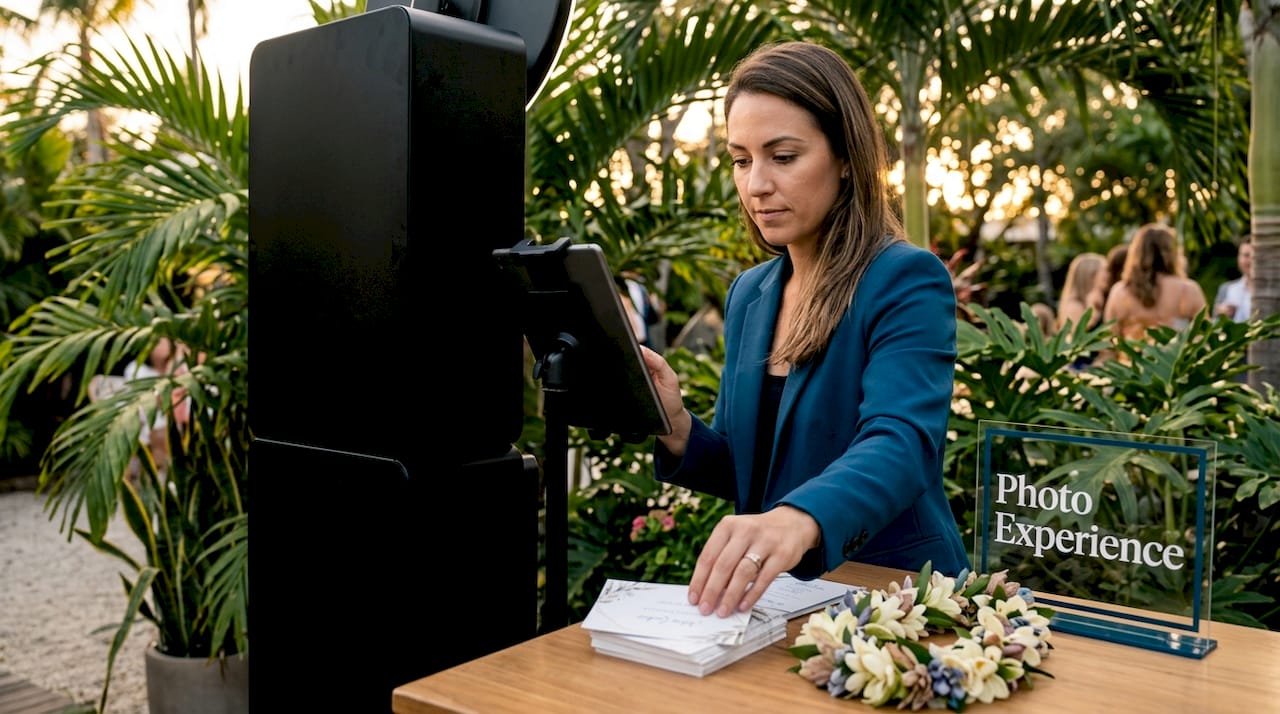
If you think photobooths are still just curtains, silly hats, and strips of printed photos, you are working with a very outdated picture. The reality in 2026 is that photobooth trends have shifted away from props and instant prints toward design-forward experiences with instant digital delivery. For Oahu event planners, that shift opens up a world of options that are smarter, faster, and more impressive than ever before. This guide breaks down what is actually new, which booth types deliver the best guest experiences, and exactly how to avoid the most common planning mistakes on the island.
Table of Contents
Key Takeaways
Point | Details |
Design over props | Today’s photobooths emphasize aesthetics and personalization instead of just fun props. |
Instant digital sharing | The best booths let guests access photos instantly via QR, SMS, or email. |
Practical planning is key | Ensuring reliable WiFi, backup supplies, and detailed intake avoids event problems. |
Not all trends deliver | Evaluate new booth features for real guest value, not just novelty. |
Use analytics data | Photo usage stats can inform smarter planning and better experiences for future events. |
What’s really new in photobooth trends for 2026?
The biggest change in the photobooth world is not a single feature. It is an entire shift in philosophy. Booths no longer need to stand out as a gimmick. Instead, the best setups blend seamlessly into your event’s visual design while still creating memorable moments for every guest.
Design-forward aesthetics are now the baseline. Modern booths use sleek enclosures, clean backdrops, and customizable LED lighting to match your wedding colors, school colors, or corporate branding. Gone are the heavy, boxy setups that clashed with elegant ballroom décor. Today’s rental options look like they belong at a professional photo shoot.
Personalization has gone way beyond a logo overlay. Now you can offer guests custom digital AR filters tied to your event theme, animated GIF templates, and fully branded digital galleries. A graduation party in Honolulu can have a booth that matches the school’s colors and mascot, complete with custom animations. A beach wedding in Kapolei can feature overlays with tropical florals and the couple’s monogram. These details make guests feel like they are part of something carefully designed just for them.
Instant digital sharing is now an expectation, not a bonus. Guests want their photos in their hands, or rather their phones, within seconds. QR codes, SMS delivery, and email galleries are standard features that keep lines moving and excitement high. Physical prints are still available and still popular, but they are no longer the main event.
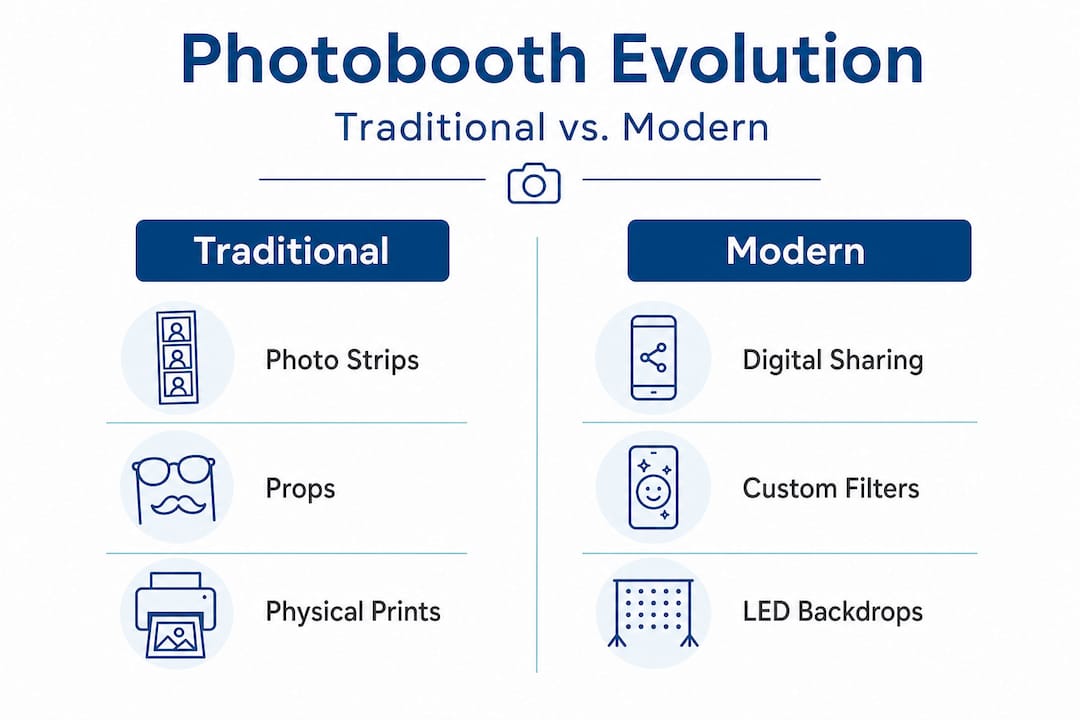
Here is a quick look at how the key features have evolved:
Feature | Traditional (2018 and before) | Modern (2026) |
Delivery method | Printed strips only | QR code, SMS, email, cloud gallery |
Design flexibility | Fixed booth shell | Sleek, brandable enclosures |
Personalization | Basic name/date overlay | AR filters, animated GIFs, full branding |
Guest wait time | 30 to 60 seconds per print | Near-instant digital delivery |
Analytics | None | Session counts, usage data, remote monitoring |
The core takeaway is simple. Interactive photo booths that prioritize digital delivery and custom design consistently outperform old-school setups in guest satisfaction. Understanding this shift helps you make smarter decisions for every event you plan.
Comparing photobooth types: Which experiences deliver the biggest impact?
Knowing the trends is step one. Choosing the right booth format for your specific event is step two. Each format has real pros and cons that affect both the guest experience and your budget.
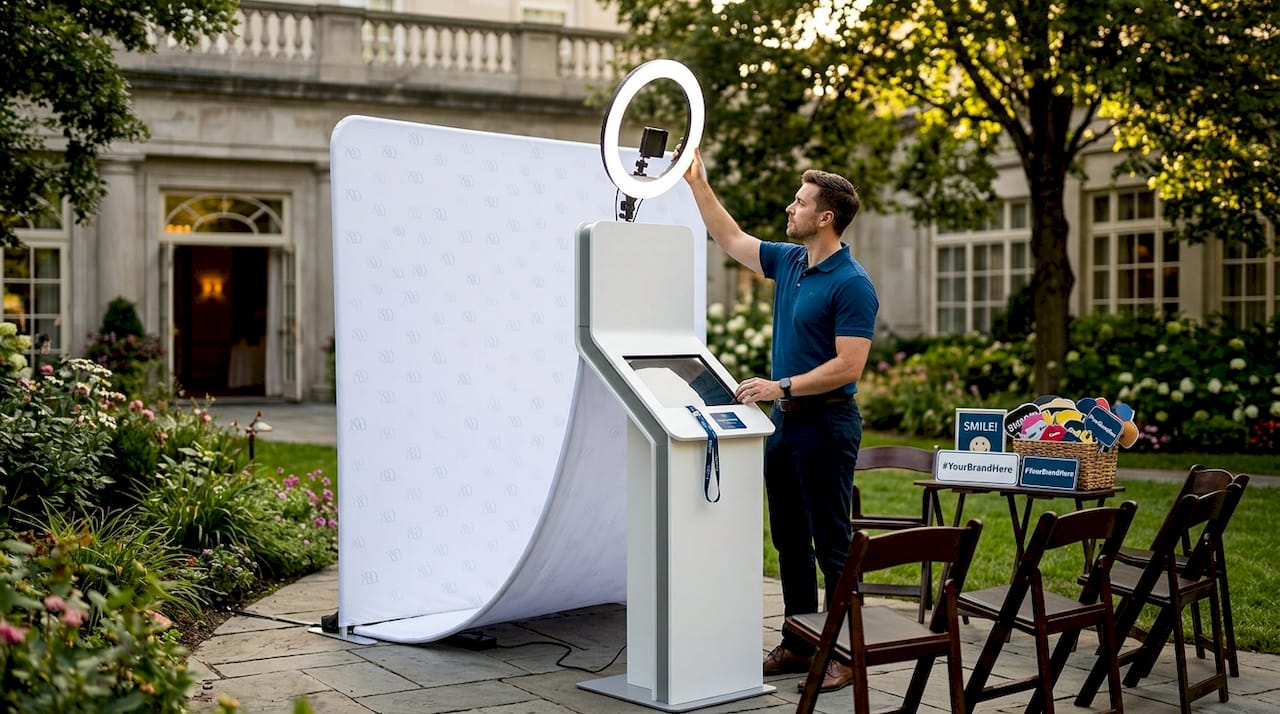
Traditional open-air booths remain the most versatile option. They work for weddings, graduations, birthday parties, corporate events, and school functions. Pricing typically falls in the $800 to $1,500 range for standard markets, making them accessible for most budgets. The guest experience is familiar and comfortable, which actually matters a lot for mixed-age crowds like family reunions or community celebrations.
Spotlight or editorial-style booths are the premium tier. These setups use professional studio lighting and high-resolution cameras to produce photos that look like they came from a fashion magazine. Pricing for these booths runs from $1,200 to $4,000 or more depending on your market. For a luxury wedding or a high-end corporate gala in Honolulu, that investment pays off in photos guests will actually frame and keep.
360-degree video booths had a massive moment of popularity. Guests stand on a platform while a camera arm rotates around them, capturing slow-motion video clips. They are undeniably fun. However, 360 booths may be reaching saturation, and AI-driven photo software is still emerging as the next wave. Translation: the novelty factor is fading, and guests at many events have seen it before.
AI-powered booths are the newest category. They use artificial intelligence to generate custom digital art styles, swap backgrounds, or create stylized portraits from a single snapshot. The results are impressive, but the experience can feel less social and more transactional compared to a well-run open-air booth where groups of friends pile in together.
“The trendiest booth in the room is not always the one guests remember most fondly. The one with the shortest line and the fastest photo delivery usually wins.”
Pro Tip: For a mixed crowd like a graduation party with grandparents and teenagers both attending, a well-designed open-air booth with fast digital sharing beats a cutting-edge 360 setup every time. Comfort and ease of use matter more than novelty for broad audiences.
Understanding the power of photobooths for Oahu events means recognizing that the right choice depends on your guest profile, not just the trendiest option available. And when you add creative photobooth props to even a basic open-air booth, you can create an experience that feels fresh and personalized without the premium price tag.
Making your photobooth efficient: Technology that reduces guest friction
A beautiful booth that runs slowly or breaks down mid-event is worse than no booth at all. The technology powering modern booths has gotten dramatically better, and knowing what to look for protects your event and your reputation as a planner.
Here are the technology features worth prioritizing when evaluating any photobooth rental:
Instant upload and sharing. Every session should automatically push photos to a cloud gallery and send them to guests via QR code or SMS. No waiting, no manual transfers.
Reliable backup systems. Look for booths that save photos locally on the device AND to a cloud backup simultaneously. If the wifi drops, no photos should be lost.
Software automation for the entire workflow. Photobooth software now controls capture, effects, sharing, printing, and backup as one seamless process. Manual steps create bottlenecks and mistakes.
Remote monitoring capability. Your provider should be able to check on the booth’s status, network connection, and print queue from a laptop or phone without physically standing next to the booth.
Automated branded overlays and templates. These should load before the event starts and require zero manual adjustments during the event itself.
The payoff is huge. Fast setups and automated delivery directly reduce guest wait times and create the kind of smooth, enjoyable experience that guests rave about afterward.
Pro Tip: Ask your photobooth provider specifically how they handle a wifi outage at an outdoor venue. If their answer is vague or they say “it shouldn’t happen,” keep looking. A mobile hotspot backup plan should be a standard part of every Oahu outdoor event setup.
When reviewing photobooth rental tips, the common thread among the best providers is always the same. They invest in reliable technology AND in knowing how to troubleshoot it fast.
Practicalities Oahu planners can’t skip: Checklists and contingency prep
Oahu’s event venues range from polished hotel ballrooms to open-air beach pavilions to school courtyards. Each setting comes with its own power, connectivity, and space challenges. Skipping the prep work almost always leads to a stressful event day.
Before the event, lock in these details:
Send a detailed questionnaire to your provider 2 to 4 weeks in advance covering templates, branding assets, load-in times, parking logistics, and day-of contact numbers
Confirm exact booth placement, ensuring enough power outlets within reach and enough floor space for the booth plus a guest line
Verify whether the venue has reliable wifi or whether a mobile hotspot is required
Finalize your printed template design, your digital overlay, and your sharing method well before the event date
Sending intake questionnaires is one of the most effective ways to prevent day-of surprises. It forces every decision to happen in advance, when there is time to fix problems, not during cocktail hour when guests are already lining up.
On setup day, run through this checklist:
Arrive with enough time to complete full setup plus a 30-minute buffer
Take at least 5 to 10 test shots in the actual event lighting, not just with overhead lights on
Print at least one test print to confirm alignment, color accuracy, and paper loading
Test the digital sharing flow end to end by sending a photo to your own phone
Confirm spare printer paper and ink or toner are on-site and accessible
Common event-day pitfalls include venue network issues, printer jams, and last-minute template change requests. Bringing spare printer supplies and a mobile hotspot are not optional extras for Oahu events. They are essentials.
Pro Tip: When scouting Oahu event venues, photograph the electrical outlet locations and ask venue staff about their wifi reliability. Send those details to your photobooth provider so they can arrive prepared, not surprised.
Getting more from your data: Analytics and ongoing event improvements
Here is something most event planners do not think about until after an event goes sideways. Modern photobooths generate real data, and that data can make every future event better.
Real-time analytics dashboards give providers and planners insight into photo sessions, template usage, hardware status, and network performance throughout the event. That is not just a technical feature. It is a practical planning tool.
Here is what you can learn from photobooth analytics:
Which templates guests actually use. If a custom overlay gets skipped repeatedly, it is a signal that the design or placement is off.
Peak usage hours. Knowing when your booth gets the most traffic lets you plan staffing, line management, and even your event timeline better.
Session counts per hour. This helps you evaluate whether one booth is enough or whether a busier event needs two setups.
Remote troubleshooting alerts. If the printer goes offline or the network drops, your provider should know immediately and fix it before a long line forms.
Analytics metric | What it tells you | How to use it |
Sessions per hour | Guest engagement level | Adjust staffing and event timing |
Template usage rate | Design effectiveness | Refine branding for next event |
Share method selected | Guest tech preferences | Optimize digital vs. print options |
Hardware uptime percentage | Equipment reliability | Evaluate provider performance |
Peak hour traffic | When guests are most active | Schedule entertainment overlap |
The planners who use this data consistently improve their events over time. Instead of guessing what worked, they know. That is a real competitive advantage for anyone managing recurring events like annual galas, school fundraisers, or community celebrations across Oahu.
What most trend lists miss: Focus on reliability, not flash
We have seen every photobooth trend cycle through Oahu events over the years. And here is our honest take: the planners who chase the newest, flashiest booth option without nailing down logistics almost always end up with a chaotic event day.
360 booths are peaking in popularity, and AI features are genuinely exciting, but they are still early-stage for real-world events. Trade show buzz and actual guest satisfaction are two very different things. A 360 booth that takes four minutes per group and requires a dedicated attendant creates a backup that frustrates guests and kills the energy in the room.
The best photobooth experience we have ever seen at an Oahu event was a clean, well-lit open-air setup with a custom tropical theme, fast digital delivery, and zero downtime. No one talked about the technology. They talked about how fun it was and how instantly they got their photos. That is the goal.
Guest experience and smooth event flow are not soft goals. They are the actual product. When you book entertainment for a wedding or graduation, your job is not to impress your clients with a buzzword. It is to create a moment their guests will remember. Focus your evaluation on providers who prioritize photobooth rental reliability and guest satisfaction over novelty, and you will consistently deliver better events.
The planners who master logistics, prep their contingencies, and work with experienced local providers will always outperform the ones who just booked the trendiest option they saw on social media.
Bring these photobooth trends to your next Oahu event
You now have a clear picture of what is working in 2026, what to watch out for, and how to plan a photobooth experience that genuinely impresses your guests. The next step is putting it all together for your specific event.
At Terriffics Entertainment, we bring all of this to life right here on Oahu. Our modern photobooth rentals include instant digital delivery, custom branding, and reliable technology built for everything from beach weddings to graduation parties to school fundraisers. We also offer DJ plus photobooth packages that combine sound, lighting, and photo entertainment into one seamless, professionally managed experience. Fast setup, zero guesswork, and the spirit of aloha in everything we do. Reach out today to get a custom quote for your next Oahu event.
Frequently asked questions
What makes a photobooth ‘on trend’ in 2026 for Oahu events?
The biggest trends are minimalist or custom design, instant digital sharing, and smooth guest experiences over just props and printed photos. Mainstream photobooth trends have shifted firmly toward design-forward experiences and instant delivery.
Are 360 booths and AI features worth the extra cost for my event?
360 booths may be reaching saturation and AI options are still new, so focus on guest enjoyment and reliability for best results. 360 booths are peaking, and AI features remain early-stage for real events, meaning novelty does not always translate to better guest experiences.
How do I ensure smooth photobooth operation with Oahu’s venue challenges?
Bring a mobile hotspot, confirm power access, and test all equipment on-site with spare printer supplies and at least one test print before guests arrive. WiFi backup and test prints are non-negotiable in Oahu’s variable venues.
What planning step prevents last-minute photobooth problems?
Send a detailed questionnaire 2 to 4 weeks ahead to lock in preferences, templates, and logistics before event day. Sending intake questionnaires is the single most effective way to prevent day-of surprises and confusion.
Can photobooth usage data improve our next event?
Yes, real-time analytics dashboards show what templates and effects guests actually used, when traffic peaked, and where technical issues occurred. Analytics dashboards track sessions, hardware status, and sharing behavior so you can make smarter decisions for every future event.
Recommended
Comments