
_edited.png)

Event Hosts: Secure U.S. Public Movie Licenses Two Weeks Ahead

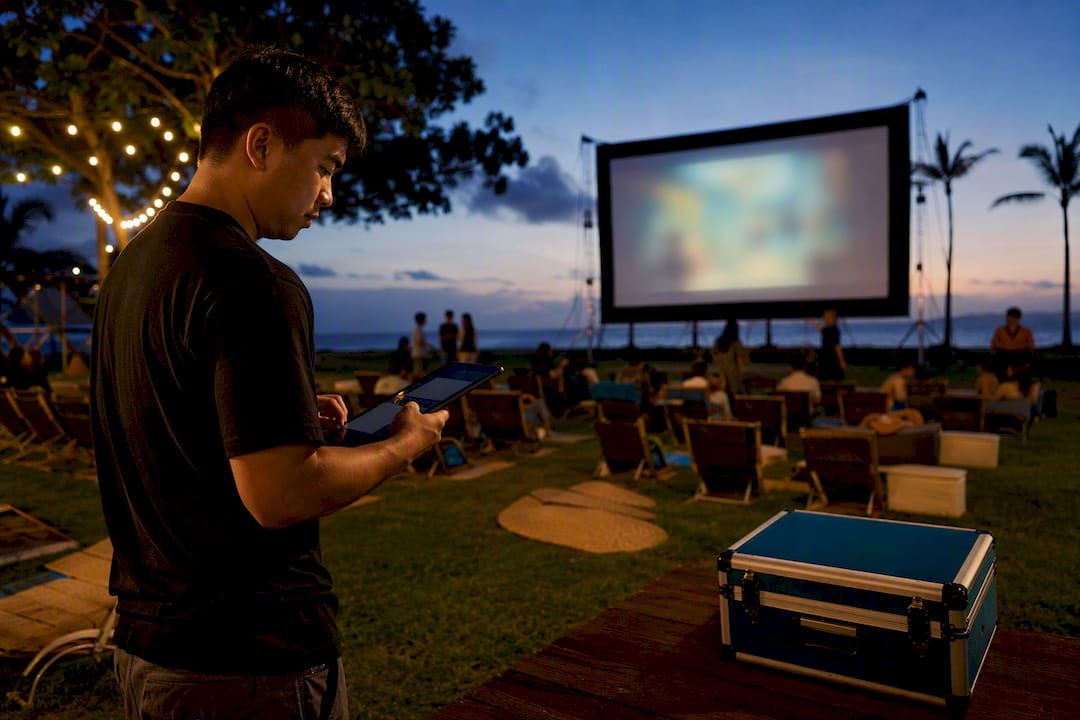
Yes, you need a public performance license to show a movie at most public events in the U.S. Under Title 17 of the Copyright Act, the host organization is legally responsible, not the streaming service or the AV company you hire. A few narrow exceptions exist, like face-to-face teaching and true public domain titles, but they rarely apply to community screenings.
TL;DR:
A public performance license is legally required for almost all movie screenings outside private settings, regardless of technology or admission fees.
The host organization, not the AV provider or streaming service, must obtain and maintain the license, which can cost based on audience size, location, and promotion.
Blanket licenses suit frequent organizers like schools or libraries, while single-event licenses are better for one-time screenings, and early licensing confirms coverage for specific titles.
Exemptions exist only for face-to-face teaching, public domain titles, and narrow fair use cases; most community screenings do not qualify.
Confirming license coverage before promotion and explicitly listing the license holder’s name on event materials are vital steps to avoid fines, damages, or event cancellation.
Table of Contents
Understanding Public Performance Rights Under U.S. Law
The U.S. Copyright Act (Title 17) — Section 106 gives the copyright owner exclusive rights to perform or display their work publicly. Section 101 defines “public” broadly; it covers any place open to the public or where a substantial number of people gather outside a normal family circle. That definition catches a lot more than most organizers expect.
Playing a movie at a company picnic, church function, HOA gathering, or school assembly counts as public. It doesn’t matter whether you charge admission or project the film on a giant outdoor screen versus a living room TV wheeled into a gym.
Any transmission of a film to a group qualifies, including streaming a rented digital copy through a smart TV.
Projecting onto a screen for an outdoor movie night falls under the same display right as a theater showing.
“Public” hinges on the audience and setting, not the technology used to show the film.
Who’s On the Hook If You Skip the License
The host organization secures the license, not the equipment company or whoever owns the Netflix account. A public performance license is separate from a rental fee or a streaming subscription. Standard consumer accounts explicitly exclude public use, so borrowing a friend’s Disney+ login for a school movie night doesn’t fix anything legally.
Skipping the license carries real exposure:
Statutory damages for copyright infringement, which can run into thousands of dollars per title.
Cease-and-desist letters that can force you to cancel an already-promoted event.
Reputational fallout for schools, libraries, or nonprofits caught screening without permission.
Coverage isn’t a one-time purchase, either. Adding a second campus, a new community center, or an expanded season of movie nights usually means updating your license scope. Distributors track venue count and frequency, not just titles.
Blanket vs Single-Event Licenses: Which One You Need
Organizations that screen often need different coverage than a group hosting one event. Two main paths exist, and picking the right one saves money and hassle.
Blanket (site) licenses cover a location or organization for a full year across a large catalog of titles. Schools, libraries, and businesses that run movie nights monthly, or several times a season, typically go this route since it eliminates title-by-title paperwork.
Single-event licenses clear one specific film for one specific screening date. This fits a one-off graduation party, a single community fundraiser, or a title outside your blanket agreement’s catalog.
Match the agent to your venue type. The Motion Picture Licensing Corporation (MPLC) offers an “Umbrella” license built for businesses and multi-location operations that want one agreement covering everything. Movie Licensing USA (Swank) focuses on annual site licensing for public libraries and K through 12 schools, plus single-event options for titles outside that catalog. Criterion Pictures USA handles additional studio and independent titles, often filling gaps the other two agents don’t cover.
Pro Tip: Call the licensing agent before you finalize a date. Some titles are locked to a specific distributor, and confirming coverage early avoids a scramble the week of your event.
Have your venue address, expected audience size, and title list ready when you call. That single step speeds up nearly every licensing conversation.
What Movie Licensing Actually Costs and When to Start
Pricing depends on several moving parts, not a flat per-title rate. The Mount Holyoke College public performance rights guide lists the biggest cost drivers: who holds the rights to the title, expected audience size, whether you charge admission, and if the screening happens indoors or outdoors.
Charging admission or selling concessions can affect the cost, and some agreements ban admission fees outright even when a donation jar is allowed.
Advertising restrictions can also affect pricing. A quiet neighborhood screening costs less to clear than one promoted citywide on flyers and social media.
Outdoor screenings sometimes carry different terms than indoor ones under the same agreement.
Licensing agents and library guides recommend starting the process at least two weeks out, and longer when a title requires direct clearance from a studio or distributor rather than a blanket agent.
When You Might Not Need a License
Three narrow situations sometimes avoid the licensing requirement, though each has real limits worth understanding before you count on one.
Face-to-face teaching exemption (Section 110(1)): This covers instructors showing a film as part of curriculum in a classroom setting. Villanova University’s library guide is clear that it does not extend to recreational or social screenings, even on a school campus.
Public domain titles: Films whose copyright has expired can be screened freely. Confirm status through the Copyright Office’s records rather than assuming a title is public domain because it’s old or free online.
Fair use: This defense applies in narrow, fact-specific situations, usually commentary, criticism, or education, and courts weigh it case by case. Leaning on fair use for a community movie night is a legal risk most organizers shouldn’t take.
Your Step-by-Step Checklist for a Compliant Screening
Work through these steps in order, and you’ll avoid the last-minute panic that trips up most first-time organizers.
Confirm it’s public. Define your audience, venue, promotion plan, and whether you’re charging admission.
Check title coverage. Determine if your organization already holds a blanket license or if you need a single-event clearance for this specific film.
Contact the matching agent. Reach out to MPLC, Swank, or Criterion Pictures USA based on your venue type and title, as covered above.
Get it in writing. Secure written permission that spells out usage restrictions, keep a copy, and file it with your event records.
Lock in logistics. Set your timeline, finalize signage and promotional language, and decide who handles which compliance task.
Pro Tip: List the license holder’s name in your event promotion. It’s a small detail that shows sponsors and venues you’ve done this the right way.
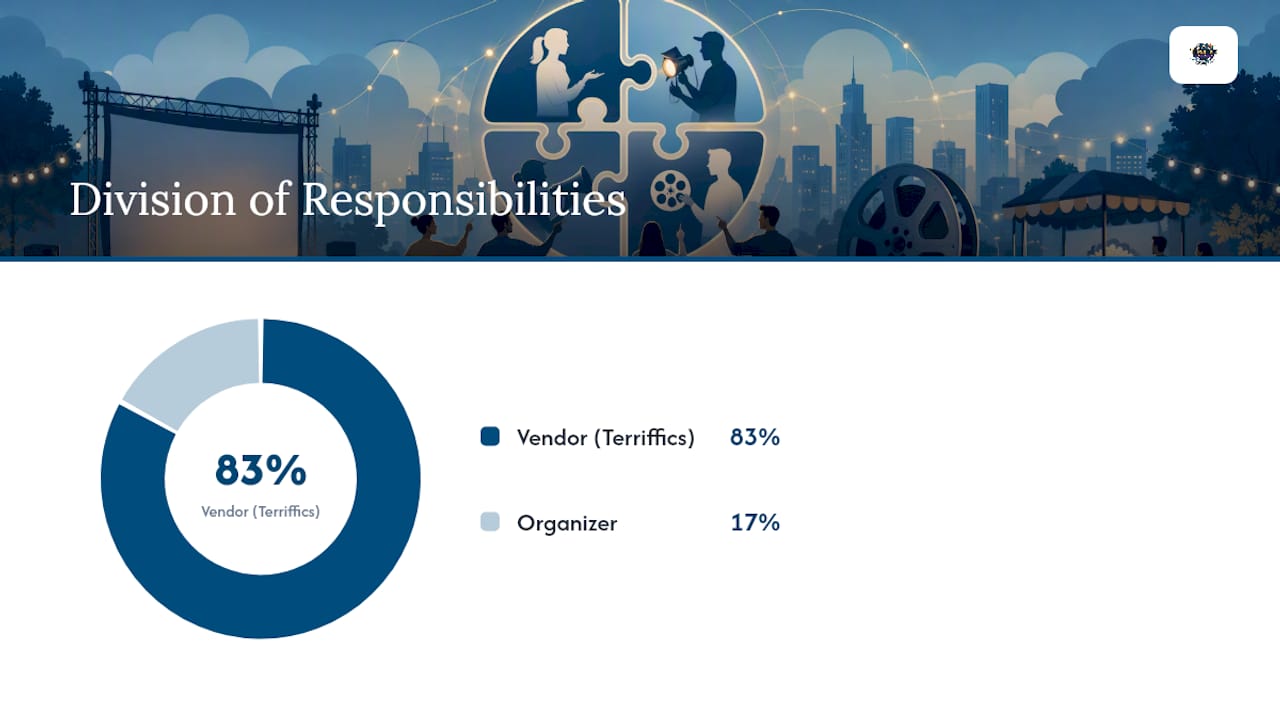
On that last point, know the division of labor. A vendor like Terriffics handles the projector, screen, sound, and setup and teardown. Your organization still needs to secure the public performance rights yourself, in writing, before the event.
Where Organizers Usually Get Tripped Up
The two mistakes we see most often: assuming a home streaming account covers a public crowd, and assuming the AV company handles licensing because they’re handling everything else. Neither is true. Confirm your license before you promote the date, and put the license holder’s name on your event page. Both fixes take five minutes and save you a much worse conversation later.
— Terriffics
Terriffics Handles the Screen, Sound, and Setup, Not the Paperwork
This service provides reliable outdoor movie equipment rental on Oahu without the need to source a projector, screen, and sound system separately. They handle the gear, the setup, the teardown, and the logistics to facilitate movie nights.
What we don’t do is supply your public performance license. That responsibility stays with you as the host, and we’re upfront about it because getting it wrong can cost you more than the rental itself. Where we help beyond equipment: our outdoor movie packages come with practical suggestions for promotional language and timeline planning, so you’re not figuring out signage wording alone. If you’re weighing screen sizes or comparing setups, our breakdown of movie screen rental options is a useful starting point, and if you need help planning food service alongside your screening, this guide to bring your own food venues covers what to consider.
Browse our event gallery to see past setups, then reach out to check available dates and get a quote for your event.
Sources
Recommended
Comments