
_edited.png)

The Role of Event Planners: What They Do and Why It Matters


An event planner is a professional responsible for orchestrating every element of an event, from the first client meeting to the final post-event report. The role of event planners covers logistics, budgets, vendor coordination, creative direction, and live execution. Whether the event is a wedding in Kapolei, a corporate conference in Honolulu, or a graduation party on Oahu, planners serve as the single point of accountability for everything that happens. They use structured tools like run-of-show timelines, onsite checklists, and vendor contracts to keep complex moving parts aligned. Understanding what planners actually do helps you decide when and how to hire one.
What are the core responsibilities of event planners?
Event planner responsibilities span the full lifecycle of an event, covering logistics, vendor management, scheduling, budgeting, and client communication. This is not a single-task job. It is end-to-end orchestration that requires attention to dozens of details at once.
Here is what event planners handle on a typical project:
Client discovery: Meet with clients to understand event goals, guest count, tone, and budget before any planning begins.
Venue sourcing and inspection: Visit and evaluate venues for capacity, layout, accessibility, and technical requirements.
Vendor coordination: Source, negotiate, and contract with caterers, entertainment providers, photographers, florists, and rental companies.
Budget development: Build a detailed budget, track spending, and approve payments throughout the planning cycle.
Timeline creation: Develop a master schedule covering setup, programming, and teardown.
Day-of management: Oversee setup, brief staff, troubleshoot problems, and keep the event on schedule.
Post-event review: Collect feedback, compare results to objectives, and document lessons learned.
The event planning process is an end-to-end lifecycle activity requiring coordination across teams and multiple vendors covering marketing, venue sourcing, branding, and more. That scope explains why planners are hired rather than tasks being split across multiple untrained individuals.
Pro Tip: Ask any planner you consider hiring to show you a sample run-of-show document and a vendor contact sheet. Those two tools reveal how organized their process actually is.
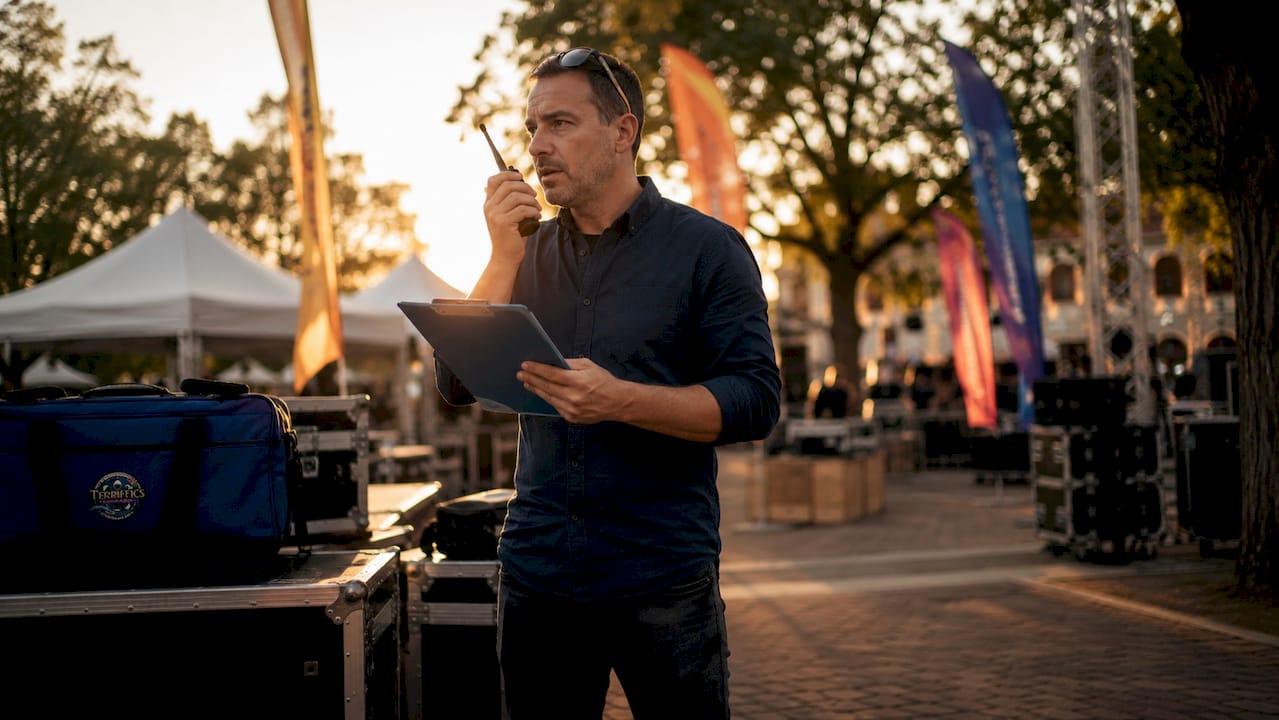
For weddings, a planner coordinates the ceremony venue, reception space, catering, DJ or live band, florist, photographer, and officiant. For a corporate event, the same planner manages AV teams, keynote speakers, sponsors, catering, and branded signage. The tasks of event planners shift by event type, but the core structure stays the same.
How do event planners manage the planning process start to finish?
Professional event planners follow a structured, multi-stage process to keep every decision aligned with client goals. The five-stage planning approach covers discovery, creative development, detailed planning, production, and delivery with post-event review. Each stage produces specific outputs that feed the next.
Here is how each stage works in practice:
Discovery: The planner meets the client, defines event objectives, confirms the budget, and identifies the target audience. This stage sets the strategic foundation for every decision that follows.
Creative development: The planner develops a concept, theme, and experience design. Outputs include mood boards, venue shortlists, and a preliminary vendor list.
Detailed planning: Contracts are signed, timelines are built, and logistics are confirmed. This is where the run-of-show document takes shape.
Production: Final rehearsals happen, vendors are briefed, and the event is executed. The planner manages real-time decisions on the day.
Delivery and review: The event closes, teardown is managed, and a post-event report is produced. Post-event reports measure objective achievement, attendance data, budget comparisons, attendee feedback, and lessons learned, typically within 5–7 working days.
Early clarity on event objectives and realistic budgets create a strategic spine that guides creative and logistical decisions. Planners who skip the discovery stage often find themselves rebuilding the plan mid-production when client expectations do not match what was booked.
The table below shows what each stage produces and why it matters:
Planning Stage | Key Output | Why It Matters |
Discovery | Objectives brief and budget | Aligns all decisions to client goals |
Creative development | Concept deck and vendor shortlist | Prevents scope creep and mismatched themes |
Detailed planning | Signed contracts and run-of-show draft | Locks in commitments and timing |
Production | Live event execution | Converts planning into guest experience |
Delivery and review | Post-event report | Captures data for future improvement |
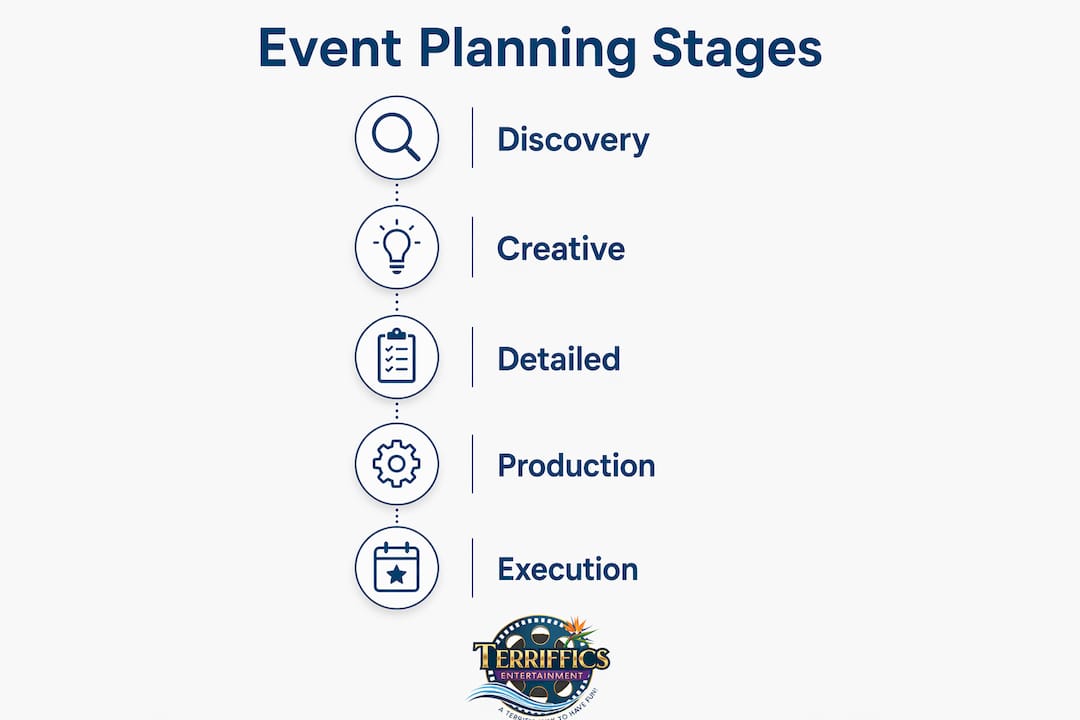
This structured approach is what separates a professional planner from someone who simply books vendors. The event schedule workflow used by experienced teams reflects this same staged thinking.
What operational tools do event planners use on event day?
The run-of-show document is the most important operational tool in a planner’s kit. Run-of-show documents serve as minute-by-minute event timelines assigning ownership and tracking task status with dependencies. Every column matters: start time, end time, owner, dependencies, and live status.
The timeline development schedule follows a clear pattern. Run-of-show drafts begin 3–4 weeks before an event, are refined 2 weeks out, locked 7 days before, and last changes are made during final rehearsals. Locking the timeline a week out prevents the last-minute rewrites that signal deeper planning problems.
Alongside the run-of-show, planners use onsite checklists to verify readiness before guests arrive. Onsite event day checklists verify venue readiness, staff briefing, sponsor setup, safety protocols, and access before doors open, starting 24 hours in advance. Using both tools together prevents the gap between what is scheduled and what is actually ready.
Key best practices for event day operations include:
Lock the run-of-show one week out. Changes after that point require sign-off from the lead planner only.
Assign a single execution lead. Successful multi-vendor events have one person who is the sole authority for real-time decisions and escalation. Multiple people giving instructions to vendors creates conflicts.
Use a shared digital document. Cloud-based run-of-show files let all vendors see live updates without version confusion.
Start checklist verification 24 hours early. Catching a missing item the day before is manageable. Catching it 30 minutes before doors open is not.
Pro Tip: Treat the run-of-show as a single source of truth. If a vendor has a different version than the planner, that is a red flag. Version control is not optional on complex events.
Tool | When Used | Primary Function |
Run-of-show document | 3–4 weeks out through event day | Minute-by-minute timeline with ownership |
Onsite checklist | 24 hours before doors open | Readiness verification across all touchpoints |
Vendor contact sheet | Throughout planning and event day | Centralized communication for all parties |
Post-event survey | Within 24 hours after event | Captures fresh attendee feedback |
The DJ event checklist used by entertainment teams on Oahu reflects this same operational discipline, covering sound checks, lighting cues, and timing confirmations before the first guest walks in.
Why is hiring a professional event planner worth it?
Hiring a professional planner is a direct investment in reducing risk and improving the guest experience. The benefits go well beyond saving time.
Vendor contract negotiation by planners aims to control costs while ensuring quality, reliability, and contract flexibility. Contracts define price, payment terms, and deliverables, which are the primary tools for managing commercial risk. A planner who negotiates dozens of contracts per year gets better terms than a first-time client negotiating alone.
The value of hiring a planner shows up in several concrete ways:
Cost control: Planners catch budget overruns early and renegotiate when vendors miss deliverables.
Vendor accountability: Written contracts with clear terms give planners leverage when something goes wrong.
Logistics management: Coordinating 8 to 12 vendors for a single event requires a system. Planners have one. Most clients do not.
Strategic alignment: Planners keep the event connected to its original objectives, whether that is celebrating a milestone, building team culture, or impressing clients.
Guest experience: When operations run smoothly behind the scenes, guests feel it. They just do not know why.
The importance of event planning becomes most visible when something goes wrong. A planner who has managed 50 events has seen most problems before and knows how to fix them fast. A first-time organizer is solving problems for the first time under pressure.
For organizations running corporate events, the stakes are higher. A poorly executed event reflects on the brand. For individuals planning weddings or milestone celebrations, the stakes are personal. Either way, a professional planner protects the outcome.
Key takeaways
The role of event planners is to manage every logistical, financial, and creative element of an event from discovery through post-event review, using structured tools and vendor coordination to deliver reliable results.
Point | Details |
End-to-end responsibility | Planners own logistics, budgets, vendors, and execution across all event stages. |
Structured five-stage process | Discovery through post-event review keeps every decision aligned with client goals. |
Run-of-show as command tool | Lock the timeline one week out and assign one execution lead to prevent day-of conflicts. |
Vendor negotiation reduces risk | Contracts define price, terms, and deliverables, giving planners leverage when issues arise. |
Post-event reporting closes the loop | Surveys sent within 24 hours and reports delivered within 5–7 days capture actionable data. |
What we have learned running events across oahu
After working alongside event planners at weddings, graduations, corporate gatherings, and community events across Oahu, one thing stands out clearly: the planners who deliver the best results are the ones who treat their run-of-show as a living document and their vendor relationships as long-term partnerships.
The conventional wisdom says event planning is about creativity. That is true, but only partly. The real work is operational. A beautiful concept falls apart without a locked timeline, a single decision-maker on event day, and vendors who know exactly what is expected of them before they arrive on site.
We have also seen what happens when post-event reporting is treated as an afterthought. The insights that come from attendee feedback and budget comparisons are genuinely useful for planning the next event better. Planners who build reporting workflows early, including getting surveys out within 24 hours, consistently produce better results over time. The data compounds.
One more thing worth saying directly: technology has changed what good planning looks like. Cloud-based run-of-show tools, shared vendor contact sheets, and real-time communication apps have replaced paper binders and phone trees. Planners who use these tools run tighter events. The ones who do not are working harder for worse outcomes.
If you are hiring a planner, ask about their tools. If they cannot describe their run-of-show process clearly, keep looking.
— Terriffics
How Terrifficsentertainment supports your event team
Planning a great event means having the right entertainment partner in your corner. Terrifficsentertainment works directly with event planners and clients across Oahu to deliver DJ sound and lighting, AI-powered photobooths, karaoke, and outdoor movie setups that fit any event type or timeline.
Our fast setup and teardown process is built to work within any run-of-show schedule. We coordinate directly with your planner or venue contact so nothing falls through the cracks. Whether you are planning a wedding in Kapolei, a graduation party in Honolulu, or a corporate event anywhere on the island, we bring professional entertainment that your guests will remember. Browse our event gallery to see what your celebration could look like, then reach out to build your custom package.
FAQ
What does an event planner actually do?
An event planner manages logistics, vendors, budgets, timelines, and client communication from the first planning meeting through post-event review. Core duties include venue sourcing, contract negotiation, run-of-show creation, and day-of execution management.
How many stages does the event planning process have?
The professional event planning process follows five stages: discovery, creative development, detailed planning, production, and delivery with post-event review. Each stage produces specific outputs that feed directly into the next.
What is a run-of-show document?
A run-of-show is a minute-by-minute event timeline that assigns ownership, tracks task dependencies, and shows live status for every scheduled activity. Planners lock the timeline one week before the event to prevent last-minute disruptions.
When should i hire an event planner?
Hire a planner as early as possible, ideally 3–6 months before the event for large functions. Early engagement gives the planner time to negotiate better vendor contracts, secure preferred venues, and build a realistic budget before costs escalate.
What skills does a professional event planner need?
Strong event planners combine project management, budget oversight, vendor negotiation, and real-time problem-solving. Communication skills are equally critical because planners coordinate clients, vendors, venues, and staff simultaneously throughout the entire planning cycle.
Recommended
Comments