
_edited.png)

Venue Setup Steps Oahu: Your Event Planning Guide

Updated: Sep 10
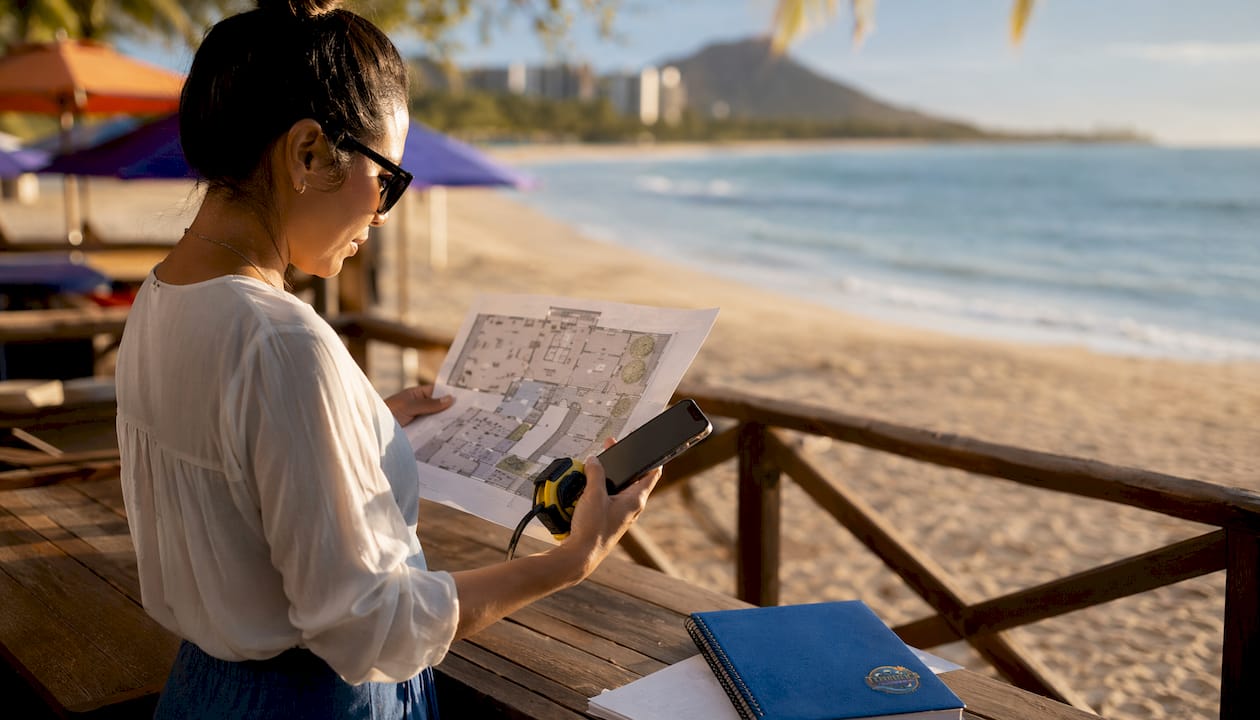
Venue setup in Oahu is defined as the structured process of preparing an event space through coordinated access planning, vendor sequencing, and on-site logistics tailored to the island’s climate and permit requirements. The venue setup steps Oahu families and couples follow differ from mainland planning because island logistics add real constraints: limited loading access, tropical humidity, and the need to work with the Department of Planning and Permitting for outdoor events. Get these steps right, and your wedding, graduation, or birthday celebration runs smoothly from the first vendor arrival to the final teardown. Skip them, and you risk delays, vendor conflicts, and a stressed-out event day.
What are the essential venue setup steps for Oahu events?
Early preparation is the single biggest factor separating smooth Oahu events from chaotic ones. Planners should begin load-in planning 6–8 weeks in advance for complex events. That window gives you time to resolve permit issues, confirm vendor schedules, and identify access problems before they become day-of emergencies.
A venue walkthrough, ideally two weeks before your event, is non-negotiable. Walk every access point: loading docks, service elevators, stairwells, and parking areas. Note door clearances and elevator weight limits, because load-in sequencing must account for access limitations unique to island venues. Oahu properties, especially beachfront estates and hotel ballrooms, often have narrow service corridors that catch vendors off guard.
During the walkthrough, confirm these items with venue management:
Permit requirements from the Department of Planning and Permitting for outdoor setups or amplified sound
Certificate of insurance requirements for each vendor
Venue-specific restrictions on open flames, confetti, or staking into grass
Power outlet locations and total amperage available
HVAC controls and who has access to adjust them
Designated vendor parking and load-in windows
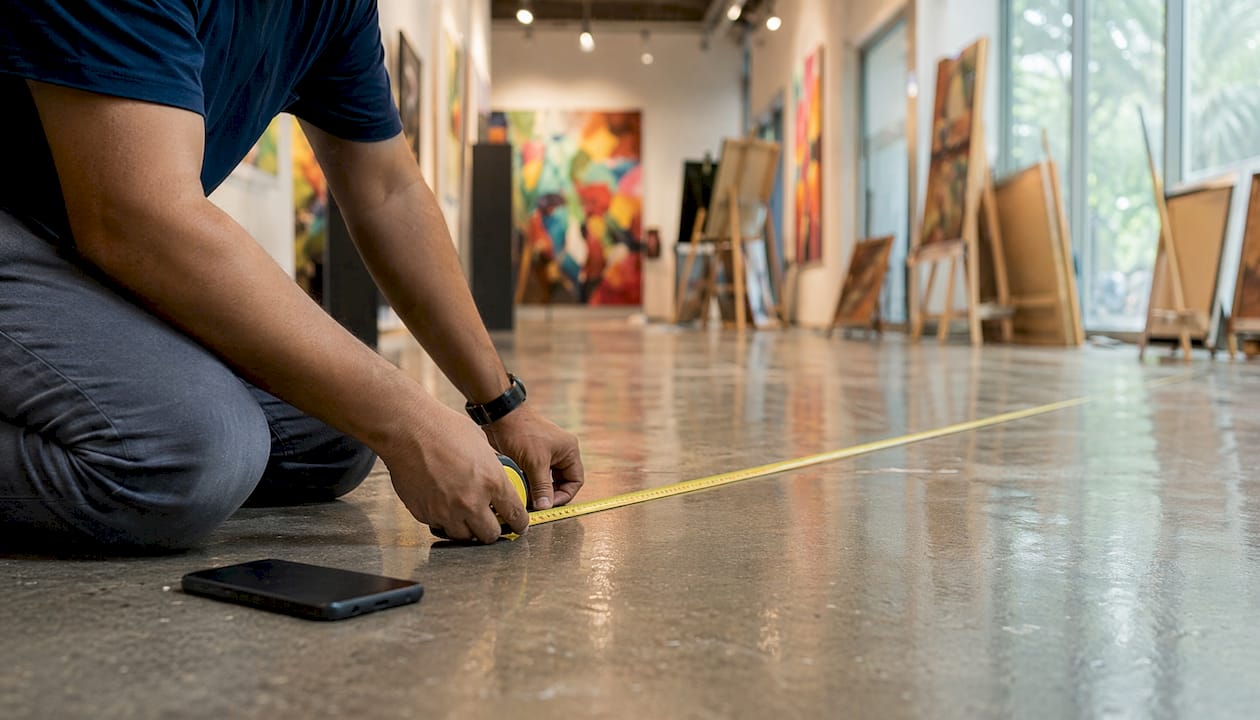
Pro Tip: Bring a measuring tape and a phone camera to your walkthrough. Photograph every access point, outlet cluster, and restricted area. Share those photos with every vendor so no one shows up surprised.
After the walkthrough, build a written venue setup guide Oahu vendors can reference independently. Include the floor plan, access instructions, contact names, and the full event timeline. Written documentation prevents the “I didn’t know” conversations that derail event days. You can also review a family party checklist to make sure nothing gets missed during prep.
How do you organize vendor arrivals for smooth event load-in?
Vendor sequencing is the backbone of a well-run setup. The rule is simple: sequence by dependency, not by convenience or alphabetical order. Communicating the vendor schedule in writing is critical to avoiding confusion on event day.
Build your arrival schedule in this order:
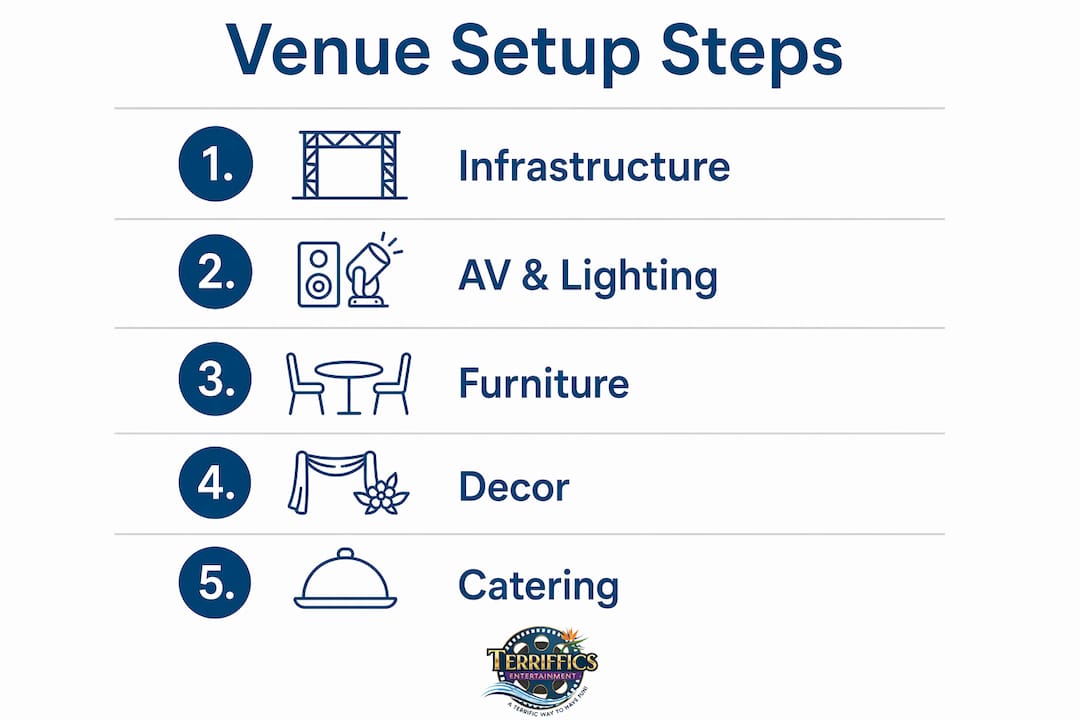
Venue crew and infrastructure. Staging, pipe and drape, and any structural elements go in first. Nothing else can be placed until the bones of the room are set.
Lighting and AV. Rigging, truss, speakers, and screens require open floor space. Bring these teams in before furniture blocks access.
Furniture and rentals. Tables, chairs, and lounge pieces fill the room once lighting positions are locked.
Decor and florals. Centerpieces, linens, and installations go on top of furniture. Florists need tables in place before they can work.
Catering equipment. Kitchen staging, chafing dishes, and bar setups come last because they require a clean, organized room around them.
Entertainment setup. DJ equipment, photobooths, and karaoke systems slot in after furniture and before final decor touches.
Each vendor needs a specific arrival time, not just a window. Send every vendor a written confirmation that includes their arrival time, the name of your on-site contact, the access point they should use, and a parking plan. Vague instructions cause vendors to cluster at the same entrance and block each other.
Build buffer time between each vendor group. Oahu venues, particularly those in Kapolei, Ko Olina, and Kailua, often have shared parking lots or single-lane service roads. A 30-minute buffer between vendor waves prevents traffic jams and gives each team room to work without interruption.
Pro Tip: Assign one person as the load-in point of contact on event day. That person’s only job is to direct vendors to the right spots and solve access problems. Do not let that role fall to the person managing the event timeline.
For a deeper look at how to coordinate entertainment arrivals specifically, the Oahu event coordination workflow guide breaks down the full process step by step.
What are the key venue setup checklist items for Oahu event spaces?
A thorough venue setup checklist for Oahu covers five categories. Each one has local nuances worth knowing.
Venue and infrastructure
Verify the floor plan matches your layout before any furniture arrives. Confirm power outlet capacities with the venue manager, not just the contract. Oahu’s tropical climate means HVAC management is critical. Adjust HVAC settings ahead of guest arrival because temperature rises significantly with 100 or more attendees. A room that feels comfortable at 3:00 PM with no guests becomes hot and humid by 6:00 PM with a full crowd. Set the thermostat 3–5 degrees cooler than your target comfort level before doors open.
Audio-visual and lighting
Test every piece of AV equipment at least two hours before guests arrive. Run through all lighting scenes: cocktail hour, dinner, dancing, and any special moments like a first dance or graduation walk. Have backup cables, adapters, and a spare microphone on site. For detailed guidance on lighting setup specific to Oahu venues, the event lighting setup guide covers positioning and scene programming clearly.
Furniture and decor
Cross-check every rental item against your original order before the rental company leaves. Count chairs, tables, and linens. Confirm seating charts match table assignments. Check that decor installations are secured properly, especially for open-air venues where trade winds can knock over lightweight arrangements.
Catering and bar
Walk the kitchen and service areas with the catering lead to verify cold storage, warming equipment, and serving positions. Confirm that dietary meals are labeled clearly and that service staff ratios match your agreement. For outdoor Oahu events, confirm that food stations have shade or covers to protect against direct sun exposure.
Registration and guest services
Set up the check-in table with printed guest lists, name badges, and a clear sign visible from the entrance
Confirm WiFi credentials are posted or available for guests
Place directional signage at every decision point: parking lot entrance, venue entrance, restrooms, and event spaces
Designate a guest services contact who can answer questions without interrupting the event coordinator
How do you handle common setup challenges at Oahu venues?
Every Oahu event faces at least one unexpected challenge. Knowing the most common ones lets you plan around them.
Climate and HVAC. Oahu’s humidity does not forgive poor HVAC planning. Temperature shifts with large guest counts require proactive adjustments well before doors open. Pre-cool the space, and identify who has thermostat access so you can make real-time adjustments without hunting down a venue manager mid-event.
Overlapping venue usage. Many Oahu venues host multiple events on the same day. Staggering load-in and teardown windows helps avoid conflicts when multiple events share a space. Confirm your load-in and teardown windows in writing, and get the schedule for any other events happening that day so you can anticipate shared-space pressure points.
Teardown management. Assign a dedicated teardown lead before the event starts. A separate teardown lead protects the main coordinator from burnout after a long event day. The teardown lead manages vendor departure order, collects rental items, and ensures the venue is returned to its original condition.
Deposit disputes. Document the venue condition with timestamped photos after teardown. Walk the space with a venue contact and note any damages, missing items, or cleaning needs together. This protects your deposit and prevents disagreements weeks later.
“Successful event planning on Oahu relies heavily on local knowledge, trusted vendor relationships, and an understanding of the island’s hospitality culture. Planners who invest in those relationships before event day consistently avoid the last-minute issues that derail celebrations.”
Share a written run sheet with every team member before the event starts. The run sheet should include the full timeline, vendor contact numbers, venue contact information, and contingency notes for the most likely problems. Written confirmations and shared documentation are the difference between a team that reacts and a team that executes.
Key Takeaways
Venue setup on Oahu succeeds when you sequence vendors by dependency, pre-cool the space for guest arrival, and document every step in writing before and after the event.
Point | Details |
Start planning 6–8 weeks early | Begin load-in planning well in advance to resolve permits and vendor schedules before event day. |
Sequence vendors by dependency | Set infrastructure and AV before furniture, decor, and catering to avoid blocking and delays. |
Pre-cool for Oahu’s climate | Adjust HVAC 3–5 degrees below target comfort before guests arrive to offset body heat. |
Assign a teardown lead | Designate a separate person for breakdown so the main coordinator stays focused on guests. |
Document with timestamped photos | Photograph the venue before and after the event to protect your deposit and avoid disputes. |
What working Oahu events taught me about venue setup
The biggest mistake I see families make is treating the venue walkthrough as optional. They read the contract, trust the floor plan, and show up on event day to find that the “loading dock” is a single door at the end of a narrow hallway. On Oahu, access limitations are real and specific to each property. No floor plan tells you that the service elevator at a particular Ko Olina resort maxes out at 1,500 pounds, or that the beachfront lawn at a North Shore estate has a 10:00 PM sound curfew enforced by the neighborhood association.
Island hospitality is less about aesthetics and more about creating a warm, welcoming atmosphere through trusted local relationships. That insight changed how I approach every event. The vendors who know a venue’s quirks, the venue staff who will quietly adjust the thermostat without being asked, the catering lead who flags a labeling issue before service starts. Those relationships are built before event day, not during it.
My honest advice: over-communicate with every vendor, walk the venue twice if you can, and build more buffer time into your schedule than you think you need. Oahu events are worth the extra planning. The setting is extraordinary, and guests notice when the details are right. They also notice when they are not.
— Terriffics
Terriffics Entertainment makes Oahu event setup easier
Planning a wedding, graduation, or birthday celebration on Oahu is a lot to manage. Terriffics Entertainment, based in Kapolei and serving the entire island, handles the entertainment side so you can focus on the bigger picture.
From AI-powered photo booth rentals that fit neatly into any venue layout to karaoke setups that get every guest involved, Terriffics Entertainment offers fast setup, professional service, and flexible packages built for Oahu events. Every service includes delivery, setup, and teardown so you have one less thing to coordinate. Browse the event gallery to see real setups from Oahu celebrations, and reach out to build a package that fits your venue and your vision.
FAQ
How far in advance should I start venue setup planning for an Oahu event?
Start load-in planning 6–8 weeks before your event for anything complex. Conduct a venue walkthrough at least two weeks out to map access points and confirm permit requirements.
What is the correct order for setting up vendors at an Oahu venue?
Set up infrastructure and staging first, then lighting and AV, then furniture, then decor, and finally catering equipment. Sequence by dependency so each team has the space and conditions they need to work.
How do I handle Oahu’s heat and humidity during event setup?
Pre-cool the venue by setting the HVAC 3–5 degrees below your target comfort level before guests arrive. Body heat from 100 or more attendees raises room temperature quickly, so starting cold is the right move.
Do I need permits for an outdoor event in Oahu?
Outdoor events, especially those with amplified sound or temporary structures, typically require permits from the Department of Planning and Permitting. Confirm requirements with your venue contact and apply well before your event date.
How do I protect my venue deposit after teardown?
Walk the space with a venue contact immediately after teardown and take timestamped photos of every area. Note any damage or cleaning needs together so you have a shared record before you leave the property.
Recommended
Comments