
_edited.png)

72, 48, 24 Hour Weather Backup for Oahu Events: Permit, Vendor Steps

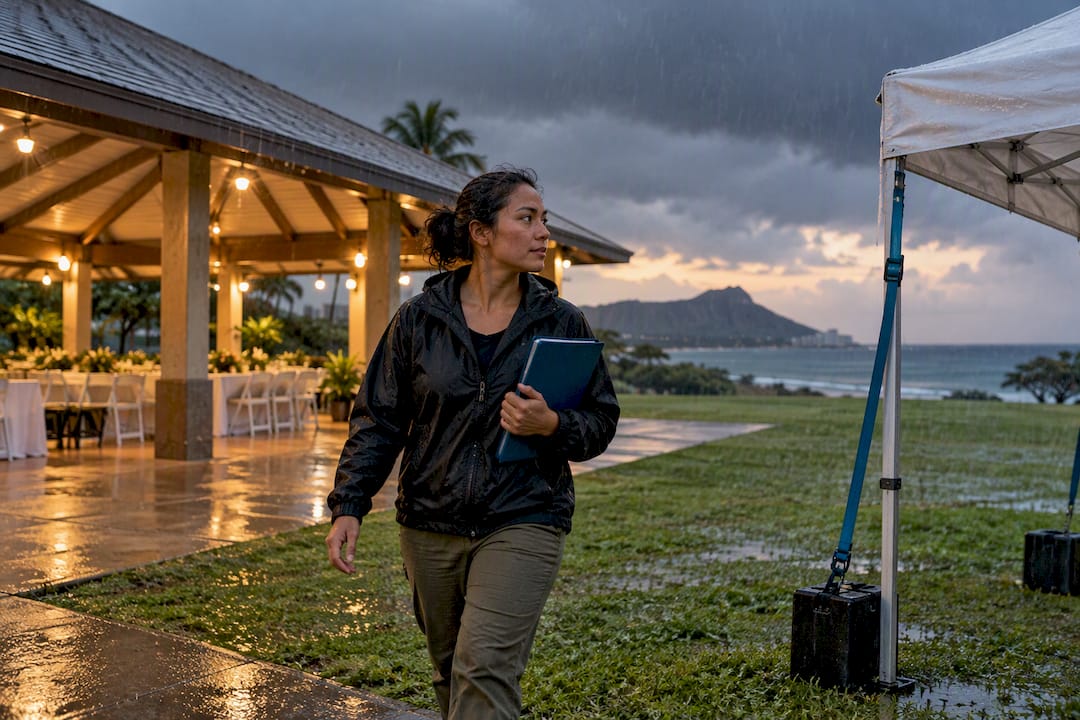
If weather threatens your outdoor event on Oahu, get your gear under cover or inside a permitted tent first, call your entertainment vendor second, and confirm your park permit status third. That order matters. Terriffics Entertainment and Honolulu’s Department of Parks and Recreation both work best when you loop them in early, and the checklist below shows exactly when to make each call.
TL;DR:
Booking your indoor venue immediately after reserving an outdoor space is crucial because larger permits often require 10 weeks’ notice and indoor spaces fill quickly.
Vendors should include detailed weather-related rescheduling and protection clauses in their contracts, specifying wind, rain, and lightning thresholds, with clear refund policies.
Audio and lighting equipment must be moved under cover or into a permitted tent 24 hours before the event, and waterproof and backup power provisions should be confirmed with vendors.
Confirm permit status, park closure notices, and ground saturation 24 hours in advance to prevent last-minute disruptions or safety hazards during weather events.
Coordinating with the Department of Parks and Honolulu Fire Department early and documenting decisions protects against permit issues and ensures quick response if weather conditions worsen.
Table of Contents
Quick Weather Backup Checklist for Oahu Event Hosts
A weather backup plan for your Oahu event only works if you actually run it on a schedule, not the morning something looks wrong on the horizon.
72 hours out: Confirm your park or venue permit is still active, re-confirm your DJ, photobooth, karaoke, or movie vendor’s availability in writing, and put a tent or indoor backup on hold if you haven’t already.
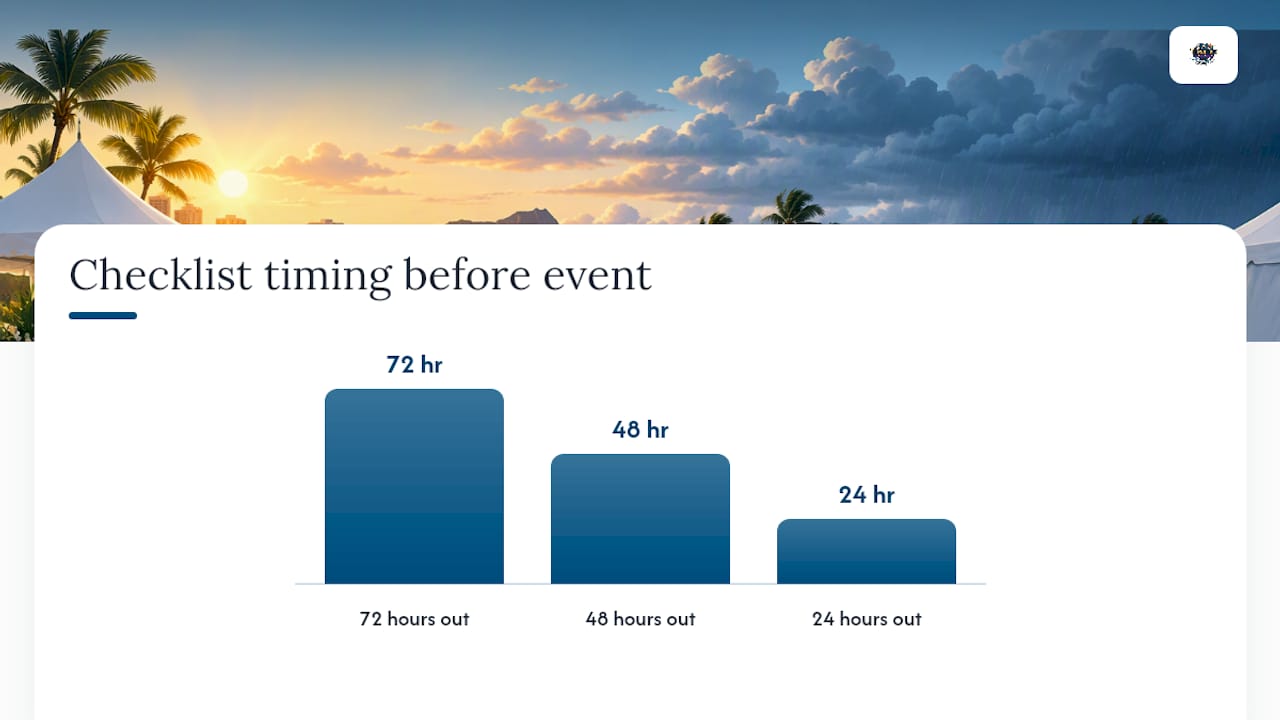
48 hours out: Assign a staffing plan for both scenarios (outdoor and covered), and ask your vendor to confirm they’ve checked forecasts against their own equipment limits.
24 hours out: Move anything sound or lighting related under cover, relocate sensitive electronics away from low ground, and name a teardown lead and a safety lead by name, not by role.
Check ground saturation at your site (standing water is a hard stop for generators and staging)
Watch for a DPR closure notice on your reserved park
Follow any direct instruction from Honolulu Fire Department staff on site
Call off outdoor components only after checking with your vendor’s on-call lead
Pro Tip: Build your 24 hour check into your calendar now, not the week of the event. A five-minute phone call to park staff catches closures that haven’t hit the website yet.
What Permits and Rules Should You Check Before the Event?
Permit timing is where most weather backup plans quietly fall apart. Oahu’s Department of Planning and Permitting offers instant online permits for temporary structures used seven days or less, but larger temporary permits need plot plans and contractor statements filed roughly 10 weeks ahead. Separately, general park facility applications should go in at least three weeks before your date, according to DPR’s own application guidance.
Tents and canopies trigger their own review. Honolulu Fire Department permits are required for places of assembly and for tents above certain size and occupant thresholds, with plan submission and an on-site inspection for larger installs.
Honolulu’s DPR closed several park facilities and suspended permitted camping during the March 2026 Kona Low, and processed refunds for affected permits within about 21 business days,
Key items to confirm before you book anything:
Whether your event size crosses the HFD tent or occupant-load threshold
Whether your permit gives exclusive use, since many park permits don’t
What your park’s specific refund and rescheduling window looks like
Whether your reserved facility has any active storm-related closure notice
How Do You Build Weather Protection Into Vendor Contracts?
Your DJ, photobooth, karaoke, or outdoor movie vendor should carry weather language in the contract itself, not just a verbal promise. Ask for:
A written definition of what counts as “weather” for rescheduling purposes (rain amount, wind speed, lightning)
A reschedule window with no added fee, plus a clear credit or refund policy if the date can’t move
A crew-confirmation deadline (24 to 48 hours out) so you know staffing is locked
Minimum teardown crew size and how much time they need to secure gear safely
On the technical side, ask what protections travel with the equipment. Waterproof covers, raised platforms to keep speakers and mixers off wet ground, battery or generator backups, and GFCI-protected cabling all separate a vendor who’s done this on Oahu before from one who hasn’t. Our event setup process builds these protections in from the start rather than scrambling for them the day of.
Pro Tip: Ask any vendor directly: “What’s your minimum teardown crew for a sudden squall?” A vague answer is a red flag. A specific number is a good sign.
Which Backup Venues and Tents Actually Work on Oahu?
Indoor pivots beat improvised tenting almost every time, so line one up before you need it. School auditoriums, community centers, and recreation rooms are worth checking for occupancy limits, AV hookups, and whether lifeguard or insurance requirements apply if water features are involved. Our guide to Oahu celebration venues covers several options planners overlook.
If tenting is your plan, know the difference:
Pop-up canopies work for short-term, small-group use and typically don’t trigger a permit
Framed or peg tents above HFD’s size thresholds require a permit, plan review, and inspection
Hawaii’s island logistics mean equipment shipping and rigging for larger tents need extra lead time, not last-minute booking
Anchoring matters more here than on the mainland. Professional rigging rated for hurricane-zone wind loads protects both your guests and your park deposit, since damaged turf is one of the fastest ways to lose a cleanup deposit.
How Should You Communicate Weather Changes to Guests and Staff?
Keep your guest-facing message short: “We’re monitoring weather and will confirm by [time] whether we’re moving indoors or rescheduling. Tickets remain valid either way.” That single line prevents most of the confusion.
Internally, follow a fixed escalation order:
Call park staff first for a real-time site condition check
Call your vendor lead second to confirm equipment and crew status
Call your backup venue third to lock the pivot if needed
Document every decision with a timestamp. This protects you with permit offices and insurers if you need to file for a refund or credit later, and it keeps your vendor’s paperwork clean too.
What Safety Checks Matter on Event Day?
Assign clear roles before the event starts: one person watching weather and ground conditions, one running teardown if needed, and one managing guest flow. If HFD staff order a fire watch for your tent or assembly space, that instruction overrides your own schedule immediately.
Keep generators and LPG fuel storage at HFD-required clearance distances from tents and crowds
Route all cabling away from foot traffic and standing water
Restore the site to its original condition before you leave, since special-use permits commonly tie deposit refunds to cleanup and restoration compliance
Photograph the site before and after setup as your own record if a dispute comes up
Terriffics’ Perspective: The Fixes We Actually Use on Oahu
Most weather crises we see aren’t dramatic storms. They’re a sudden squall that soaks a speaker cabinet, or a tent permit that got approved late. Our fix is almost always the same: waterproof covers on standby, a teardown crew that can clear a DJ booth in under 10 minutes, and a covered pivot already scouted before the event, not during it.
Flexible mix-and-match packages can help simplify adjustments when changing setups due to weather. Confirm your permit status with DPR within 24 hours of your event. It’s the single step that prevents the most avoidable surprises.
— Terriffics
Let Terriffics Build Your Backup Plan In
Terriffics Entertainment gives Oahu hosts something most vendors don’t: entertainment packages built to pivot fast when weather turns, without renegotiating your whole event. Our DJ, photobooth, karaoke, and outdoor movie setups include waterproof covers and backup power options, and fast setup and teardown helps minimize event disruption if you move indoors.
We coordinate directly with permitting timelines so your backup plan and your vendor plan are never working against each other, and our flexible mix-and-match packages make it simple to add a backup piece of equipment or shift your booking window if the forecast turns. Whether you’re planning a wedding, a school event, or a community gathering, our full lineup of services covers the pieces most likely to need a weather contingency, including DJ rentals built for fast reset. For real-time coordination across multiple vendors on event day, a platform like Jubiliq can help keep your run-of-show on track too. Request a quote today and ask us about adding a weather contingency option to your package.
Sources
FAQ
What Is the First Thing I Should Do If Rain Threatens My Event?
Move sound and lighting equipment under cover or into a permitted tent, then call your vendor and check your park permit status. This sequence protects your gear, your crew’s schedule, and your legal standing with the permit office all at once.
How Far Ahead Should I Book a Backup Venue on Oahu?
Book your indoor pivot as soon as you reserve your outdoor date, since larger temporary permits are recommended about 10 weeks ahead and popular indoor spaces fill fast. Waiting until the week of the event usually leaves only limited options.
Do I Need a Permit for a Small Pop-Up Tent?
Small pop-up canopies used short-term generally don’t trigger a city permit, but anything approaching HFD’s size or occupant-load thresholds does require review and inspection. Check with Honolulu Fire Department before assuming your tent is exempt.
What Happens to My Refund If DPR Closes My Park?
DPR closed several facilities during the March 2026 Kona Low and processed refunds for permitted camping within about 21 business days. Refund timelines vary by permit type, so confirm your specific policy when you book.
Does Terriffics Entertainment Offer Rescheduling for Weather?
Terriffics Entertainment’s flexible mix-and-match packages make it easier to adjust your setup or shift a booking window when weather changes your plans. Current package details and pricing are available on our services page.
Recommended
This article was created with the assistance of AI and reviewed for relevance and accuracy by Terriffics Entertainment. Information may change over time, so readers should verify important details with the appropriate local source.
Comments