
_edited.png)

What Is Sound Rental? Your Event Planning Guide

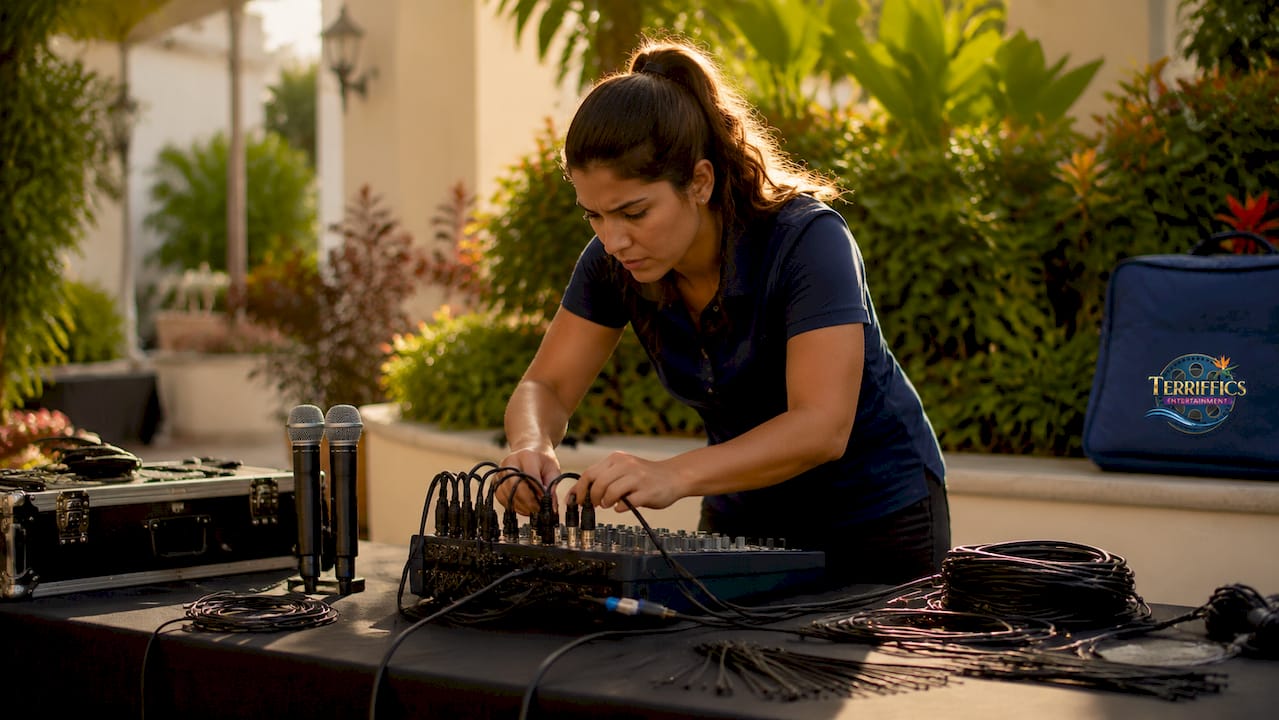
Sound rental is the temporary sourcing of professional audio equipment from a provider so you can deliver clear, powerful sound at your event without buying or storing gear. For a birthday party in a backyard, a wedding reception at a Oahu venue, or a corporate gathering with hundreds of guests, the right sound system makes every word and every song land the way it should. Terrifficsentertainment has seen firsthand how the difference between a great event and a forgettable one often comes down to audio quality. This guide covers what is sound rental, what equipment you get, what it costs, and how to plan it right.
What is sound rental and what does it include?
Sound rental is defined as the short-term lease of professional audio equipment, including speakers, microphones, mixers, amplifiers, cabling, and related accessories, from a sound reinforcement provider. You pay for the gear for the duration of your event, then return it. You skip the purchase price, the storage hassle, and the maintenance costs entirely.
The industry term for the broader category is “sound reinforcement rental.” Whether you call it sound rental, audio rental, or PA rental, the concept is the same. You get professional-grade gear matched to your event size and format, often with delivery, setup, and teardown included.
Sound rental services cover a wide range of events. Weddings, graduation parties, school events, corporate presentations, community festivals, and backyard celebrations all benefit from rented audio setups. The key advantage is flexibility. You choose the gear that fits your specific event, not a permanent system built for a room you do not own.
What equipment is included in typical sound rental packages?
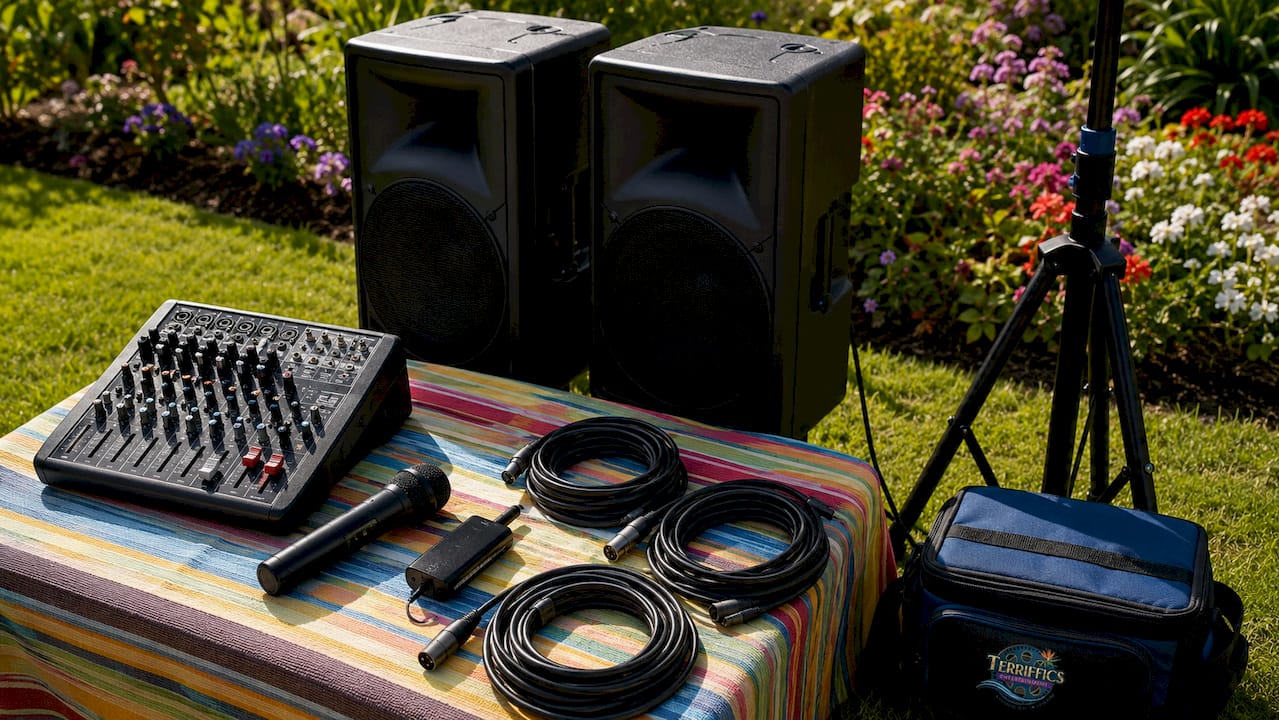
A baseline rental package typically includes two 12-inch powered speakers, two tripod stands, the necessary cables, a small 4-channel mixer, and a wired handheld microphone. That setup works well for small gatherings under 100 guests where you need clear speech or background music.
Premium packages scale up significantly. They add subwoofers for deeper bass, wireless microphones, and larger speaker arrays. These setups cost $500–$1,500 or more and are built for events where music quality and coverage across a large space matter.
Here is what you will commonly find across rental tiers:
Speakers: Powered (active) or passive speakers in 10-inch, 12-inch, or 15-inch configurations
Subwoofers: Added for events with live music, DJs, or large dance floors
Microphones: Wired handheld, wireless handheld, lapel (lavalier), and headset options
Mixers: 4-channel units for simple setups, 12-channel or larger for complex events
Amplifiers: Required for passive speaker systems
Cables and connectors: XLR, TRS, and speaker cables included in most packages
Stands: Tripod speaker stands and mic stands
The mic type matters more than most planners realize. A lapel mic works well for a speaker who needs both hands free. A wireless handheld works for a host moving through a crowd. A wired mic on a stand suits a podium presentation. Choosing wrong creates audio problems no amount of volume can fix.
Pro Tip: Match your equipment to your event format, not just your guest count. A speech-heavy corporate event needs clear midrange and a quality mic. A dance party needs subwoofers and a mixer with EQ control. Ask your provider which setup fits your specific program.
How much does sound rental cost and what affects pricing?
Sound equipment rental pricing scales with event size, equipment complexity, and whether you hire a technician. Here is a clear breakdown of typical ranges:
Event Size | Guest Count | Estimated Rental Cost |
Small PA setup | Under 200 guests | $500–$1,000 |
Mid-size PA system | 200–500 guests | $1,000–$2,500 |
Large line-array system | 500+ guests | $2,500–$5,000+ |
These figures reflect single-day event costs for equipment alone. They do not always include the technician, delivery, or overtime fees.
Technician and operator fees typically add $300–$500 to your total. That cost covers a professional who sets up the system, runs a sound check, tunes the EQ for your room, and operates the console during your event. Skipping the technician saves money upfront but creates real risk. Running a sound system without a trained operator can cause feedback, distortion, and blown equipment mid-event.
Additional charges to watch for include:
Delivery and pickup fees: Charged by distance or flat rate depending on the provider
Setup and teardown labor: Sometimes bundled, sometimes billed separately
Overtime fees: Applied if your event runs past the agreed end time
Security deposit: Most providers require a deposit plus valid ID and a credit card at pickup
Rental periods run daily, weekly, or monthly. Most event planners book a daily or weekend rate. Weekly rates make sense for multi-day festivals or extended corporate events.
Pro Tip: Always ask for an all-in quote that includes delivery, setup, teardown, and technician fees. A low base price with add-on charges often costs more than a bundled package from a full-service provider.
What should you look for in a sound rental provider?
The best sound rental providers offer delivery, setup, teardown, and on-site technician support as part of their packages. Providers with full service save you the physical work of hauling heavy gear and the technical stress of troubleshooting audio problems during your event.
When evaluating providers, check for these qualities:
Delivery and setup: Confirm the provider brings gear to your venue and sets it up before guests arrive
On-site engineer availability: Ask if a technician stays for the event or just drops off the equipment
Equipment quality and age: Newer gear fails less often and sounds better
Package flexibility: Good providers let you customize or mix and match components
Reputation and reviews: Look for consistent feedback about reliability and professionalism
Booking timeline: Popular providers book out weeks in advance for peak event seasons
Ask specifically whether sound check and EQ tuning by a professional are included in the quoted price. Some providers include this, others charge extra. That tuning session is where a technician adjusts the system to your specific room, which directly affects how good your event sounds.
Also confirm the provider brings backup cables, spare wireless mic batteries, and a backup playback method. Equipment failures happen. A prepared provider has spares on hand so a dead battery does not stop your ceremony or presentation.
How to plan your sound rental for a successful event
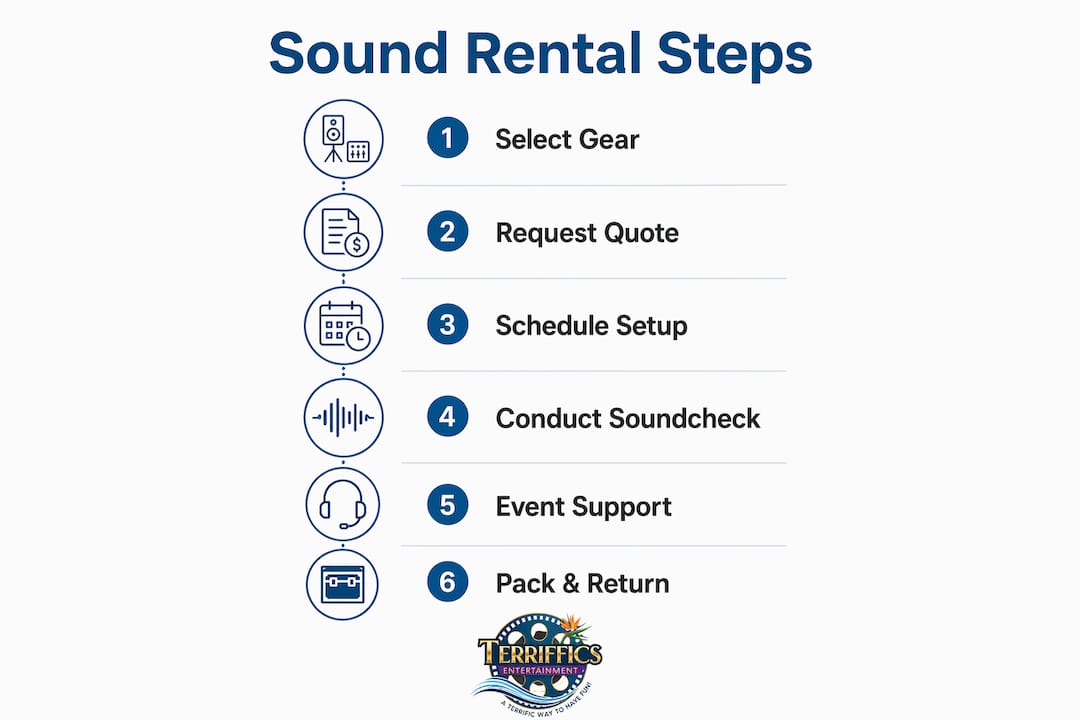
Good planning prevents the most common audio problems. Follow these steps to set your event up for success.
Assess your venue and guest count first. Measure the space or get the venue’s square footage. Outdoor events need more speaker power than indoor rooms of the same size. Acoustics vary dramatically between a tiled ballroom and an open-air park.
Define your audio needs by event format. A wedding ceremony needs clear speech amplification and background music. A graduation party needs music coverage across a large area. A corporate presentation needs a podium mic and possibly a confidence monitor. Know your format before you request a quote.
Book early. Contact your rental provider at least three to four weeks before your event. For peak seasons like summer graduations or holiday parties, book even earlier. Good providers and quality gear get reserved fast.
Coordinate delivery and setup timing with your venue. Confirm when the venue allows load-in. Give the technician at least one to two hours before guests arrive to set up and run a proper sound check.
Run a full sound check. A sound check and EQ tuning session lets the technician adjust speaker placement, mic levels, and EQ settings for your specific room. Skipping this step is the single most common cause of bad audio at events.
Plan for backup gear. Common failure points include cables, connectors, and wireless mic batteries. Ask your provider to bring spares. Have a backup playlist or audio source ready in case of a technical issue.
Communicate your program to the technician. Share your event timeline, the order of speeches, when music plays, and any special audio moments. A prepared technician can anticipate transitions and keep audio smooth throughout.
The event sound system guide from Terrifficsentertainment walks through these steps in detail for Oahu-specific venues and conditions.
Key takeaways
Sound rental gives event planners access to professional audio gear without the cost or commitment of ownership. Matching the right system to your event size, format, and venue is the most important decision you will make.
Point | Details |
Sound rental defined | Temporary lease of speakers, mics, mixers, and cables from a professional provider. |
Package tiers matter | Baseline packages suit small events; premium setups with subwoofers serve 200+ guests. |
Pricing by event size | Small events run $500–$1,000; large events with line arrays cost $2,500–$5,000 or more. |
Technician fees add value | Operator fees of $300–$500 prevent feedback, equipment failure, and audio problems. |
Plan and book early | Secure your provider three to four weeks out and schedule a sound check before guests arrive. |
What we have learned from doing this on Oahu
After setting up sound for weddings, graduations, school events, and corporate gatherings across the island, one thing stands out clearly. Most audio problems at events are not equipment problems. They are planning problems.
Planners often focus on the speaker brand or the wattage rating and miss the things that actually determine sound quality. Speaker placement, mic selection, and EQ tuning for the specific room matter far more than raw power. A well-placed pair of 12-inch speakers tuned to a room will outperform a larger system dropped in without a sound check every single time.
The other mistake we see regularly is skipping the technician to save money. That $300–$500 operator fee feels optional until the wireless mic cuts out during the vows or feedback screams through the speakers mid-speech. A trained technician pays for themselves in peace of mind alone.
Renting also beats buying for the vast majority of event planners. Professional audio gear is expensive, heavy, and requires maintenance. Renting gives you access to current, well-maintained equipment sized exactly for your event. You do not need to own a line-array system to have one at your wedding.
Ask detailed questions when you book. Ask what is included, what is not, who sets it up, and who stays. The answers tell you everything about whether a provider is worth trusting with your event.
— Terriffics
Sound for your next Oahu event with Terrifficsentertainment
Terrifficsentertainment serves the entire island of Oahu with professional DJ sound and lighting, karaoke, AI-powered photobooth rentals, and outdoor movie setups. Every package includes fast setup, teardown, and friendly on-site support so you can focus on your guests.
Whether you are planning a wedding, graduation, birthday, or corporate event, we build packages around your specific needs. Mix and match services to create the right experience for your crowd. Check out our DJ and entertainment packages or add an AI photobooth rental to make your event even more memorable. Contact Terrifficsentertainment to get a personalized quote and lock in your date.
FAQ
What is sound rental in simple terms?
Sound rental is the short-term lease of professional audio equipment, including speakers, microphones, and mixers, from a provider for use at your event. You return the gear after the event instead of owning it.
How much does it cost to rent a sound system?
Small event sound systems rent for $500–$1,000 per day. Mid-size setups for 200–500 guests run $1,000–$2,500, and large line-array systems for 500+ guests cost $2,500–$5,000 or more.
Do I need a technician with my sound rental?
Hiring a technician is strongly recommended. Operator fees typically run $300–$500 and cover setup, sound check, EQ tuning, and live operation, which prevents feedback and equipment failures during your event.
What is included in a basic sound rental package?
A baseline package typically includes two powered speakers, two tripod stands, a 4-channel mixer, cables, and a wired handheld microphone. Premium packages add subwoofers and wireless microphones.
How far in advance should I book a sound rental?
Book at least three to four weeks before your event. During peak seasons like summer or the holidays, booking six to eight weeks out gives you the best selection of equipment and providers.
Recommended
Comments