
_edited.png)

Honolulu Noise Ordinance: What Residents and Event Hosts Need to Know

Updated: Sep 10
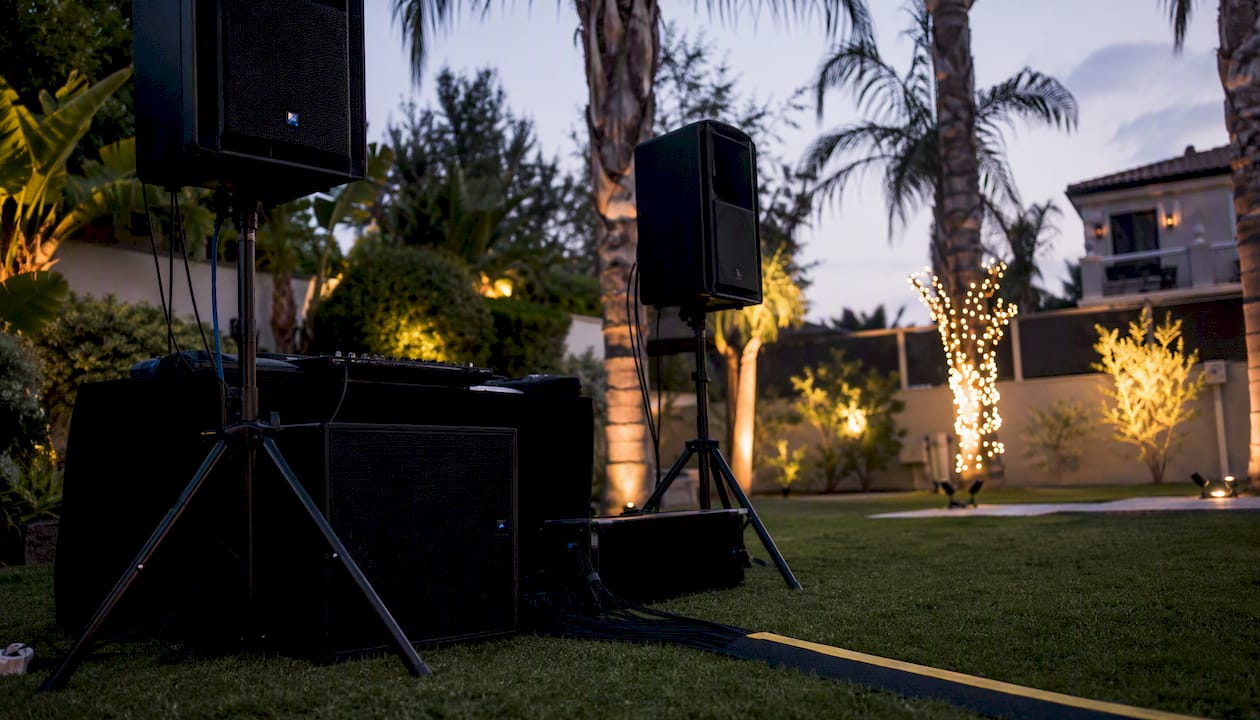
Under the Honolulu noise ordinance (Revised Ordinances of Honolulu, Article 6), any sound-producing device operated on public property or inside a vehicle is unlawful if someone can hear it from 30 feet away. That single rule catches more residents and event hosts off guard than any other provision. Pair it with Hawaii’s state-level measurement standards under HAR Title 11, Chapter 46, and you have a two-layer system: city ordinance handles the audibility test and penalties, while state rules set the decibel numbers and zoning-class limits.
The bottom line: if your sound carries 30 feet, lower it now. If it’s after 10:00 p.m. on a weekday, stop amplified sound entirely unless you have a permit.
Quick-reference snapshot:
Quiet hours: 10:00 p.m. to 7:00 a.m. (weekdays); weekend and holiday time frames may differ
Audibility test: Sound audible at 30 feet from the source is unlawful under ROH §41-6.1
Penalties: Fines start at a nominal amount for a first offense, increase for subsequent violations within a set period, and may include equipment forfeiture for repeat offenses, as specified in ROH §41-6.3
Primary enforcement: Honolulu Police Department (HPD) for amplified sound and vehicles; Hawaii Department of Health (DOH) for stationary sources and variance requests
Statute references: ROH Article 6 (§41-6.1 through §41-6.5); HRS Chapter 342F; HAR Title 11, Chapter 46
Key Takeaways
The Honolulu noise ordinance prohibits any amplified sound audible at 30 feet on public property, sets quiet hours from 10:00 p.m. to 7:00 a.m., and backs those rules with fines from $100 to $1,000 and potential equipment forfeiture.
Point | Details |
The 30-foot audibility rule | Any sound audible at 30 feet from a public-property or vehicle source is unlawful under ROH §41-6.1. |
Quiet hours | Amplified sound must stop by 10:00 p.m. on weekdays; the nighttime window runs to 7:00 a.m. |
Penalty scale | Fines run $100 (first offense), $500 (second), and up to $1,000 or equipment forfeiture (third offense). |
File a complaint | Call HPD non-emergency or Honolulu 311; provide time, address, source description, and a time-stamped recording. |
Terrifficsentertainment | Offers compliance-aware DJ, photobooth, karaoke, and outdoor movie setups across Oahu, with teardown timed before quiet hours. |
Table of Contents
What does the Honolulu noise ordinance actually prohibit?
ROH §41-6.1 is direct: it is unlawful to play, operate, or permit the operation of any sound-reproducing or sound-amplifying device on public property, or inside a motor vehicle on any public street, if the sound is audible at a distance of 30 feet from the source. No decibel meter required. An officer’s determination that the sound is audible at that distance is enough to issue a citation.
The 30-foot rule catches people because open spaces amplify perception. A speaker that sounds moderate at your picnic table can easily reach 30 feet across a park lawn, a parking lot, or a Waikiki sidewalk. Waikiki, in particular, carries additional amplified-sound restrictions because of its high pedestrian density, so event organizers there should plan for stricter limits than they would in a residential neighborhood.
What counts as a prohibited source under ROH §41-6.1:
Portable Bluetooth speakers, PA systems, or boom boxes on public property (parks, sidewalks, beaches)
Car stereos, subwoofers, or vehicle-mounted speakers audible at 30 feet from the vehicle
Sound trucks or vehicles with external speakers used for advertising or entertainment
Amplified sidewalk performances without a city permit
Any device on public property where the operator cannot demonstrate the sound stays within 30 feet
Possession as prima facie evidence: if you have the device and it is playing, the ordinance treats that as evidence you are operating it. You do not need to be caught with your hand on the volume knob. That matters in practice because it shifts the burden to the device owner to show the sound was not audible at 30 feet.
Private property is not automatically exempt. State rules under HAR Chapter 11-46 apply to stationary sources on private land, and residential zoning-class limits still cap how loud you can be even in your own backyard.
What are the decibel limits and quiet hours in Honolulu?
HAR Title 11, Chapter 46 sets the numeric framework. It divides land use into three zoning classes and assigns maximum permissible sound levels in both dBA (A-weighted, for general noise) and dBC (C-weighted, for low-frequency bass). The chapter defines nighttime as 10:00 p.m. to 7:00 a.m., which aligns with the quiet hours most Honolulu residents recognize.
Zoning classes and typical limits
Zoning Class | Land Use | Daytime Limit (dBA) | Nighttime Limit (dBA) |
Class A | Residential | 65 dBA | 45 dBA |
Class B | Mixed-use / commercial | 60 dBA | 60 dBA |
Class C | Industrial | 65 dBA | 60 dBA |
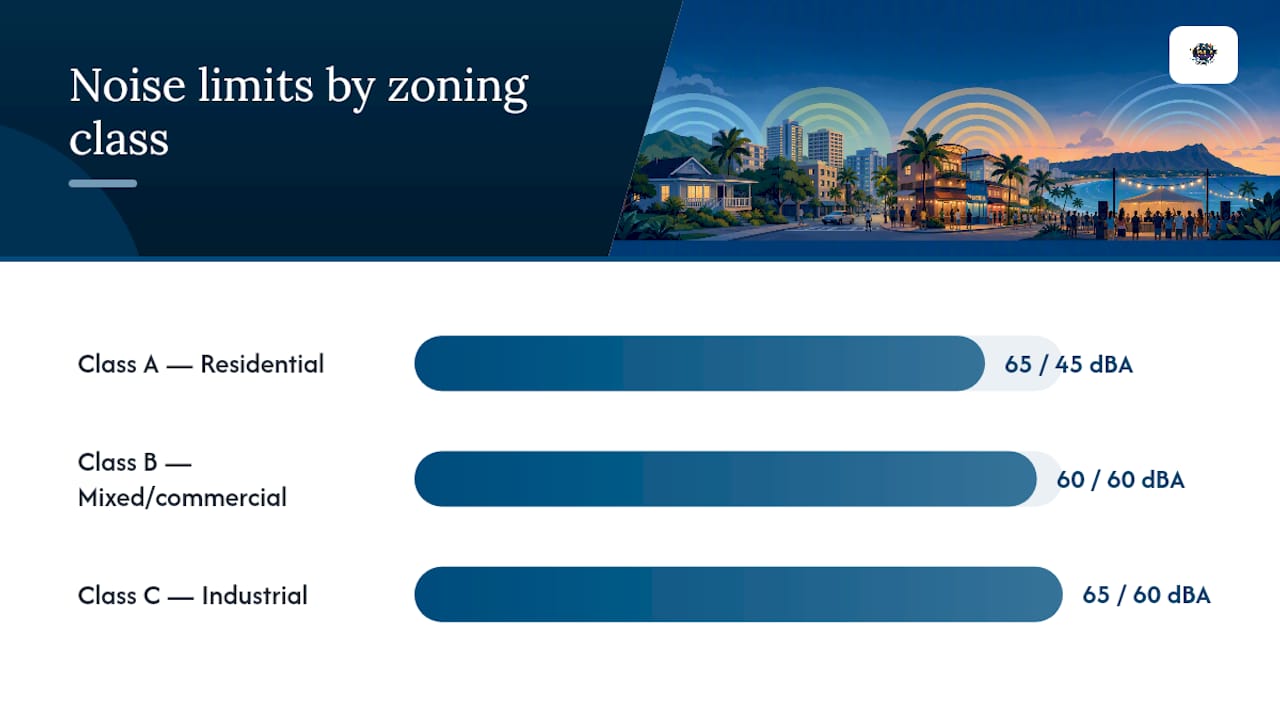
Source: HAR Title 11, Chapter 46, Table 1. Limits are Leq measured at the property line of the receiving property.
A few things about these numbers are worth knowing. First, they are measured as Leq (equivalent continuous sound level), not peak readings. A brief loud burst may not trigger a violation if the average stays within limits. Second, dBC limits apply specifically to low-frequency noise, including bass from subwoofers. Bass travels through walls and floors more efficiently than mid-range sound, so a DJ setup that reads fine on a dBA meter can still violate dBC thresholds in a residential zone. Third, impulsive noise (sharp, sudden sounds like fireworks or pile drivers) gets a +10 dBA allowance added to the limit before a violation is triggered.
Measurement basics
Officers and DOH inspectors use a “fast” meter response for most measurements and a “slow” response for steady-state sources. Measurements are taken at the property line of the affected (receiving) property, not at the source. That distinction matters for event hosts: the question is not how loud your speakers are at the stage, but how loud they are at your neighbor’s fence line.
Weekend and holiday quiet hours may vary slightly from the weekday 10:00 p.m. cutoff. Check the current city rules before scheduling a late event, because local enforcement can apply the stricter interpretation.
How does noise enforcement work in Honolulu?
HPD is the primary enforcement agency for amplified sound violations and vehicle noise under ROH Article 6. DOH handles stationary-source complaints and variance requests under HAR Chapter 11-46. In practice, most noise complaints start with a call to HPD or 311, and officers respond to assess audibility on-site.
Enforcement process under ROH §41-6.2:
An officer responds to a complaint or observes a violation directly
The officer determines audibility at 30 feet (no meter required for ROH violations)
A citation form is issued; the officer records time, location, source description, and observations
Repeat violations within six months escalate automatically to higher penalty tiers
For persistent or stationary-source violations, HPD may refer the case to DOH
Penalty scale under ROH §41-6.3:
First offense: $100 fine
Second offense (within six months of the first): $500 fine
Third offense (within six months of the second): up to $1,000 fine and/or forfeiture of the sound equipment
Equipment forfeiture is not a hypothetical. Officers can seize the device that produced the violation, which means a $2,000 speaker system can be lost over a $100 citation that was ignored.
Civil vs. criminal outcomes: ROH violations are civil infractions at the first and second offense level. A third offense or pattern of violations can escalate to misdemeanor status under state law, with potential court appearances and criminal records. HRS Chapter 342F gives the state the authority to pursue enforcement independently of city citations, so a single event can generate both city and state penalties.
What officers document shapes any appeal. Time of citation, exact location, officer’s distance estimate, and the type of device all go into the record. If you plan to contest a citation, your own time-stamped audio or video recording taken from the same distance is the most useful counter-evidence you can have.
When do you need a permit, and what exemptions exist?
ROH §41-6.4 allows the city to issue temporary permits for events that would otherwise violate the ordinance. The permit application requires the event date, location, hours, type of sound equipment, and the name of the responsible party. Lead times vary, but applying at least two to three weeks before the event gives you room to respond to any conditions the city attaches.
State-level variances under HAR Chapter 11-46 cover stationary sources and construction projects that need to exceed the zoning-class limits or operate during quiet hours. DOH reviews these applications and can attach conditions (time limits, decibel caps, monitoring requirements).
Common exemptions that do not require a permit:
Emergency vehicles (sirens, horns) responding to calls
Authorized city and state activities (public works, official events)
Approved school activities within permitted hours
Agricultural equipment during normal operating hours in designated zones
Construction noise sits in its own category. Residential construction is generally limited to daytime hours (typically 7:00 a.m. to 6:00 p.m. on weekdays), and work outside those windows requires a DOH variance. Even within daytime hours, construction that exceeds the Class A dBA limit at a neighboring property line can trigger enforcement if complaints accumulate. Commercial properties adjacent to residential zones also face additional sound restrictions under ROH §21-4.80, which governs PA systems and amplified sound on commercial and industrial developments near homes.
Pro Tip: If you receive a construction complaint while holding a valid DOH variance, reference the variance number in every response to HPD or DOH. Officers who see a valid variance on file typically close the complaint faster, and it protects you in any appeal.
For community gatherings and school events, check whether your activity qualifies for an exemption before applying for a permit. Some community gathering setups on Oahu fall under approved school or city-activity categories, which can save both time and fees.
What are the rules for animal noise and other special cases?
Animal noise, particularly dogs and roosters, is one of the most common residential complaints in Honolulu. The actionable threshold under local rules is continuous barking or crowing for 10 minutes or intermittent noise for 30 minutes. Below those thresholds, enforcement is unlikely. Above them, a complaint to HPD or the city’s animal services line can result in a warning or citation to the animal’s owner.
Special restrictions near sensitive facilities:
Hospitals, medical centers, and licensed care facilities have stricter ambient limits because of patient welfare requirements
Schools during instructional hours are protected from external amplified sound that would disrupt classes
These restrictions apply regardless of zoning class and can override the standard dBA limits
Low-frequency and impulsive noise:
Bass from subwoofers is measured in dBC, not dBA, and the dBC limits under HAR Chapter 11-46 are enforced more strictly in urban and residential settings. A sound system that passes a dBA check can still violate dBC thresholds if the bass is heavy enough. Impulsive noise (fireworks, pile drivers, gunshots from a range) gets the +10 dBA allowance, but repeated impulsive events can still generate complaints and enforcement if the pattern is disruptive.
When to escalate to DOH vs. HPD:
Call HPD (or 311) for immediate, ongoing noise from amplified sound, vehicles, or animals
Contact DOH when the source is a stationary installation (HVAC, industrial equipment, construction) or when you need to challenge a variance that was improperly granted
DOH also handles appeals of variance decisions and can conduct its own decibel measurements using calibrated equipment
How do you file a noise complaint in Honolulu?
Most complaints are resolved faster when the person filing them provides specific, documented information. Vague reports (“it’s loud next door”) are harder for officers to act on than precise ones (“amplified music audible from the sidewalk at 11:15 p.m., source is a backyard speaker at [address]”).
Step-by-step complaint process:
Determine urgency. Call 911 only if the noise involves a safety threat or is part of a larger disturbance. For standard noise complaints, use the HPD non-emergency line or Honolulu 311.
Note the exact time and date. Officers need this to assess whether quiet hours apply and to document the citation record.
Record the exact address or location. Cross streets, park names, or building numbers all help dispatch direct the right officer.
Describe the source. Is it a vehicle stereo, a backyard speaker, a rooster, construction equipment? Be specific.
Estimate audibility distance. If you can hear it clearly from your property line or from 30 feet away, say so.
Capture audio or video with timestamps. A 60-second recording on your phone, taken from a measured or estimated distance, is the strongest evidence you can provide.
Note witness information. If a neighbor also hears the noise, their contact information strengthens the complaint.
Follow up. If no officer responds within a reasonable time, call back and reference your original complaint number.
What HPD typically does after a complaint:
Dispatch an officer to the location
Assess audibility at 30 feet (for ROH violations) or take a meter reading (for stationary-source referrals to DOH)
Issue a warning or citation depending on the severity and the violator’s history
Refer persistent or stationary-source cases to DOH for variance review
Pro Tip: Time-stamped recordings and distance notes materially strengthen both complaints and defenses. Many enforcement actions rely on officer audibility determinations rather than meter readings, so your documentation can be the deciding factor if the case goes to appeal.
If you are a neighbor dealing with a recurring issue, try a direct, calm conversation first. Most unintentional violations stop when the responsible party learns about the 30-foot rule. If direct outreach fails, the complaint process above is your next step.
Practical tips for residents and event hosts to stay compliant
Staying on the right side of Hawaii noise regulations is mostly about planning ahead. The rules are not complicated, but the consequences of ignoring them (fines, equipment seizure, event shutdowns) are real enough to justify a short checklist.
Pre-event compliance checklist:
Confirm whether your venue requires a city permit under ROH §41-6.4 or a DOH variance
Apply for permits at least two to three weeks before the event date
Notify neighbors in writing at least one week in advance, including your permit number if you have one
Set a hard cutoff time for amplified sound at least 15 minutes before quiet hours begin
Designate one person at the event to monitor sound levels and respond to complaints
Technical tips for sound control:
Orient speakers inward and downward toward the audience, not outward toward property lines
Use a sound limiter or volume cap on your amplifier set to a level that keeps the signal below 30 feet at the property boundary
Rent a calibrated sound level meter (or use a reliable SPL meter app as a rough guide) and check levels at your property line before guests arrive
Keep bass (dBC) levels conservative in residential zones; subwoofer output travels farther than mid-range frequencies
Schedule sound checks during daytime hours so you can adjust before the event starts
When to bring in a professional:
A licensed acoustical consultant is worth the cost for large outdoor events, events near hospitals or schools, or any event where the venue is close to a residential property line. For most private parties and community gatherings, a professional sound rental with a knowledgeable technician is enough. Renting a professional sound system gives you calibrated equipment and someone who knows how to set levels that stay compliant without sacrificing audio quality.
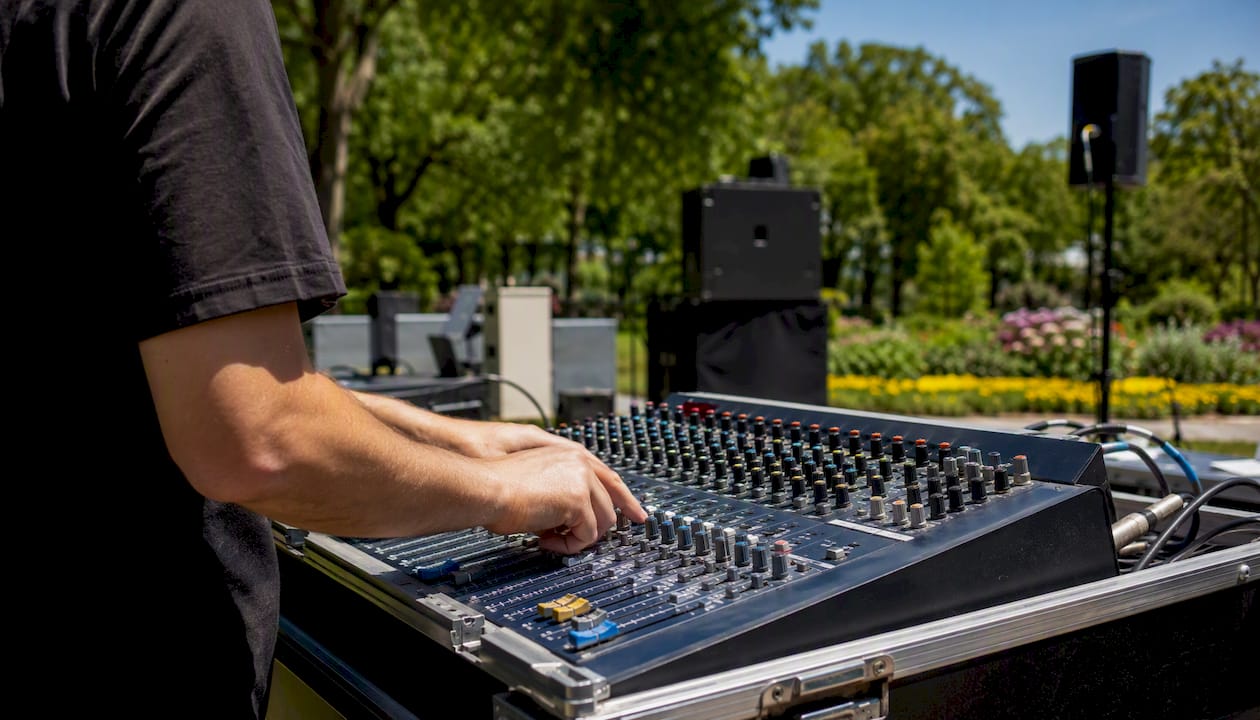
Pro Tip: Plan around cumulative noise. If there is active construction nearby, or another event scheduled at the same venue on the same day, your baseline ambient level is already elevated. Coordinate with your property manager and neighboring businesses so your sound does not push the cumulative level over the limit.
For a full event coordination workflow on Oahu, including permit timing and neighbor outreach steps, a structured planning guide helps you cover every compliance checkpoint before the day of the event.
Where can you read the law and find official forms?
These are the primary sources to check before any event or complaint. Each one serves a different purpose.
ROH Article 6: Noise Control — the city ordinance text, including §41-6.1 (prohibited noise), §41-6.2 (citation process), §41-6.3 (penalties), and §41-6.4 (permits). Use this for appeals, permit applications, and understanding what officers can and cannot do.
HAR Title 11, Chapter 46 — the state’s community noise control rules, including zoning-class dBA/dBC limits, measurement methods, nighttime definitions, and variance procedures. Use this when dealing with stationary sources, construction projects, or DOH enforcement.
HRS Chapter 342F — the state statutory authority for noise pollution control. Use this to understand the legal foundation behind both city and state enforcement, and to cross-reference state-level penalties.
HPD non-emergency line and Honolulu 311 — for filing complaints, checking on open cases, and reaching dispatch for immediate noise issues. The 311 portal also accepts online submissions.
Hawaii DOH, Indoor and Radiological Health Branch — for variance applications, stationary-source complaints, and measurement disputes. Contact information is available on the DOH website.
State noise legislation is also an active area. Bills like SB1418 show ongoing legislative attention to noise regulation updates. Check the Hawaii State Legislature’s website for current bill status before a major event, since statutory changes can affect permit requirements or penalty scales.
Why noise compliance matters more than most event hosts realize
Here is an honest take from us at Terriffics Entertainment: noise compliance is not just a legal formality. It is the difference between an event that runs smoothly and one that gets shut down mid-reception.
We operate across Oahu, and we see the same pattern repeat. A host books a great venue, plans a great event, and then skips the permit step because the process feels like extra paperwork. Then a neighbor calls HPD at 9:45 p.m., an officer arrives, and the music stops 15 minutes before the planned cutoff. The guests remember the silence, not the celebration.
Proactive compliance does the opposite. When you notify neighbors in advance, hold a valid permit, and set your sound levels conservatively, you remove the conditions that trigger complaints in the first place. Officers who arrive at a permitted event with a compliant setup almost always leave without issuing a citation. That is not luck. It is planning.
The business case is simple: one citation costs $100 to $1,000. One equipment forfeiture can cost thousands. One event shutdown costs you the reputation you spent years building. Spending an afternoon on permits and neighbor outreach is the better investment every time.
Terriffics Entertainment keeps your Oahu event sounding great and staying compliant
Planning a wedding, graduation, or community event on Oahu and worried about sound levels? Terriffics Entertainment brings local knowledge and compliance-aware setups to every booking. Our DJ sound and lighting packages are calibrated for real Oahu venues, from backyard graduations in Kapolei to outdoor movie nights at community parks across the island. We know the 30-foot rule, we know quiet hours, and we set up with both in mind.
Our photo booth rental and outdoor movie packages are low-noise options that keep your guests engaged without pushing sound levels past the property line. Every setup includes fast, clean teardown so you are wrapped up well before quiet hours begin. Ready to plan a compliant, unforgettable event? Request a quote at Terriffics Entertainment and we will walk you through the setup that fits your venue, your guest count, and your local sound rules.
Sources
These are the authoritative sources to bookmark before any event or complaint filing.
This article is general information, not a substitute for advice from a qualified lawyer. Consult a qualified legal professional about your own circumstances before acting on anything here.
Recommended
Comments