
_edited.png)

How to Organize Group Events: A Practical Guide


Organizing group events is the process of planning and coordinating celebrations, meetings, or gatherings so they run smoothly and achieve a clear purpose. Whether you are planning a birthday party for 20 people or a corporate outing for 300, the same core framework applies: define your goals first, then build every logistical decision around them. This guide covers the full process, from setting SMART objectives and building a realistic budget to scheduling with backwards planning and managing group communication. Follow these steps and you will spend less time putting out fires and more time enjoying the event you worked hard to create.
How to organize group events: start with clear goals
The single most important step in group event planning is defining why the event exists before you decide anything else. Up to 70% of event failures result from unclear objectives. That number tells you exactly where most planners go wrong.
Use the SMART framework to write your event goals. SMART stands for Specific, Measurable, Achievable, Relevant, and Time-bound. A vague goal like “throw a great company party” gives you nothing to plan against. A SMART goal sounds like this: “Host a 50-person team appreciation dinner on november 15 that scores an average net promoter score of 8 or higher from attendees.” Every word in that sentence drives a decision.
Your goal type also shapes your entire event structure:
Celebration events (birthdays, graduations, weddings): prioritize guest experience, entertainment, and personal touches
Corporate events (product launches, conferences): prioritize brand alignment, lead capture, and professional presentation
Team-building events: prioritize participation, interaction, and measurable engagement
Pro Tip: Write your success metrics before you book a single vendor. If you cannot measure whether the event succeeded, you have not defined your goal clearly enough.
Once your goals are written, every downstream decision, from venue size to entertainment choices, has a clear filter. You ask one question: does this choice serve the goal? If the answer is no, cut it.
How do you plan an event timeline for any group size?
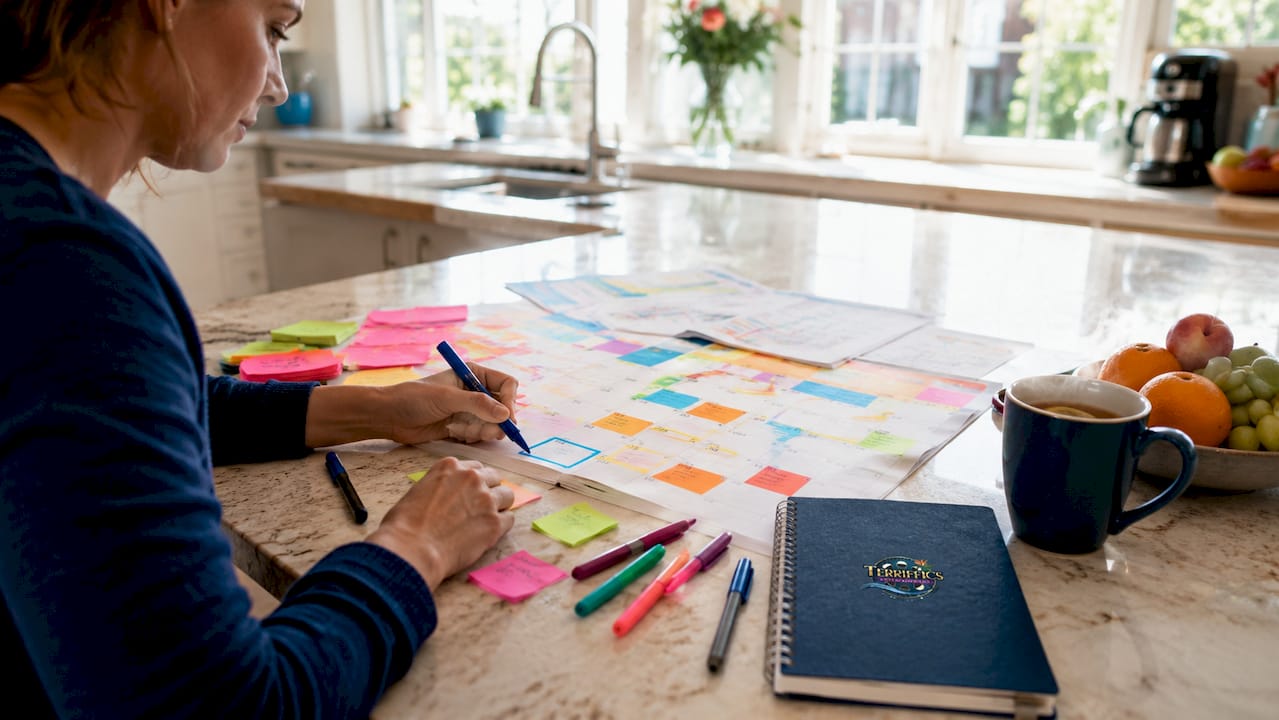
Timeline planning is where most group events fall apart. Backwards scheduling prevents planning bottlenecks by starting at the event date and working backward to today. This method forces you to see task dependencies before they become emergencies.
The right planning window depends on your group size. Here is a practical reference:
Group Size | Event Type | Recommended Lead Time |
Under 50 people | Small gathering or party | 8 weeks minimum |
50–499 people | Mid-sized event or corporate function | 4–6 months |
500+ people | Large conference or community event | 9–12 months |
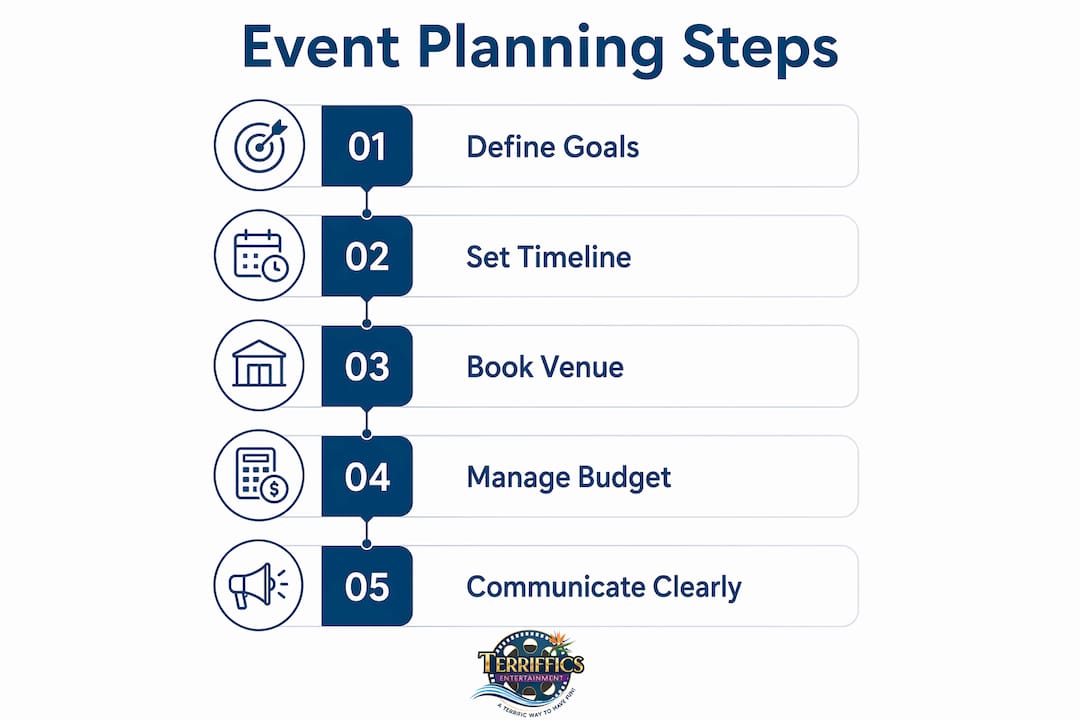
Structured timelines reduce last-minute stress by 65%. That reduction comes directly from knowing what needs to happen and when, not from working harder in the final week.
Here is how to build your backwards schedule:
Write the event date at the top of a blank document
List every major milestone: venue confirmed, vendors booked, invitations sent, RSVPs closed, run-of-show finalized
Assign a deadline to each milestone, working backward from the event date
Add a 3-day internal buffer before every external deadline so you have recovery time if something slips
Assign one person as the timeline owner for each major milestone
Pro Tip: Build 15-minute buffers between every major segment of your event day. Rushing guests degrades the atmosphere fast, and a 15-minute cushion costs you nothing but saves the feel of the whole event.
Check out this event schedule workflow guide for a deeper breakdown of planning horizons by event type. The more specific your timeline, the fewer surprises you face on the day.
What are best practices for budgeting and vendor management?
A budget without a contingency fund is not a budget. It is a wish list. Include a 10–15% contingency fund in every event budget to cover unforeseen expenses. Unexpected costs are not rare in event planning. They are standard.
The second rule of event budgeting is this: never accept flat package vendor quotes. Always demand itemized quotes. A flat package hides where your money goes and removes your ability to negotiate. An itemized quote lets you cut or adjust individual line items without losing the whole contract.
Here is a practical checklist for vendor management:
Get at least three competing quotes for every major vendor category
Ask each vendor to break costs into labor, equipment, setup, and teardown
Confirm cancellation and refund policies in writing before signing anything
Set a firm internal budget cap 10% below your actual maximum so you have room to negotiate
Track every expense in a shared spreadsheet updated weekly
Pro Tip: Prioritize your budget toward the elements guests will remember most: food quality, entertainment, and sound. Guests rarely notice the centerpieces. They always notice if the music was bad.
A comparison of budget approaches makes the difference clear:
Budget Approach | Risk Level | Flexibility |
Flat package quotes only | High | Low |
Itemized quotes with contingency | Low | High |
No contingency fund | Very high | None |
Clear goals also protect your budget. When you know exactly what the event needs to achieve, you stop spending on things that do not serve that goal. That discipline alone prevents most budget overruns.
How does communication affect group event success?
Lack of clear communication about rules and schedules causes the most friction in group events. This is not a soft skill problem. It is a logistics problem with a direct fix.
Every participant needs three things communicated clearly before the event: the schedule, the rules or expectations, and who to contact if something goes wrong. Send this information at least 48 hours in advance. Do not assume people will ask.
Tools that make group communication easier:
Google Calendar or Calendly for shared scheduling and RSVP tracking
Slack or GroupMe for real-time group messaging during planning and on event day
A single shared document (Google Docs works well) for the run-of-show that all coordinators can access
One rule that experienced event coordinators follow: avoid one-off exceptions. When one person gets a special schedule change or a rule bent for them, others notice. That inconsistency creates confusion and resentment. Hold the structure firm and communicate any changes to the full group at once.
The event coordinator’s job on the day of the event is to manage flow, not to troubleshoot every small issue personally. Assign a point person for each major area: registration, entertainment, catering, and guest relations. Each person handles their zone and reports up only when something cannot be resolved at their level.
Flexibility is the key to handling the unpredictable nature of events. Rigid adherence to a schedule when something goes wrong makes things worse. Train your team to adapt and keep guests informed with calm, confident updates.
For corporate gatherings specifically, this corporate event entertainment guide covers how to keep professional groups engaged from arrival to close.
Key takeaways
Successful group event organization requires clear SMART goals, a backwards-scheduled timeline, itemized vendor budgets with contingency funds, and consistent communication across all participants.
Point | Details |
Define goals first | Write SMART objectives before booking any vendor or venue. |
Match timeline to group size | Small events need 8 weeks; large events need 9–12 months of lead time. |
Demand itemized vendor quotes | Flat packages remove your ability to negotiate or cut costs. |
Build in a contingency fund | Reserve 10–15% of your total budget for unexpected expenses. |
Communicate early and consistently | Send schedules and expectations to all participants at least 48 hours out. |
What we have learned from planning events on oahu
After working with hundreds of groups across Oahu, from school graduations in Kapolei to corporate team events in Honolulu, one pattern shows up every single time: the events that go smoothly are the ones where the organizer made decisions early and communicated them clearly. The events that struggle are almost always the ones where someone tried to keep options open too long.
The conventional advice says “stay flexible.” That is true, but it gets misapplied. Flexibility means adapting your execution when something unexpected happens. It does not mean delaying decisions about your venue, your vendors, or your entertainment until the last minute. Those late decisions create the chaos that flexibility is supposed to fix.
Budget conversations are the other area where we see organizers get into trouble. People underestimate how quickly small additions stack up. A photo station here, an extra hour of sound there, upgraded lighting for the main stage. Each one feels minor. Together they blow the budget. The itemized quote approach protects you from this because you can see every line before you commit.
The most memorable events we have been part of were not the most expensive ones. They were the ones where guests felt included, the energy stayed high, and the entertainment matched the crowd. Getting entertainment right is often the difference between an event people talk about for weeks and one they forget by monday.
— Terriffics
Make your next group event unforgettable with Terrifficsentertainment
Planning a group gathering takes real effort. The entertainment you choose at the end of that process should be the easy part.
Terrifficsentertainment serves the entire island of Oahu with professional DJ sound and lighting, an AI-powered photobooth rental, karaoke setups, and outdoor movie nights. Our packages are mix-and-match, so you pay for exactly what your event needs and nothing extra. We handle fast setup and teardown so your timeline stays on track. Whether you are hosting a birthday, a graduation, a corporate outing, or a community gathering, we bring the energy and you take the credit. Book your karaoke rental or get a custom quote today at Terrifficsentertainment.
FAQ
What is the first step to organizing a group event?
Define your event’s purpose using SMART goals before making any logistical decisions. All venue, budget, and vendor choices should follow from that goal.
How far in advance should you plan a group event?
Small gatherings need at least 8 weeks, mid-sized events need 4–6 months, and large events with 500 or more attendees require 9–12 months of planning time.
What is backwards scheduling in event planning?
Backwards scheduling starts at the event date and works backward to assign deadlines for every task. It identifies dependencies early and prevents last-minute bottlenecks.
How much contingency should i build into my event budget?
Reserve 10–15% of your total budget as a contingency fund. Unexpected costs are standard in event planning, not exceptions.
How do you keep group communication clear during planning?
Send schedules, expectations, and contact information to all participants at least 48 hours before the event. Use shared tools like Google Calendar or Slack to keep everyone on the same page and avoid one-off exceptions that create confusion.
Recommended
Comments