
_edited.png)

Easy Event Setup Process for Oahu Celebrations

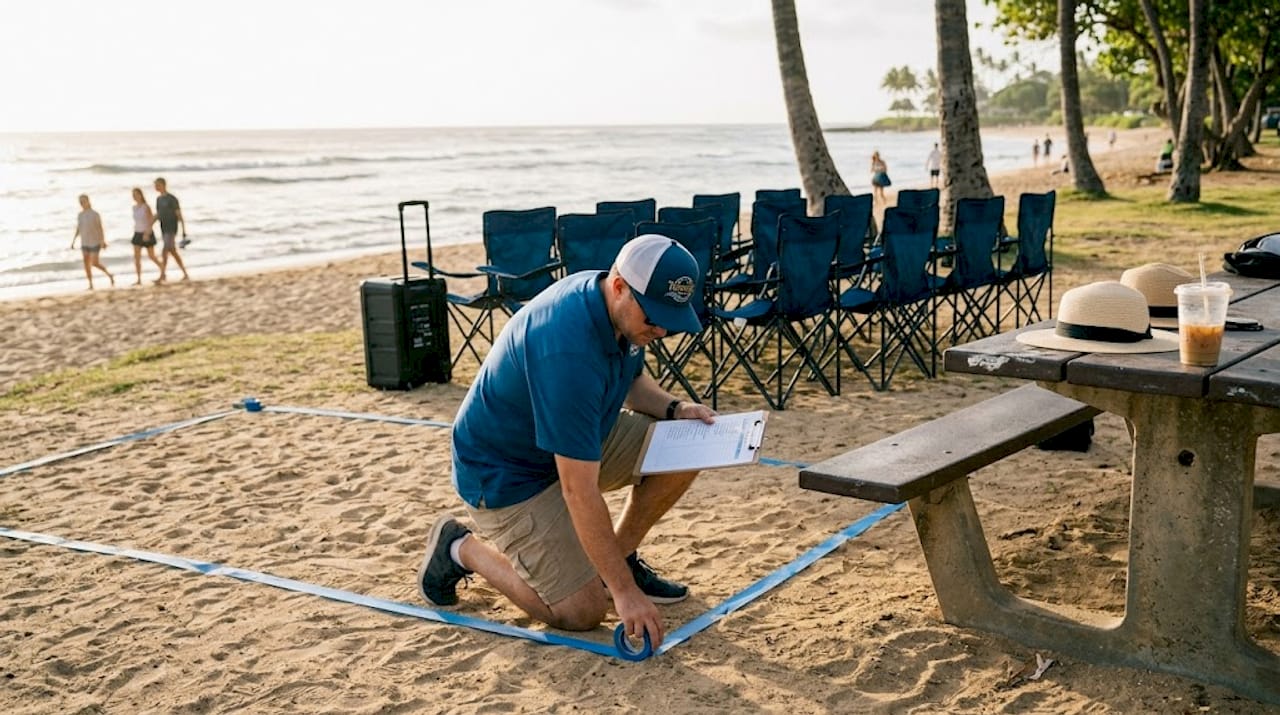
Planning a birthday, graduation, or wedding in Oahu is exciting. But the easy event setup process you imagined can quickly become stressful once you factor in permit requirements, equipment logistics, and local venue rules. Families across Oahu face the same challenges: too many moving parts, not enough time, and no clear starting point. This guide changes that. You will get a practical, Oahu-specific roadmap covering permits, layout planning, day-of execution, and the most common mistakes to avoid. By the end, setting up your next celebration will feel manageable and even fun.
Table of Contents
Key takeaways
Point | Details |
Permits matter on Oahu | Beach and public space events require a DLNR Permit, so apply at least three weeks early. |
Layout mapping saves time | Mark zones with tape before moving any equipment to prevent errors and extra trips. |
Sound rules are strict | Unpermitted amplified sound in Honolulu can result in fines up to $10,000. |
Minimalism works best | Lightweight, minimal setups are easier to transport, assemble, and comply with local rules. |
Professional support reduces stress | Experienced local vendors handle permits, equipment, and setup so you can focus on your guests. |
Understanding local permits and legal requirements
Oahu is one of the most beautiful places in the world to celebrate. It is also one of the most regulated. Knowing the rules before you book anything is the single most effective easy event setup tip you can follow.
Beach events and the DLNR permit
If you plan to hold your birthday party, graduation gathering, or wedding on a public state beach, you need a DLNR permit. The permit costs $20 minimum and covers a two-hour event window. Liability insurance is often required alongside it. Apply through the DLNR State Parks office, and give yourself at least three weeks because processing times vary.
Here is what surprises most families: the permit comes with real restrictions. DLNR prohibits structures like arches, tents, and chairs on many public beaches, with the only exception being ADA accommodations. That means no elaborate arch setups, no rows of chairs, and no canopy tents. The recommended approach is a minimalist, feet-in-the-sand style that works beautifully with Oahu’s natural scenery.
Weddings and marriage licenses
For couples planning a beach or outdoor wedding, the legal side is straightforward. Hawaii marriage licenses cost $65 in 2026, have no waiting period, and are valid for 30 days after issuance. You apply online but must pick up the license in person. Plan this at least one to two weeks before your ceremony date to avoid any scheduling conflicts.
Amplified sound rules
Sound is where many Oahu events get into trouble. Unpermitted amplified sound in Honolulu can result in fines ranging from $250 to $10,000. Daytime noise limits sit at 55 dBA, and nighttime limits drop to 45 dBA. If your event includes a DJ, live band, or karaoke, you need to confirm with your venue or obtain the proper permit before the day arrives.
Requirement | Details | Cost |
DLNR beach permit | Required for public beach events | $20 minimum |
Marriage license | Required for all Hawaii weddings | $65 |
Amplified sound permit | Required for outdoor amplified music | Varies by venue |
Liability insurance | Often required with beach permits | Varies by provider |
“Hiring a local vendor knowledgeable about Oahu permits is the most effective way to avoid permit rejections and event interruptions.” — Your Story Events Hawaii
Building your easy event setup plan
A strong plan built before the event day removes most of the stress. This is where the easy event setup process really begins, not on the day itself but in the weeks leading up to it.

Create a detailed checklist
Generic checklists do not account for Oahu-specific logistics. Yours should include permit applications, insurance confirmations, vendor contact numbers, equipment delivery windows, and venue-specific rules. Starting planning at least three weeks early gives you enough buffer to handle cooking, cleaning, logistics, and the unexpected. For weddings and large graduations, six to eight weeks out is even better.
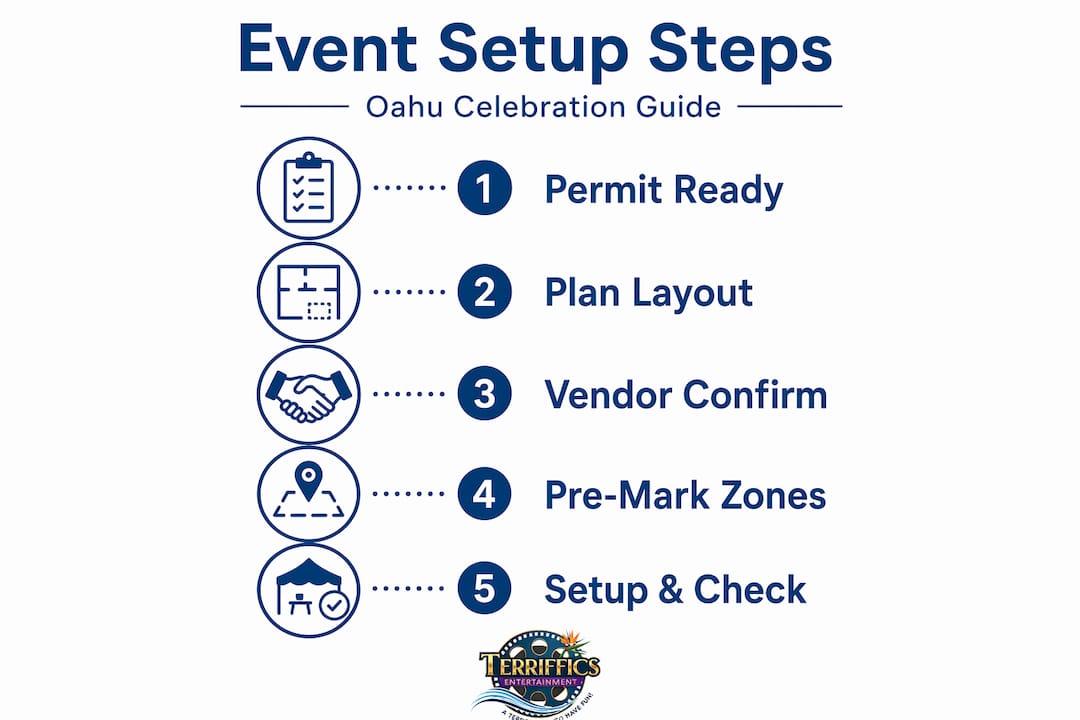
Here is a sample preparation sequence you can follow:
Confirm your venue and review all local rules and permit requirements.
Apply for DLNR or sound permits as needed, well before the event date.
Build your equipment list and contact all vendors with clear delivery instructions.
Create a layout map of the event space, marking zones for seating, food, entertainment, and power sources.
Conduct a site visit to verify measurements, power outlet locations, and any obstructions.
Confirm all vendor deliveries and arrivals 48 hours before the event.
Pack a day-of kit with extension cords, tape, zip ties, markers, and a printed copy of your layout map.
Pro Tip: Early supplier communication prevents last-minute shortages, extra costs, and delivery delays. Send a written confirmation to every vendor at least one week before your event.
Map your layout before moving anything
A pre-layout marking method based on power outlets, obstructions, and guest flow can dramatically reduce setup errors and the need to move equipment multiple times. Use tape or chalk on the ground to mark where tables, speakers, the photobooth, and food stations will go. Once you see it on the ground, you will often catch problems before they become problems. This step alone saves significant time and labor on the day of the event. You can learn more about this approach in our Oahu party planning essentials guide.
Step-by-step day-of setup execution
The day of your event is not the time to make major decisions. All of those should already be made. What you need on event day is a clear sequence and a calm team.
Arrive at least two hours before guests are expected. Walk the space and confirm the layout against your printed map.
Assign roles to your team. One person manages equipment unloading, one manages placement, and one handles décor.
Set up sound and lighting first. These take the most time and have the most impact on the event atmosphere. Check out our event lighting setup guide for Oahu-specific tips.
Use transport carts and lightweight furniture to minimize trips and reduce physical strain. Fewer trips means fewer opportunities for damage or delay.
Once large equipment is placed, add décor and personal touches.
Run a full equipment test before guests arrive. Check every speaker, every light, and every interactive element like a photobooth or karaoke screen.
Do a final safety walk to confirm no cords are crossing foot traffic areas and all structures are secure.
Pro Tip: Marking zones with tape before moving any heavy equipment reduces damage and extra labor. It takes five minutes and saves thirty.
Staying flexible matters, too. Wind picks up unexpectedly on Oahu. A delivery runs late. A speaker malfunctions. Build a 30-minute buffer into your timeline so that when something shifts, you absorb it without panic.
Common pitfalls and how to avoid them
Even well-prepared families run into problems. These are the most common ones, along with straightforward fixes.
Misjudging the space. Many hosts overestimate how much room a venue has once equipment is placed. Always measure the space during your site visit, not just estimate it from photos.
Ignoring local sound rules. Playing amplified music without a permit is the fastest way to have your celebration shut down. Confirm permit requirements with your venue contact before finalizing your entertainment plan.
Assuming beach setups are flexible. The most common pitfall for beach ceremonies on Oahu is assuming full setups are allowed. DLNR prohibits most structures to protect fragile ecosystems. Plan for minimalist setups from the beginning.
Booking rentals too late. Booking party rentals without sufficient lead time leads to mismatched linens, unavailable equipment, or delivery delays. Confirm all rentals at least two weeks out. Our guide on booking party rentals walks you through how to avoid these issues.
Skipping the equipment test. Do not assume equipment works because it worked at the last event. Test everything on site before guests arrive.
“Friction-free event setup transforms stressful days into smooth, enjoyable celebrations for hosts and guests.” — Your Story Events Hawaii
Quick fixes when things go wrong: If a piece of equipment fails, have the vendor’s phone number ready. If your layout feels off once placed, refer to your map and adjust one zone at a time. If sound levels are too high, reduce the output immediately and check your permit limits. Small, calm corrections keep the event on track.
My take on Oahu event setup after years in the field
I have seen hundreds of events on Oahu, from intimate birthday gatherings at Kapolei parks to large graduation parties and beach weddings. The families who have the best experience are almost never the ones with the biggest budgets or the most elaborate setups. They are the ones who planned simply and prepared thoroughly.
What I have learned is that minimalism almost always wins here. Oahu’s natural beauty does most of the work. You do not need to fight it with excessive decorations or overcrowded layouts. Working within the natural and legal constraints of this island actually produces more memorable events, not less.
The permit process frustrates a lot of families at first. But once you understand it, it is not complicated. It just requires lead time and local knowledge. Working with a vendor who already knows the DLNR process, the sound permit requirements, and the venue-specific rules removes that friction entirely. That is what stress-free Oahu celebrations actually look like: not no problems, but problems that get solved before they reach you.
My honest advice? Do not try to do everything yourself. Simplify your setup, lean on experienced local help, and spend your energy being present with the people you are celebrating.
— Terriffics
Let Terrifficsentertainment handle the heavy lifting
Planning your celebration in Oahu does not have to mean weeks of stress. Terrifficsentertainment specializes in making the event setup process fast, fun, and worry-free for families across the island.
Our team brings everything: professional DJ sound and lighting, an AI-powered photobooth, karaoke, and outdoor movie setups. We handle delivery, setup, and teardown, so you spend zero time hauling equipment. Our DJ, photobooth, and karaoke packages are flexible and mix-and-match, built for birthdays, graduations, and weddings. We know Oahu’s rules and venues, and we bring that local knowledge to every booking. See what we have created for other families in our event gallery, and when you are ready, book your event online or reach out for a custom quote.
FAQ
Do I need a permit for a beach event in Oahu?
Yes. Public state beach events in Hawaii require a DLNR permit, which costs a minimum of $20 and covers a two-hour window. Liability insurance is also commonly required.
What are the noise rules for outdoor events in Honolulu?
Honolulu limits daytime amplified sound to 55 dBA and nighttime to 45 dBA. Violating these limits without a permit can result in fines between $250 and $10,000.
How far in advance should I start planning my event setup?
Planning at least three weeks ahead is the minimum for smaller events. For weddings or large gatherings, six to eight weeks gives you the best buffer for permits, rentals, and logistics.
Can I set up chairs and arches on a public beach in Hawaii?
In most cases, no. DLNR permits prohibit structures like arches, tents, and chairs on public beaches, with exceptions only for ADA accommodations. Minimalist setups are required.
How much does a Hawaii marriage license cost in 2026?
A Hawaii marriage license costs $65 in 2026. It has no waiting period and is valid for 30 days after issuance, but you must pick it up in person after applying online.
Recommended
Comments