
_edited.png)

Lei Etiquette for Weddings: Rules Every Guest Should Know
- Terriffics Entertainment

- 1 day ago
- 8 min read
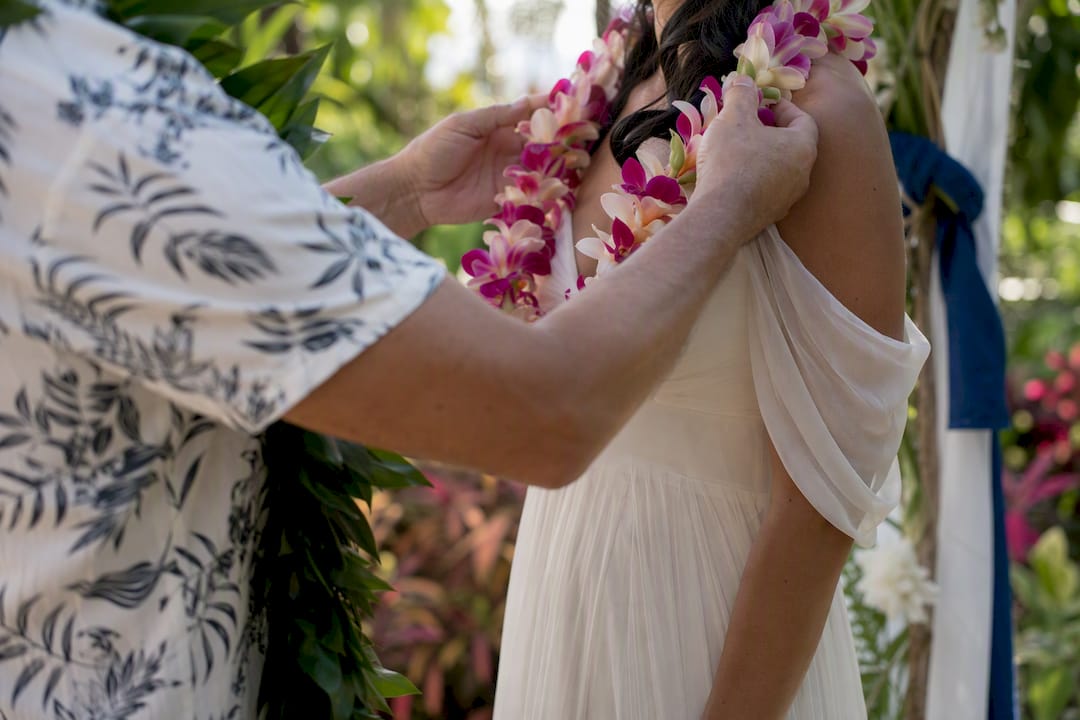
Always accept a lei when it’s offered to you. Lower your head slightly and let the giver place it, or hold it above your heart if they invite you to put it on yourself. Wear a closed lei so it drapes evenly across both shoulders; if you’re giving one to a pregnant guest, choose an open lei instead of a closed loop. Never take a lei off in front of the person who gave it to you, and if you’re planning to gift a lei later that day, don’t wear it beforehand.
Here’s the short version to keep in your back pocket:
Accept every lei offered. Refusing it reads as rejecting the gesture itself.
Wear closed leis draped evenly over both shoulders; use open leis for pregnant recipients.
Skip removing a lei in front of the giver, even if it’s warm or itchy.
Never pre-wear a lei you’re planning to hand off as a gift later in the day.
Key Takeaways
Lei etiquette at weddings comes down to always accepting the gift, wearing it exactly as presented, and respecting the special rules around pregnancy, fragrance, and pre-wearing.
Point | Details |
Always accept a lei | Refusing a lei rejects the gesture; lower your head or hold it above your heart to receive it. |
Match lei style to recipient | Use closed leis for most guests and open leis for pregnant recipients to avoid inauspicious symbolism. |
Time the presentation | Present leis at arrival, ceremony start, or right after vows, and keep them on for at least the first half hour. |
Care for leis properly | Refrigerate around 50 to 55 degrees Fahrenheit or mist and wrap in a damp towel if no cooler is available. |
Coordinate with vendors | Tell your florist about allergies, staining risks, headcounts, and any pregnancy notes ahead of the wedding. |
Table of Contents
The Lei Exchange Tradition at Weddings
A lei exchange usually happens right at the start of the ceremony, and it means something specific: mutual respect, unity, and the spirit of aloha passing between two people. Couples trade leis as a stand-in for vows they haven’t spoken yet, a physical promise before the verbal one.
Some couples now exchange open leis and then tie them closed once the officiant pronounces them married, turning the tie itself into a visual symbol of the union forming. It’s a small ritual, but it lands. Guests notice it, photographers time shots around it, and it gives the processional a natural emotional beat.
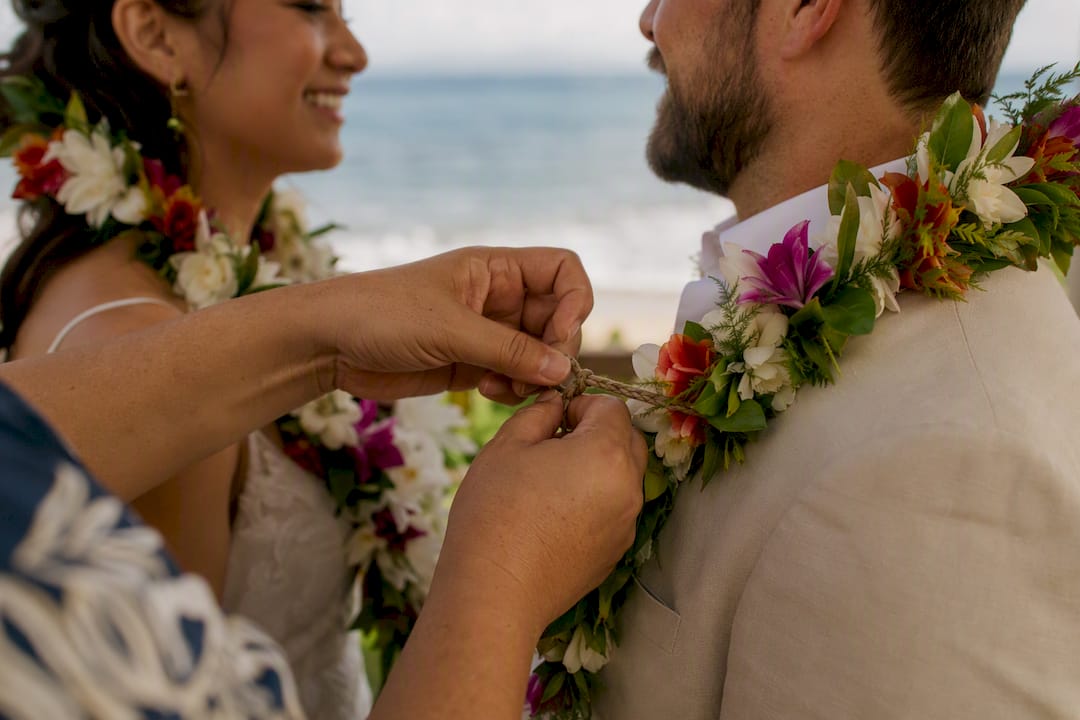
What separates real lei etiquette from costume dress-up is intent. A lei handed to you at a wedding is a gift with meaning attached, not an accessory you grab off a table. Treat it that way and you’ll never get the etiquette wrong.
How Do You Give and Receive a Lei at a Wedding?
Giving a lei correctly takes about five seconds, but those five seconds matter. Here’s the sequence:
Hold the lei above your heart with both hands, not dangling from one wrist.
Step forward when the officiant or coordinator gives the cue, usually at the ceremony’s opening or right after vows.
Offer it to the recipient, and if it’s culturally appropriate for your relationship, a light kiss on the cheek can accompany the presentation.
Let the recipient decide whether to place it themselves or bow their head so you can drape it.
On the receiving end, the rule is simple: accept it, don’t decline it. Lower your head slightly if the giver wants to place it over your neck. Some couples prefer the older method of holding the lei at chest height and letting the recipient place it themselves, which avoids reaching hands over someone’s head and feels more personal to many families.
Most weddings present leis at one of three moments: guest arrival, the ceremony’s start, or right after the couple exchanges vows. Once given, plan to keep the lei on for at least the first half hour, especially while the giver is still nearby.
Pro Tip: If you’re the officiant or a member of the wedding party, ask the coordinator exactly when leis get presented during rehearsal. Guessing the cue live, in front of a hundred guests, is how awkward pauses happen.
How to Wear a Lei and Which Types Fit the Occasion
Wearing a lei correctly depends entirely on its style. A closed lei should drape evenly over both shoulders, with half hanging in front and half in back. An open lei sits differently: centered at the back of the neck with both ends hanging down the front, never looped closed. A haku lei, the flower crown style, sits above the eyebrows and ties behind the head.
Wedding leis vary by role, formality, and fragrance; for floral-design inspiration to coordinate lei color and fragrance with your wedding palette, see ideas for lavender wedding flowers.
Maile is the ceremonial vine lei, often worn by grooms or exchanged between couples for its history and scent.
Pīkake and plumeria are fragrant floral choices popular with brides, and pair well with lighter, airier gowns.
Orchid leis hold up well through long ceremonies and photo sessions since they’re sturdier than most florals.
Kukui nut leis work for a more understated, non-floral look, and they don’t wilt in heat.
Ti leaf leis are traditional and durable, often used for larger wedding parties needing leis that survive a full day.
Popular wedding lei flowers like pīkake, plumeria, pakalana, and maile each carry different scent intensity and seasonal availability, so check with your florist before locking in a choice. A lei often replaces a corsage or boutonniere entirely; wearing both tends to look crowded, so pick one and coordinate the rest of your florals around it.
Which Wedding Roles Wear Which Leis?
Lei assignments usually follow a loose hierarchy that keeps the wedding party visually coordinated without everyone matching exactly.
Grooms often wear maile, sometimes paired with a smaller floral lei for the ceremony itself.
Brides typically choose fragrant florals like pīkake or plumeria, or a haku crown instead of a neck lei.
Bridesmaids and groomsmen usually get simpler, matching leis in a single flower type to keep the lineup cohesive.
Parents and grandparents often receive maile or more formal styles as a mark of respect.
Officiants sometimes receive a lei too, particularly if they’re playing an active cultural role in the ceremony.
When ordering, count every wedding party member plus two or three backups for last-minute additions or breakage. Children’s leis should be sized shorter to avoid tripping hazards or dragging on the ground during photos.
Special-Case Rules That Prevent Wedding Day Mistakes
A few etiquette rules exist specifically because they’ve caused real problems at real weddings. Pregnant guests or family members should receive open leis rather than closed circular ones, since the closed loop carries inauspicious symbolism in traditional custom.
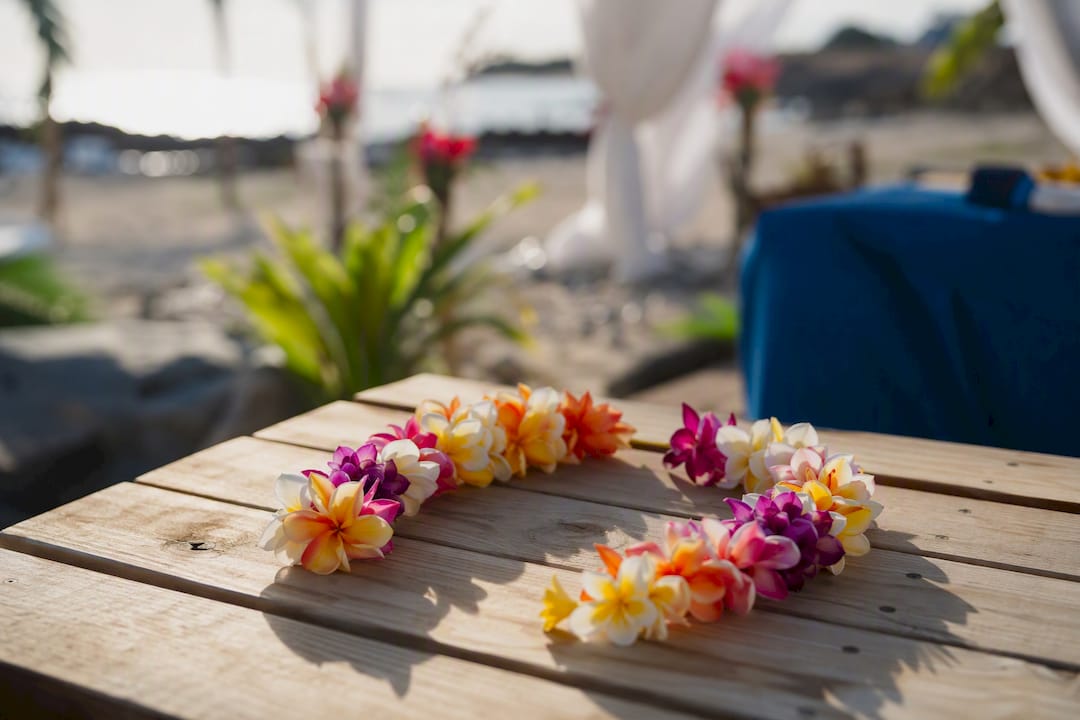
Never pre-wear a lei you intend to give away later. It’s presented as a fresh gift, and wearing it first undercuts that. Removing a lei in front of the person who gave it is considered rude, even if it’s uncomfortable in the heat.
Allergies and staining deserve real attention, not an afterthought:
Ask guests in advance about flower sensitivities, especially with fragrant varieties like pīkake.
Request non-staining florals for anyone wearing white or light-colored fabric, since crushed petals from plumeria and similar flowers can transfer color onto silk.
Test a small sample against garments the day before if staining is a concern.
Fragrance sensitivity affects more guests than most couples expect, so build a no-fragrance backup option like ti leaf or kukui nut into your order.
Caring for Leis Before and After the Ceremony
Fresh leis are fragile, and mishandling them in the hours before a wedding is one of the most common avoidable mistakes.
Unpack every lei the moment it arrives rather than leaving it boxed in a hot car or venue closet.
Keep leis cool, ideally refrigerated around 50 to 55 degrees Fahrenheit; if there’s no cooler on site, mist them lightly and wrap them in a damp towel.
Use fragrant leis like pīkake or plumeria the same day since they don’t hold up well past a few hours in heat; sturdier types like orchid can last up to three days refrigerated.
After the event, either return the lei to the earth as a respectful farewell gesture, hang it to dry for preservation, or discard it in the trash if that’s the only practical option left.
Fresh flower leis aren’t meant to last forever, and that’s part of the tradition. Treat the ending with the same care as the presentation.
Terriffics’ Practical Tips for Staging Leis at Your Wedding
Timing leis around your ceremony flow takes coordination, and it’s one of those details that’s easy to miss until it’s happening live. We recommend building lei cues directly into your run of show, whether that’s tied to processional music or the moment right after vows.
Set up a single staging table with a cooler nearby and one attendant handling handoffs, so cues don’t turn into chaos.
Keep a quick-mist spray bottle on hand for touch-ups between arrival and ceremony start.
Label backup leis clearly in case one gets damaged or a last-minute guest needs one.
Tell your florist ahead of time about any pregnancy, allergy, or staining concerns, plus your exact headcount.
Getting these small logistics right is what keeps a beautiful ceremony moment from turning into a scramble.
Ready to Coordinate Every Detail of Your Big Day?
Lei presentations are one small piece of a much bigger timing puzzle on your wedding day, and getting the cues right takes coordination between your officiant, photographer, and sound setup. That’s where a professional DJ earns their keep. At Terrifficsentertainment, we work with Oahu couples to build ceremony and reception timelines that account for every moment, including exactly when to cue music for a lei exchange or vow presentation. Our DJ rental services pair sound and lighting with an AI-powered photobooth, so every lei moment gets captured and every cue lands on time. Browse our event gallery to see how we’ve helped other couples bring their ceremony details together, then reach out to book your date.
What Wedding Planning Guides Get Wrong About Leis
Most wedding etiquette guides treat leis as a costume decision: pick a pretty flower, hand it over, done. That misses the point entirely. The lei exchange works because it’s a gift transaction with real cultural weight, not a photo prop, and couples who skip the “why” tend to fumble the “how” without realizing it.
The biggest gap we see isn’t cultural ignorance. It’s logistics. Couples get the symbolism right and then lose the moment because nobody assigned a cue, the leis sat in a hot trunk for two hours, or a pregnant aunt got handed a closed lei by accident. The etiquette rules exist because real weddings have exposed the failure points again and again.
If you take one thing from this guide, prioritize timing over selection. Choosing between pīkake and plumeria matters far less than making sure someone knows exactly when to hand that lei over, and that it’s been kept cool enough to survive the wait. Respect for the tradition shows up in the details you plan ahead, not the flower you pick last minute.
— Terriffics
Sources
Recommended
Comments