
_edited.png)

Lighting Setup Types for Parties and Weddings

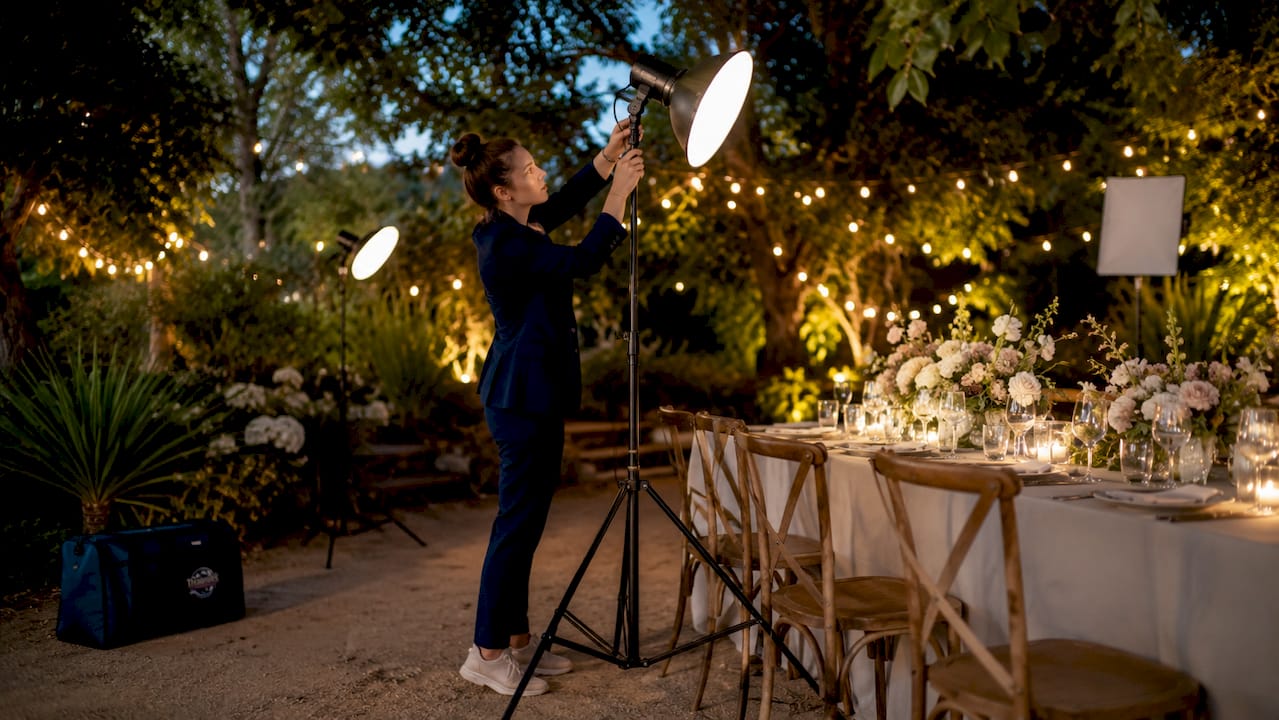
Lighting setup types are distinct configurations of lights designed to create specific atmospheres, moods, and visual effects at events. The right configuration transforms a plain venue into an unforgettable experience. Whether you’re planning a backyard birthday party in Kapolei or a formal wedding reception on Oahu, understanding your options puts you in control of the entire room’s energy. This guide covers the essential lighting setup types, how each one works, and how to choose the best configuration for your event style and budget.
1. What are the essential lighting setup types for events?
Every professional event lighting plan draws from five core categories. Each type serves a specific purpose, and the best events layer several of them together.
Ambient lighting fills the entire space with soft, even light. It sets the baseline mood and prevents dark corners. Think warm Edison bulbs overhead or soft LED panels bouncing light off the ceiling.
Accent lighting highlights specific details. A spotlight on a wedding cake, a floral centerpiece, or a photo backdrop all use accent lighting to draw the eye.
Decorative lighting adds style and theme. String lights, fairy lights, lanterns, and neon signs fall into this category. They contribute to the visual identity of the event more than they illuminate it.
Task lighting serves a functional purpose. It lights up the DJ booth, the bar, the buffet table, or the gift table so guests and staff can see clearly.
Three-point lighting is the professional foundation used for stages, photo booths, and performance areas. It combines a key light, fill light, and back light to create dimension and depth.
The most common mistake planners make is relying on a single type. A wedding reception that uses only ambient lighting feels flat. One that layers ambient, accent, and decorative lighting feels designed. You can read more about how lighting transforms events to see this layering in practice.
2. How does a three-point lighting setup create professional event visuals?
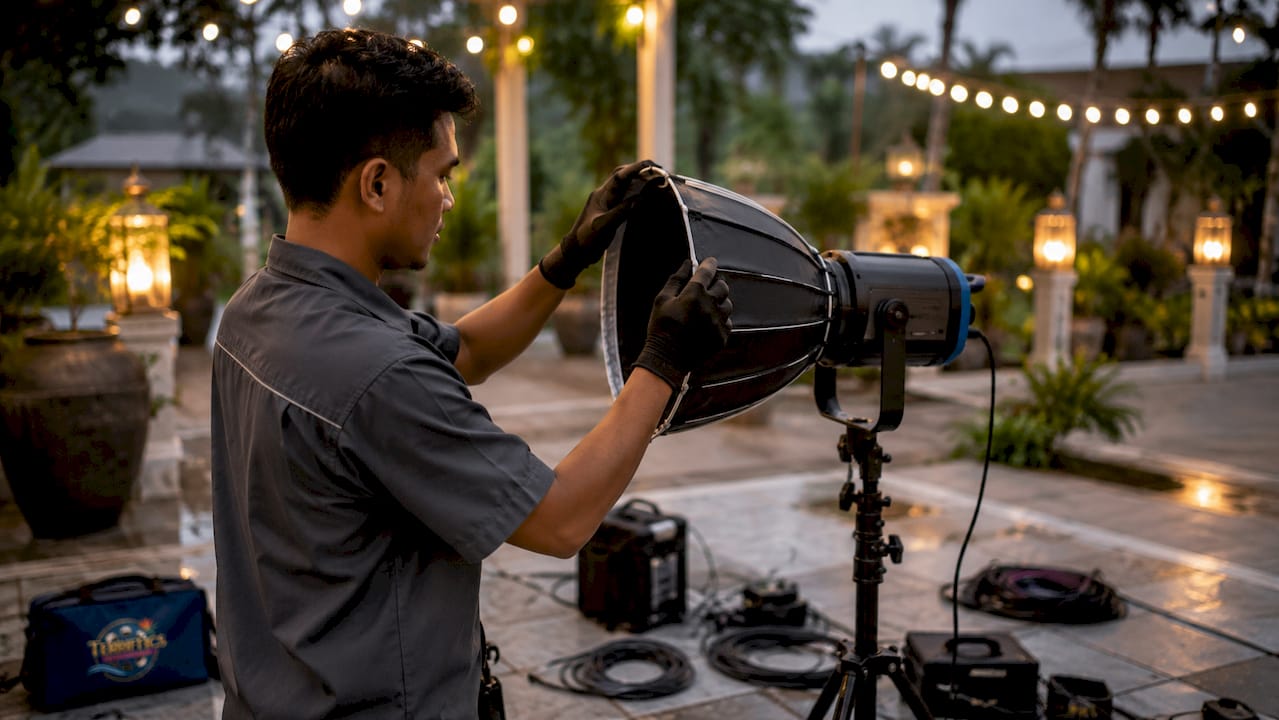
Three-point lighting is the foundational setup for all professional event lighting. Every other creative configuration adapts this principle for scale and style.
The three components work together to eliminate flat, unflattering light:
Key light: The primary and brightest source. Place it at 45 degrees to the side and slightly above eye level. This creates natural shadows that give faces and subjects dimension.
Fill light: Positioned opposite the key light, the fill softens harsh shadows without erasing them. Fill light intensity must stay at 30–60% of the key light’s output. At 100%, the image goes flat and clinical.
Back light: Placed behind the subject, it creates a rim of light that separates the person from the background. This separation is what makes photos and video look professional rather than amateur.
For event planners building a kit, entry-level three-point setups cost between $100 and $400. A basic kit with clamp lights and an LED panel starts around $100. Mid-range LED panels run $200–$400. Professional Aputure-style lights with softboxes push past $500. That price range reflects real differences in color accuracy, output, and reliability.
A common pitfall is setting the fill light too bright. When fill intensity matches the key light, all shadow disappears. The result looks like a passport photo, not a celebration. Keep the fill dialed back and let the shadows do their job.
Pro Tip: Match all your fixtures to the same Kelvin temperature. A 5600K daylight standard across all lights prevents the orange-and-blue color cast that ruins event photos. Set your camera or phone to manual white balance and lock it in.
3. Portrait lighting patterns that add mood to event photos
Beyond the three-point structure, specific lighting patterns create distinct emotional tones. Rembrandt, Butterfly, and Loop lighting are the three most popular choices for event portrait areas and photo booths.
Rembrandt lighting uses a 45-degree side light that creates a small triangle of light on the shadowed cheek. It reads as dramatic and classic. This works well for formal weddings and black-tie events where you want photos to feel timeless.
Butterfly lighting positions the key light directly in front of and above the subject. It creates a small shadow under the nose that resembles a butterfly shape. This pattern is flattering for most faces and works well for birthday parties, quinceañeras, and graduation events.
Loop lighting places the key light at a 30–45 degree angle, creating a small loop shadow beside the nose. It is the most versatile pattern and the easiest to set up quickly. For event planners who need a reliable, fast configuration, Loop lighting is the go-to choice.
Knowing these three patterns gives you creative control over the mood of every photo taken at your event. You do not need a professional photographer on site to benefit from them. A well-positioned LED panel and a ring light can replicate any of these patterns at a fraction of the cost.
4. What creative and decorative lighting options transform event spaces?
Decorative lighting is where personality enters the room. String lights and RGB LED fixtures are the two most popular choices for adding charm and thematic color to weddings and parties.
Here is what works best for each event type:
String lights and fairy lights create warmth and intimacy. Drape them across ceilings, wrap them around pillars, or hang them as a backdrop. They work for outdoor luaus, garden weddings, and casual birthday parties.
Uplighting places LED fixtures on the floor aimed upward at walls, columns, or drapery. It washes the room in color and transforms a plain venue into a themed space. A single color like deep blue or warm amber changes the entire feel of a room.
RGB and programmable LED fixtures allow dynamic color control. You can shift colors to match the event timeline. Soft white for dinner, vibrant colors for dancing, and a specific hue for the first dance.
Neon signs and LED letters add a personalized touch. Custom signs with names, dates, or phrases double as photo backdrops and decorative elements.
Gobo projectors project patterns, logos, or monograms onto walls and floors. They are popular for weddings and corporate events where branding matters.
Pro Tip: Start with softboxes for natural-looking light before adding RGB color effects. Softboxes create a flattering base that makes colored accent lighting look intentional rather than chaotic.
The key to combining decorative and functional lighting is contrast. Bright decorative lights need a dimmer ambient base to stand out. If everything is equally bright, nothing reads as special.
5. How to choose the best lighting setup for your event style and budget
Choosing the right configuration depends on three factors: venue size, event formality, and your budget. This comparison table covers the most common scenarios.
Setup type | Best for | Estimated cost | Effect |
Ambient only | Small gatherings, casual parties | $50–$150 | Soft, even fill light across the space |
Three-point lighting | Stages, photo booths, performances | $100–$500+ | Professional depth and dimension |
String lights + uplighting | Weddings, outdoor events | $150–$400 | Warm, themed atmosphere with color |
RGB LED fixtures | Dance floors, DJ setups | $200–$600 | Dynamic color shifts and energy |
Full layered setup | Weddings, corporate events | $500+ | Complete ambiance control |
For small events under 50 guests, ambient lighting plus one accent element is enough. A string light canopy and two uplights can completely transform a backyard or small hall without a large investment.
For larger events, portable speedlights are an affordable entry point before committing to professional monolights or panels. They are compact, easy to transport, and powerful enough for most event spaces.
One practical tip that professional event planners use: mark your light positions on the floor with tape before the event starts. This prevents multiple full adjustments during setup and keeps your configuration consistent from rehearsal to the actual event.
6. Matching lighting to your event’s emotional tone
The emotional tone of an event should drive every lighting decision. Lighting is not just decoration. It is direction. It tells guests where to look, how to feel, and what to remember.
Warm color temperatures in the 2700K–3000K range create a cozy, romantic feel. They work for wedding receptions, anniversary dinners, and intimate birthday celebrations. Cool temperatures around 5600K feel clean and energetic. They suit corporate events, graduation parties, and high-energy dance floors.
Color psychology plays a real role in event design. Deep blue and purple tones feel sophisticated and calm. Red and orange tones feel warm and celebratory. Green tones work well for tropical or nature-themed events, which is especially relevant for Oahu celebrations where the outdoor environment is part of the experience.
The best approach is to plan your lighting in three phases: arrival, dining, and dancing. Each phase gets its own configuration. Guests arrive to warm ambient light, dine under soft accent lighting, and dance under dynamic RGB effects. This progression makes the event feel curated rather than accidental. You can explore more ideas in this party lighting guide for Oahu events.
Key takeaways
The most effective event lighting combines three-point structure with layered decorative and ambient configurations to create depth, mood, and a memorable visual experience.
Point | Details |
Layer your lighting types | Combine ambient, accent, and decorative setups for a fully designed event space. |
Control fill light intensity | Keep fill at 30–60% of key light to preserve dimension and avoid flat visuals. |
Match color temperature | Use the same Kelvin rating across all fixtures to prevent color casts in photos. |
Plan by event phase | Adjust lighting for arrival, dining, and dancing to create a natural progression. |
Mark positions before setup | Tape light positions on the floor to save time and stay consistent during the event. |
What we have learned from lighting hundreds of Oahu events
After setting up lighting for weddings, graduations, birthday parties, and corporate events across Oahu, one truth stands out. Most clients underestimate how much lighting shapes the entire feel of their event. They focus on the DJ, the food, and the decor. Then they see the photos and realize the lighting made or broke the whole look.
The biggest mistake we see is skipping the three-point foundation and going straight to decorative effects. String lights and RGB uplighting look great in photos, but without a proper key and fill light structure at the main focal points, the results are inconsistent. The dance floor looks amazing. The sweetheart table looks dark and flat.
We also see planners try to match every light in the room to the same color. A fully red room or a fully blue room loses contrast. Contrast is what makes lighting interesting. Use your dominant color for uplighting and walls, then keep your key and fill lights neutral so faces look natural in photos.
The most underrated tool in any event lighting kit is a simple dimmer. Being able to reduce ambient light by 30% during the first dance or the cake cutting changes the entire emotional weight of that moment. You do not need expensive equipment for that effect. You need control.
Start simple. Build a solid three-point setup for your main focal area. Add uplighting for color and atmosphere. Then layer in string lights or RGB effects for personality. That sequence works every time, at every budget level, for every type of celebration.
— Terriffics
See your event come to life with Terrifficsentertainment
Planning the lighting for your next party or wedding on Oahu does not have to feel overwhelming. Terrifficsentertainment brings professional DJ sound and lighting, custom setups, and fast, friendly service to every event we touch.
Browse our event lighting gallery to see real examples of string lights, uplighting, RGB setups, and full layered configurations from actual Oahu celebrations. Whether you need a simple accent setup for a birthday or a full wedding lighting package, we have flexible options that fit your vision and your budget. We serve the entire island, and we make setup and teardown fast and easy so you can focus on your guests. Get inspired for your event and reach out to start planning today.
FAQ
What is the most important lighting setup type for events?
Three-point lighting is the foundational setup for any professional event focal area. It combines a key light, fill light, and back light to create depth, dimension, and flattering visuals for photos and video.
How much does a basic event lighting setup cost?
A basic three-point setup costs between $100 and $400 for entry-to-mid-range equipment. Full professional setups with Aputure-style lights and softboxes run $500 and above.
How do I avoid color casts in event photos?
Match all lighting fixtures to the same Kelvin temperature, such as 5600K daylight, and set your camera to manual white balance. Mixing warm and cool fixtures creates unnatural color casts that are difficult to fix in editing.
Can I combine decorative and functional lighting at the same event?
Yes, and you should. The best approach layers ambient and three-point lighting as the functional base, then adds string lights, uplighting, and RGB effects for decorative impact. Contrast between the two layers is what makes the space feel designed.
What lighting setup works best for a wedding reception?
A full layered setup works best for weddings. Use warm ambient lighting for arrival and dining, three-point lighting at the sweetheart table and stage, and RGB uplighting with dynamic color shifts for the dance floor.
Recommended
Comments