
_edited.png)

DJ First Wedding Timeline With 6:00 PM Sample and Cue Sheet

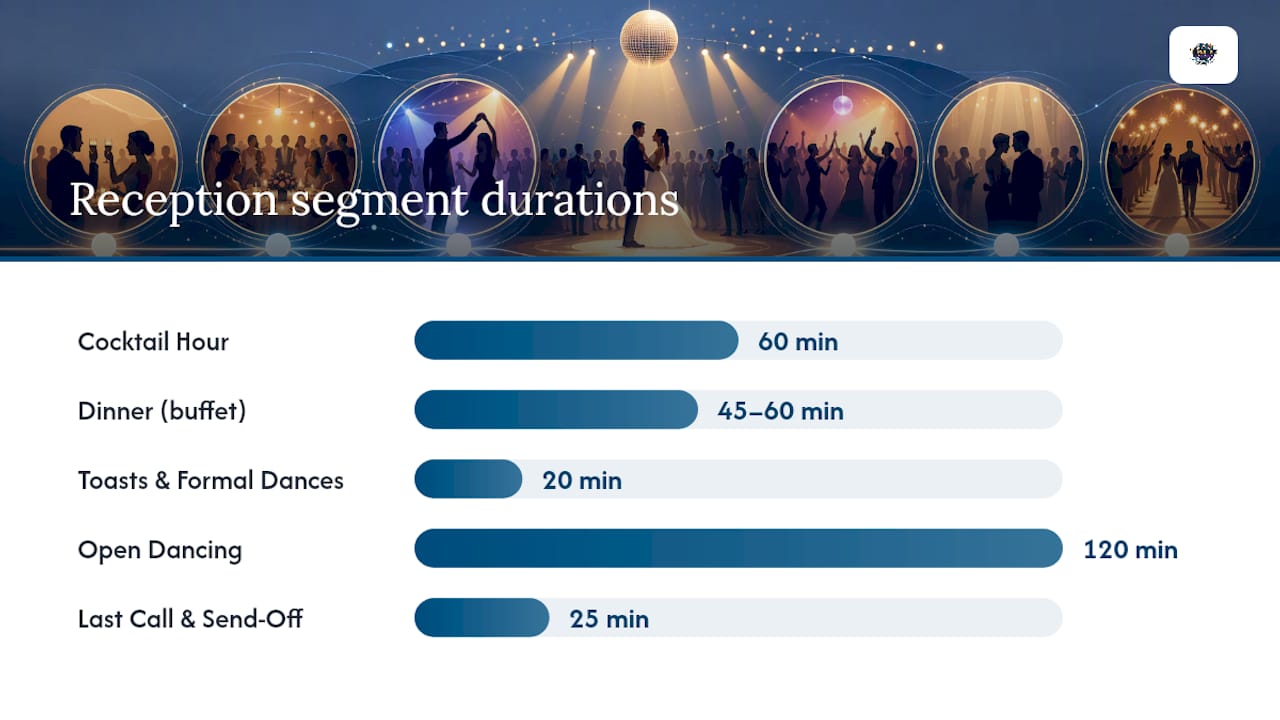
For a five-hour reception, the split that works most consistently runs 60 minutes of cocktails, 45 to 90 minutes for dinner depending on service style, 10 to 20 minutes for formal dances, and 90 to 120 minutes of open dancing. The first thing you should do with that split: send it to your DJ, coordinator, and photographer, and name one person authorized to approve any last-minute changes. From there, your DJ handles the live tempo and transitions.
TL;DR:
A five-hour wedding reception generally includes 60 minutes of cocktail hour, 45 to 90 minutes of dinner, and 90 to 120 minutes of open dancing.
Lock in your timeline and song choices at least two weeks before the event, providing clear instructions and a single contact for approvals.
For a six-hour reception, consider adding extra activities or extending open dancing rather than evenly spreading out time across segments.
The DJ should signal transition shifts with cues rather than announcements, and open dancing should start within five minutes of the last toast.
Providing your DJ with detailed cue sheets, pronunciation notes, and authorized contacts enhances smooth operation and prevents last-minute chaos.
Table of Contents
Building Your Wedding Reception Timeline DJ Template
A wedding reception timeline DJ template only works if it has real clock times attached, not just “cocktail hour” and “dinner” written in a vacuum. Here’s a version built around a 6:00 PM start, which fits most Oahu evening receptions and gives your DJ a clear runway.
6:00–7:00 PM, Cocktail Hour. Background music at conversational volume, mixing acoustic covers, jazz, or light pop. This is the one stretch where the DJ should stay in the background.
7:00–7:10 PM, Grand Entrance. High energy, short and punchy tracks that match your entrance song choices.
7:10–7:15 PM, First Dance. One song, full attention, sound isolated from side conversations.
7:15–8:15 PM, Dinner Service. Buffet service typically runs 45 to 60 minutes; plated dinners run 75 to 90 minutes, so budget accordingly. Music stays warm and instrumental, low enough for toasts to be heard clearly.
8:15–8:35 PM, Toasts and Formal Dances. Parent dances, speeches, and any cultural rituals happen here as a bridge into dancing.
8:35–10:35 PM, Open Dancing. This is where the DJ reception flow shifts into full gear, building tempo in waves rather than one long plateau.
10:35–11:00 PM, Last Call and Send-Off. Slower cool-down songs, cake cutting if it hasn’t happened earlier, and a final send-off track.
The transition points matter more than the segments themselves. A good DJ signals the shift from cocktails to reception with a distinct music cue, not an announcement, so guests move into the room without feeling herded.
Pro Tip: Tell your DJ which two or three songs mean the most to your families ahead of time. Slotting those into dinner or the formal dances, rather than saving all of them for open dancing, keeps the emotional peaks spread out instead of stacked at the end.
What Fields Belong on a DJ Cue Sheet?
A cue sheet is the operational backbone of the night, and it needs to answer questions before your DJ has to ask them out loud during a live moment. According to research on DJ timeline structure, the strongest cue sheets include:
Entrance order with phonetic pronunciations for every name, including bridal party members and parents
A mic plan showing who speaks, in what order, and for how long
Speaker placement notes and any venue sound restrictions or curfew times
Exact song versions (radio edit, clean version, extended mix) so there’s no scrambling mid-song
A short do-not-play list, ideally capped at two to five songs
One authorized cue person who approves any change during the event
That last point is the one couples skip most often, and it causes more chaos than a wrong song choice ever does. When a coordinator, a parent, and the maid of honor all try to tell the DJ something different in the same five minutes, the DJ needs one name to listen to. Naming a single point of contact for real-time approvals is standard in professional run sheets for exactly that reason.
On the technical side, your checklist should also cover load-in time, power access, backup equipment or files, and where gear gets staged relative to the dance floor. Setup windows typically run 60 to 90 minutes before doors open, so confirm that window with your venue early.
Comparing 4-, 5-, and 6-Hour Reception Timelines
Your reception length dictates what gets compressed and what gets protected. Here’s how the math shifts across common durations.
4-hour reception. Cut cocktail hour to 30 to 45 minutes, keep dinner tight at 45 minutes with a buffet, and limit toasts to two speakers max. That protects at least 90 minutes of open dancing, which is the floor most couples regret going below.
5-hour reception. This is the balanced default: 60 minutes of cocktails, 45 to 90 minutes for dinner (buffet versus plated service drives the range), and 90 to 120 minutes of open dancing after formalities wrap.
6-hour reception. Extra time here is best spent two ways: either add a second short activity block (a lawn game hour, a photobooth session, an extended cocktail set) or stretch open dancing toward the full two hours. Build in a 15 to 20 minute buffer somewhere in the middle, since dinner service running long is the single most common timeline slip.
Where couples go wrong is spreading the extra time evenly across every segment instead of choosing one or two to expand. A six-hour reception with a 90 minute cocktail hour and only 90 minutes of dancing feels backward once the night is actually running.
How DJs Sequence Music to Build Momentum
Your DJ isn’t just playing songs, they’re managing an energy curve across four distinct phases: cocktail hour, dinner, formal dances, and open dancing. Each phase has its own target, and treating reception music as a phase-by-phase energy plan is what separates a night that feels intentional from one that feels random.
Cocktail hour stays low and easy, background music guests can talk over comfortably.
Dinner holds a warm, mid-tempo mood that supports conversation and toasts without competing with them.
Formal dances peak briefly and intentionally around parent dances and speeches.
Open dancing should ramp fast. The strongest opener after dinner is a recognizable, moderate-tempo crowd favorite, not your highest-energy track. Save the biggest songs for the final 45 minutes.
The two mistakes DJs see most: opening the dance floor too late, letting energy die during a long toast section, and front-loading all the high-energy tracks early so the last hour feels flat instead of climactic.
Pro Tip: Ask your DJ to open dancing within five minutes of the last toast wrapping up. That gap is where guests start checking phones and drifting toward the exits.
When to Finalize Your Timeline and Song List With Your DJ
Lock your timeline and special song lists 14 to 28 days before the wedding. Finalizing this window gives your DJ enough runway to build a proper run sheet without leaving room for last-minute scrambling. If you’re still shopping for entertainment, book nine to 12 months out; shorter windows narrow your options fast.
Your final shared file should include:
A one-page contact sheet with cell numbers for the DJ, coordinator, and photographer
Pronunciation notes for every name in the entrance order
Load-in time and venue access details
Confirmed song versions for the first dance, entrance, and any special dances
Your must-play list (10 to 15 songs) and do-not-play list
Name one authorized cue person now, before the wedding day, and tell every other vendor who that person is. That single decision prevents more mid-event confusion than any other line item on this list.
Terriffics’ Real-World Run Sheet Example
Every Terriffics run sheet includes the same core fields regardless of package: entrance order, pronunciations, mic handoffs, and one confirmed cue contact. That consistency is why DJ setup and teardown stay fast, and why photobooth handoffs during open dancing don’t interrupt the music. Mix-and-match packages mean your run sheet covers both systems in one document, not two.
Why We Treat the DJ as the Night’s Maestro
A timeline is stage directions, and music is the energy plan that makes those directions feel natural instead of forced. The single tactic we’d push hardest: open the dance floor within minutes of the last toast, using a song your grandparents and your college roommates both recognize. That one choice determines whether your first 20 minutes of dancing builds a crowd or loses one.
— Terriffics
Get Your Timeline Reviewed Before the Big Day
Some event entertainment companies offer a combined service handling DJ sound and lighting, timeline coordination in real time, and the integration of AI-powered photobooths without added setup crews.
If your reception timeline still has gaps, or you want a second set of eyes on your song list before the 14 to 28 day deadline, send it over for a quick review. Couples working with a wedding planning partner on flowers or décor can fold that timeline in too, since the DJ schedule usually anchors every other vendor’s clock. Terriffics covers events across Oahu, and you can see bundled DJ and photobooth options on the Photobooth Rental Oahu page. Request a quote there and get your timeline locked with a team that runs the whole night, not just one piece of it.
Sources
Recommended
Comments